From chaos to clarity: Building a knowledge ecosystem to fuel growth and collaboration
Introduction: The case for a centralized knowledge management
Let's say you are working remotely and encounter a specific issue with connecting to the corporate VPN. You know that somewhere within the organization the solution to your problem exists, but finding that exact information is a challenge. In a company with multiple departments and regions, the document you need might be buried deep within the system, making it difficult to get a timely answer. This is where a well-maintained knowledge management (KM) framework can make all the difference, allowing you to quickly find the information you need and resolve the issue efficiently.
Every IT team is overwhelmed with a constant influx of tickets. While critical issues demand immediate attention, a significant portion of an IT team's time is consumed by redundant issues like printer errors or network connectivity issues. Imagine if employees could easily find solutions to these common issues themselves using a step-by-step guide or article in a knowledge base (KB).
Let's do the math: Your IT team dedicates 180 hours weekly to troubleshooting network issues. If a KB could expedite the resolution of 60% of these cases by even 15%, you'd free up nearly 16.2 hours each week.
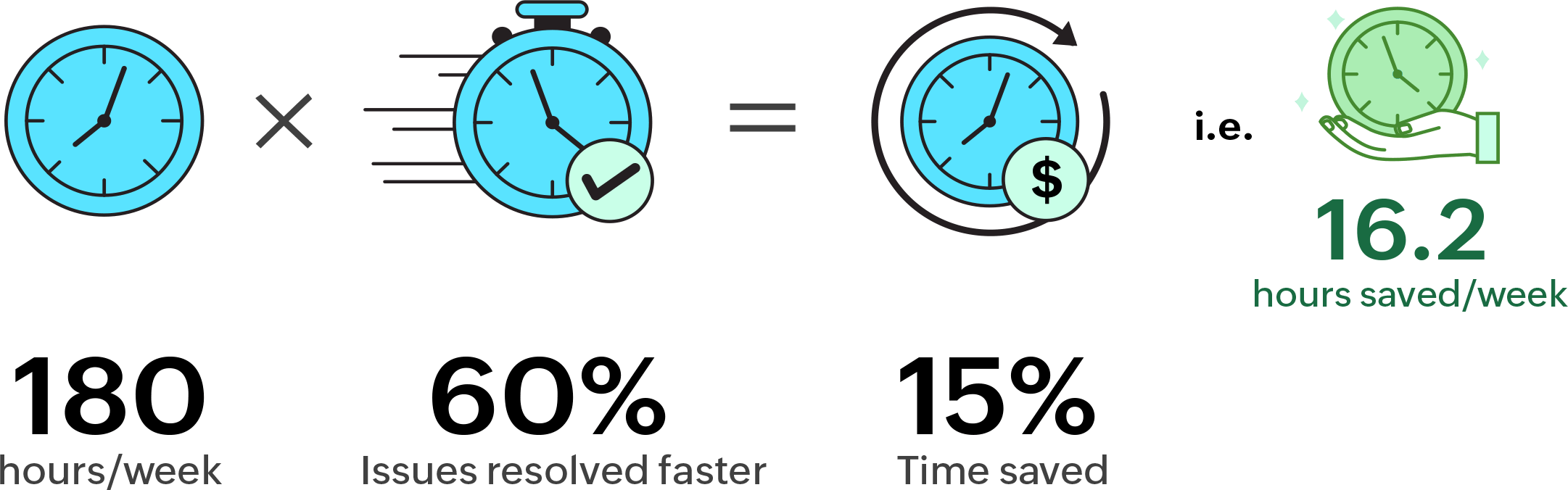
This means that one of your IT staff could spend nearly three working days each week focusing on more strategic tasks or other critical projects.
At ManageEngine, we have encountered similar challenges in our early stages. As our organization expanded, we recognized the importance of retaining, managing, and transferring knowledge. Without a structured approach to manage knowledge and information, we were at risk of losing critical insights—which would have deterred our growth. These challenges led us to create a comprehensive KM framework. This framework was designed to capture and distribute essential knowledge effectively across our organization, ensuring that expertise was not only preserved but also readily accessible.
Before we get into the specifics of building an effective knowledge management system (KMS), it's important to understand the basic concepts that form its foundation. Let's start with the knowledge triangle and how it underpins KM.
-
Previous Chapter
‹ - ›