Chapter 1: From Wiki to Learn: ManageEngine's KM journey
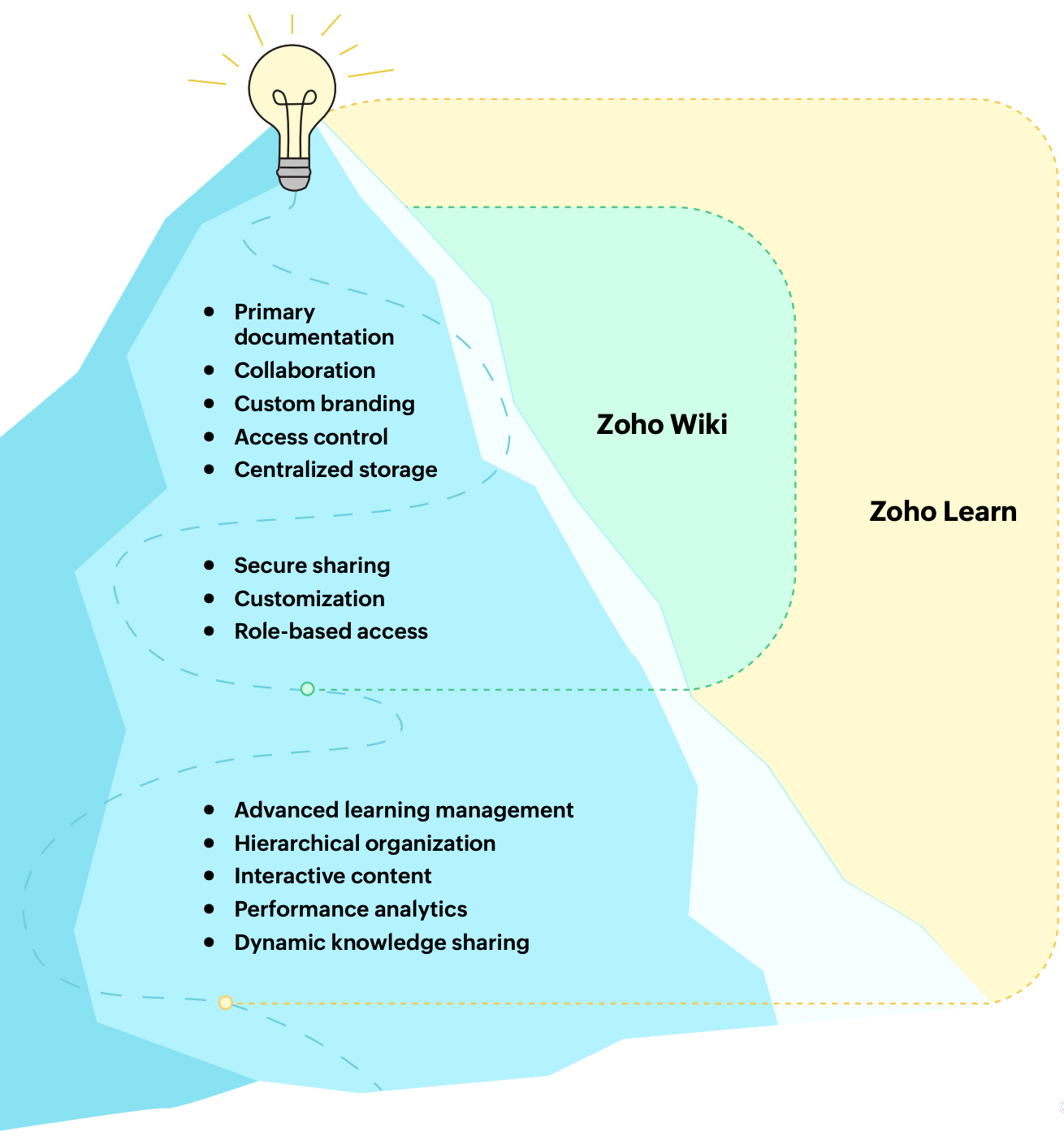
Zoho Wiki: KM with limitations
In the early stages of our KM journey, our product teams used Zoho Wiki, an online collaboration tool. It allowed teams to create pages, collaborate on content, and securely share information across departments. It was perfect for teams who needed to organize their knowledge into workspaces, whether they were discussing product features, uploading designs, or maintaining internal guides.
Zoho Wiki allowed customization in terms of branding and access control. Teams could assign roles to ensure that only authorized personnel could edit or access specific documents, creating a secure knowledge-sharing environment. It offered a straightforward editor and a centralized space for teams to upload, edit, and manage information. For example, developers, QA, and support teams could easily collaborate on new feature roll-outs, test plans, and help create documentation without the mess of endless email chains. This was a major leap forward in productivity and ensured everyone was on the same page (literally).
The problem
As we evolved to be an enterprise and encouraged paperless operations, our requirements became more complex, going beyond the capabilities of the tool. While Zoho Wiki was sufficient for documentation and collaboration, it lacked advanced features such as training management, course creation, and performance analytics. It worked for 2,000 employees, but going up to a 10,000-strong workforce called for a product that could scale to match our growth.
ManageEngine embraces Zoho Learn
Our digital transformation showed us that businesses today need a continuous learning culture where knowledge can be shared, understood, and applied. Enter Zoho Learn, a more advanced platform that not only addressed the limitations of our wiki but also expanded its capabilities to include learning management alongside KM. Our aim was to go beyond static documentation, offering a dynamic platform where organizations like us could create, manage, and share knowledge—while simultaneously training their workforce.
With the new and improved learning management system (LMS), knowledge isn’t just stored; it’s organized into manuals and articles with intuitive hierarchies. Teams could now group relevant information under common spaces, making it easier to find and manage. For instance, a development team might maintain a manual on coding standards, while a marketing team manages another on campaign best practices. This structure not only boosts findability but also helps eliminate clutter.
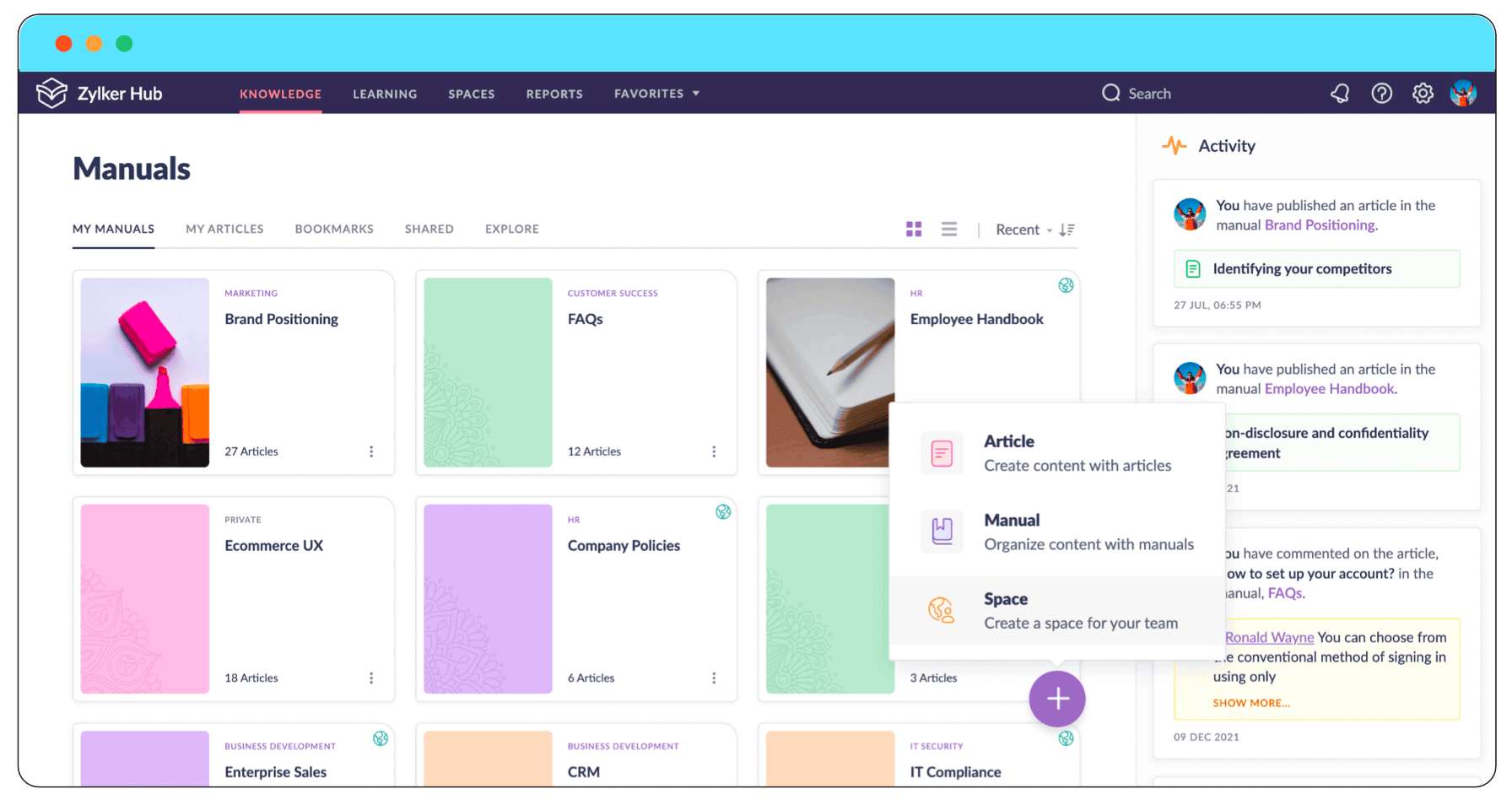
Why the shift was necessary
When we introduced Zoho Learn, it wasn’t just about replacing the wiki—it was about building a knowledge-driven culture. During the pandemic, as our company adapted to remote and hybrid work environments, the shift highlighted a crucial need for dynamic and integrated knowledge-sharing tools. Traditional wikis and static documentation systems fell short in this new reality. We quickly realized that with teams spread across various locations, relying solely on these outdated methods wasn’t sustainable. We needed platforms that could grow with us, handle complex information flows, and ensure that our employees were not only accessing knowledge but learning from it.
Traditional wikis, while useful for documentation, lacked the interactive elements necessary for modern knowledge transfer. Organizations required a platform that could train employees, track their learning progress, and ensure that knowledge was being continuously updated and utilized.
In short, Zoho's evolution from Zoho Wiki to Zoho Learn illustrates how KM has transitioned from simple documentation to comprehensive platforms that facilitate both knowledge sharing and employee development.