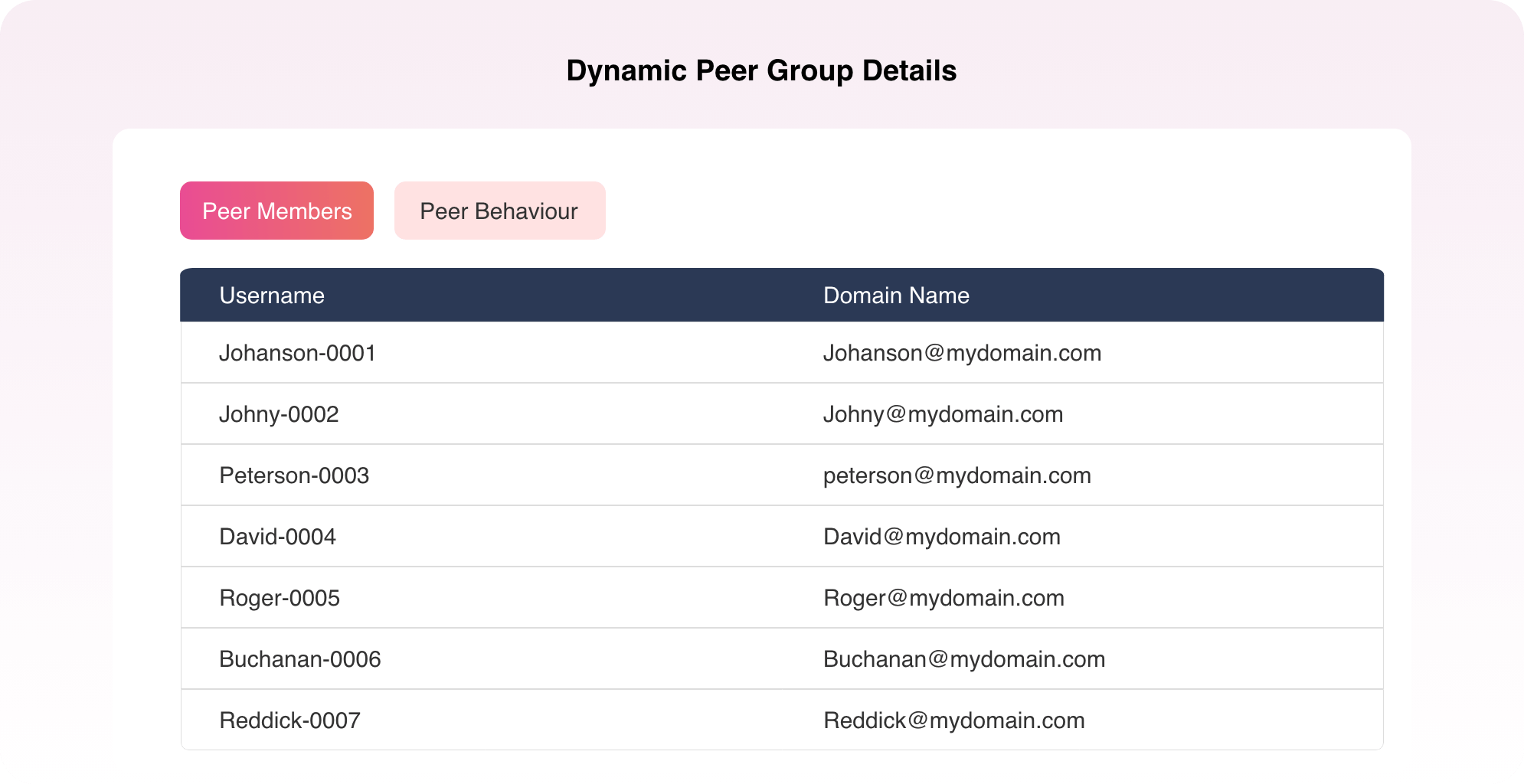
Dynamic peer grouping is a feature within behavior analytics that bolsters the anomaly detection and risk scoring capabilities of a SIEM solution. It is the process of grouping users in a network based on the behaviors they exhibit and establishing a baseline for the group. This baseline is then used as a reference to detect anomalies. In simpler words, dynamic peer groups provide context to user events in the network, helping to detect threats with higher accuracy.
Log360 creates peer groups for each of the reports it has within the UEBA module. These groups are time-based, count-based, and anomaly-based. Any event by a user is evaluated based on the clusters the user is a part of and the UEBA risk score is altered accordingly. If the score rises beyond a set threshold, a high-risk alert is raised.
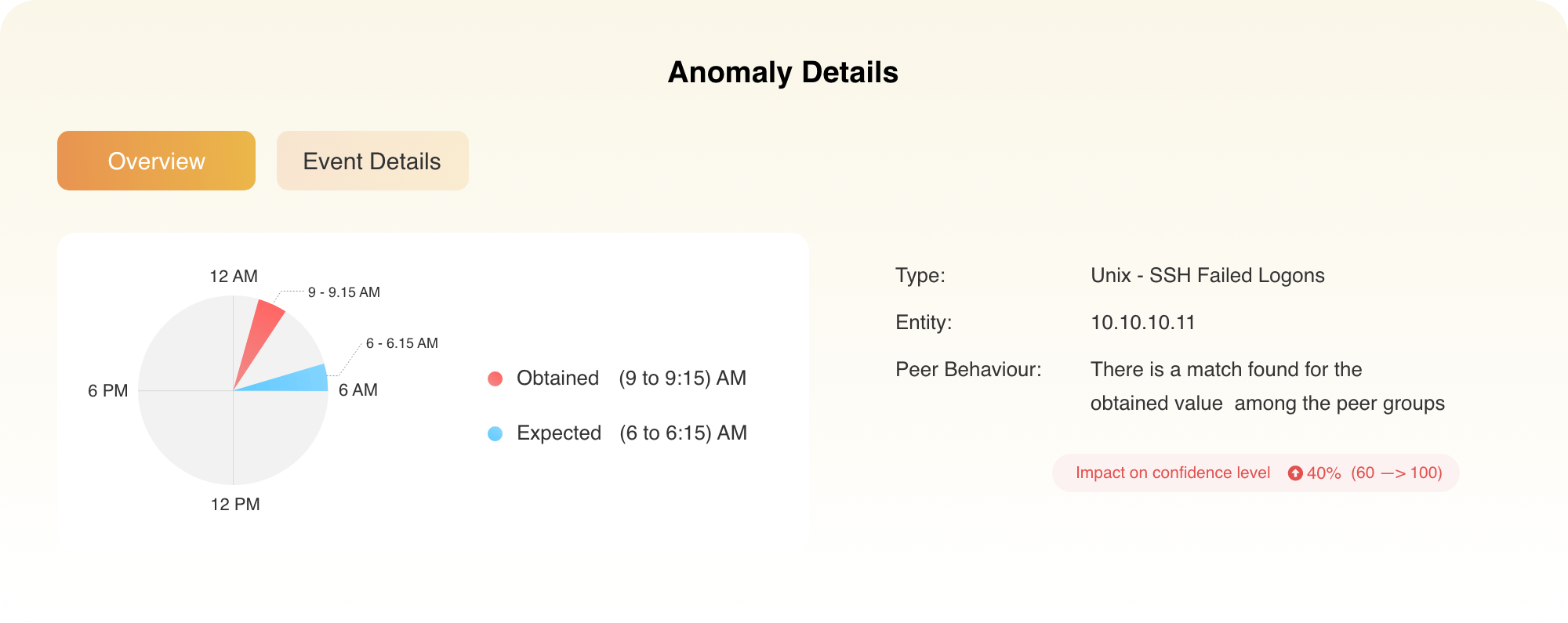
A user, John, logs in between 9am and 9:15am, which is not in accordance with his usual login time between 6am and 6:15am.
This is flagged as an anomaly by Log360's UEBA feature and a high-risk score is generated.
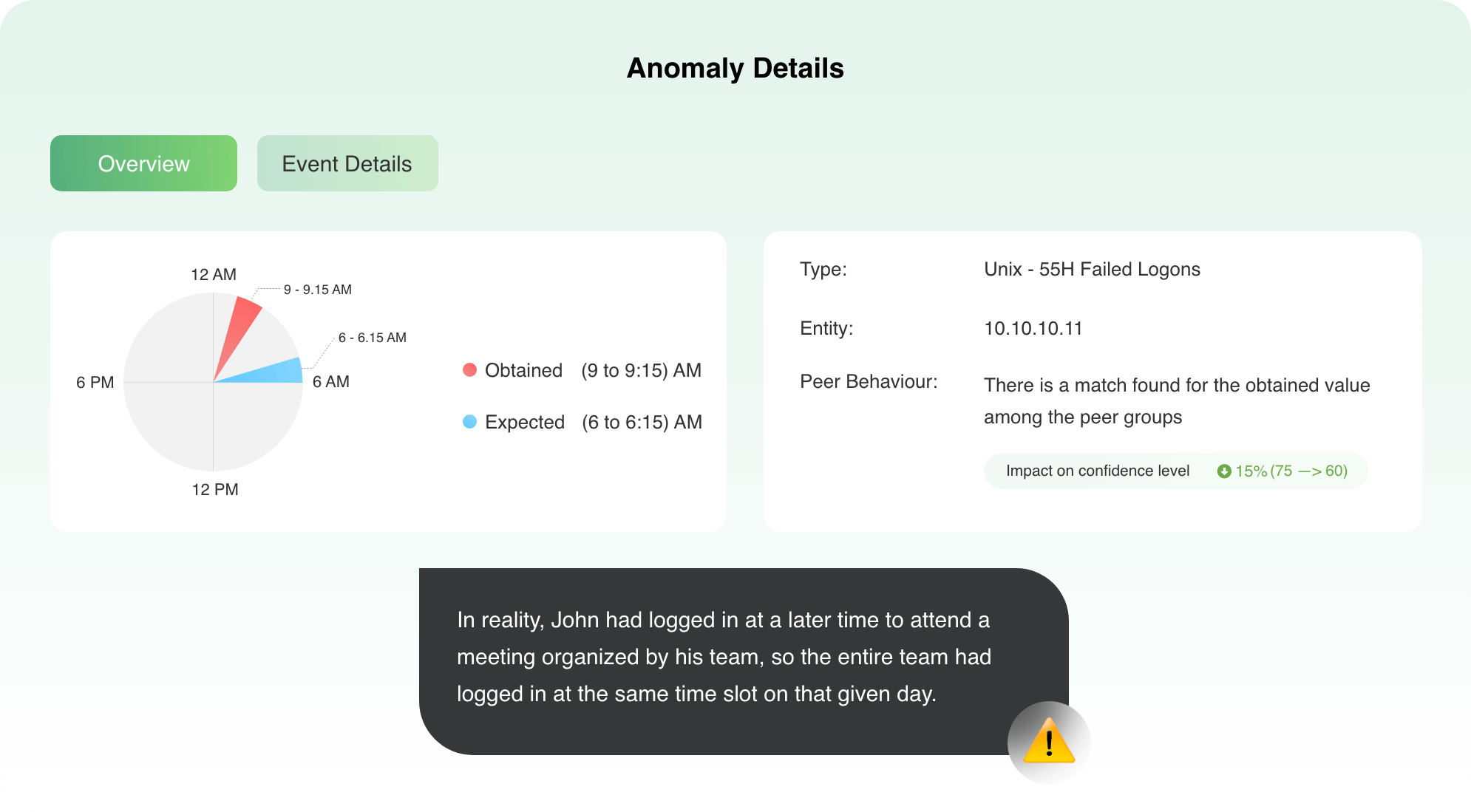
This is where dynamic peer grouping comes into the picture.
Since the team regularly would have logged in around the same time, John would be a part of a cluster with other team members. And when this anomalous event is viewed in the context of the login time of other members of that peer group, it is less likely to be a threat. In cases like these, the risk score is reduced based on ML algorithms.
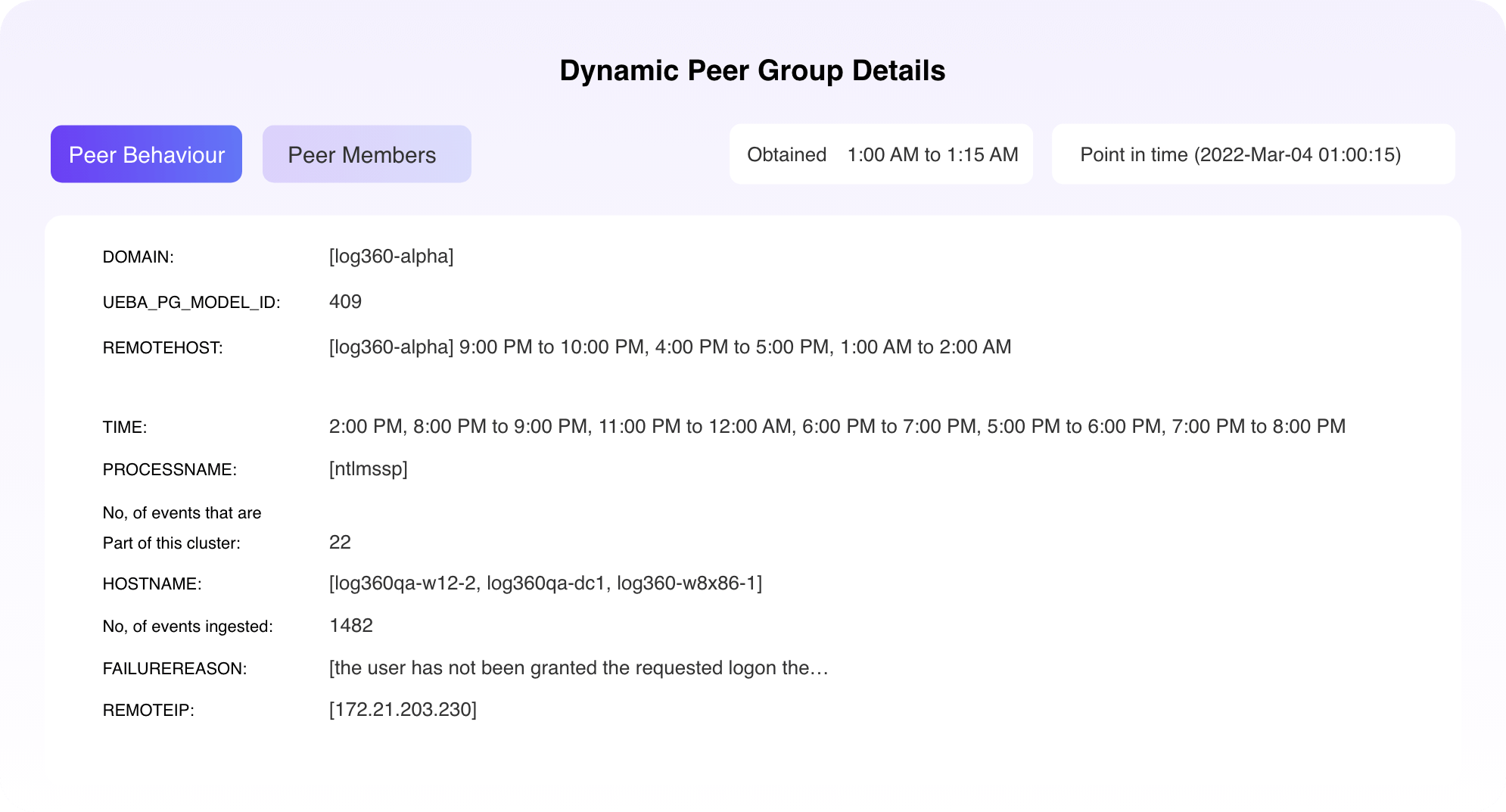
In another case, Maria logs in between 9am and 9:15am, which is not in accordance with her usual login time between 6am and 6:15am.
This is again flagged as an anomaly by Log360's UEBA feature and a risk score is generated accordingly. When this behavior is not in line with the user's peer group, the risk score of this event is increased further to flag an alert.
We wanted to make sure that one, we can check the box for different security features that our clients are looking for us to have, and two, we improve our security so that we can harden our security footprint.
Carter Ledyard
The drill-down options and visual dashboards make threat investigation much faster and easier. It’s a truly user-friendly solution.
Sundaram Business Services
Log360 helped detect insider threats, unusual login patterns, privilege escalations, and potential data exfiltration attempts in real time.
CIO, Northtown Automotive Companies
Before Log360, we were missing a centralized view of our entire infrastructure. Now, we can quickly detect potential threats and respond before they escalate.
ECSO 911
See how Log360 compares user behavior with similar peers to identify genuine anomalies in your network in real time.