


Log360 SIEM for healthcare organizations: Strengthening cybersecurity and compliance in hospitals

Empower your organization to gain end-to-end visibility across your healthcare network, safeguard sensitive patient data, streamline regulatory compliance, and protect critical healthcare devices from evolving cyberthreats.

Fortify your organization with unified identity security posture management

Healthcare agencies that trust Log360

siem-for-healthcare-log360-trust-logo1
siem-for-healthcare-log360-trust-logo2
siem-for-healthcare-log360-trust-logo3
siem-for-healthcare-log360-trust-logo4
siem-for-healthcare-log360-trust-logo5

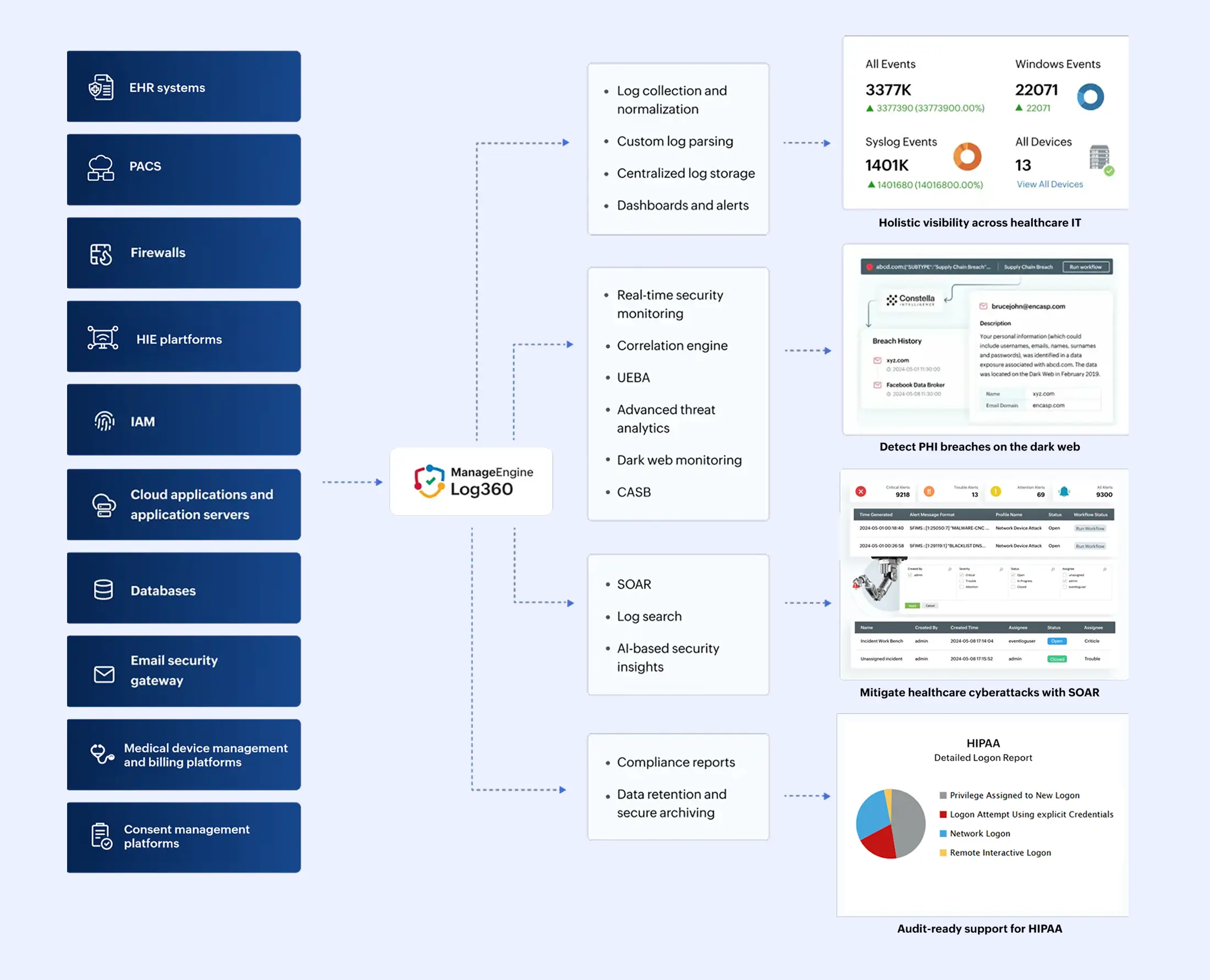
Redefining healthcare IT:
From data silos to actionable insights

Flow chart image

How Log360 strengthens cybersecurity in healthcare

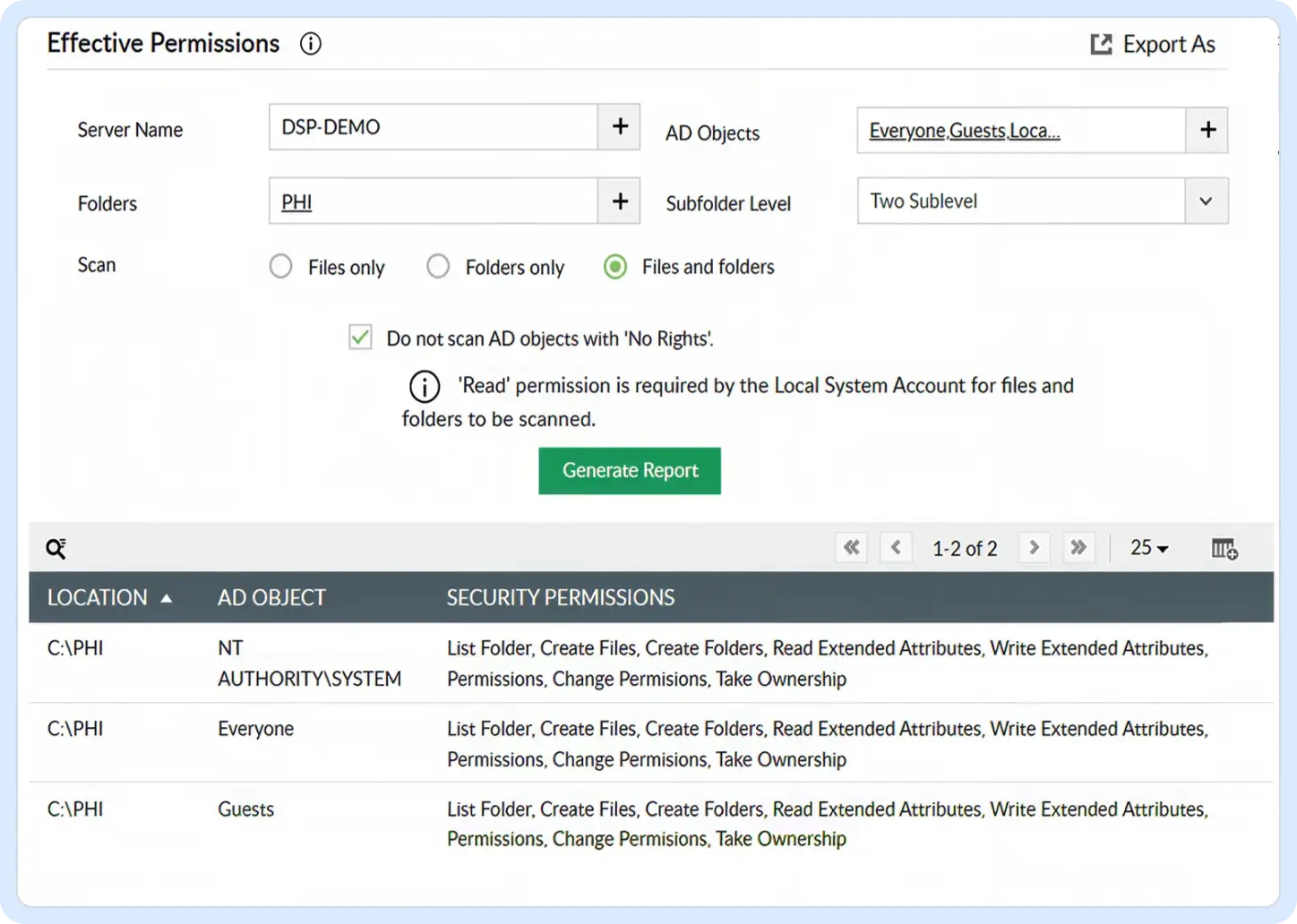
Secure sensitive health information from threat actors

  • Continuously scan your environment for sensitive health data using predefined DLP rules built for PII and PHI.
  • Classify sensitive files to automatically identify ePHI and enforce security policies for high-risk data.
  • Protect patient and genomic data from unauthorized access and data theft.
  • Gain full visibility into every instance of PHI access across all devices, endpoints, and cloud applications in your healthcare network.
  • Strengthen compliance by eliminating unnecessary copies of sensitive data, and block shadow IT use and data exfiltration attempts with a CASB.
  • Track and instantly alert on critical changes to EHRs, ensuring the confidentiality and integrity of sensitive health information—a HIPAA requirement—through file integrity monitoring.
Learn more  
Stop public facing resource exploits

Protect critical healthcare network infrastructure and medical devices

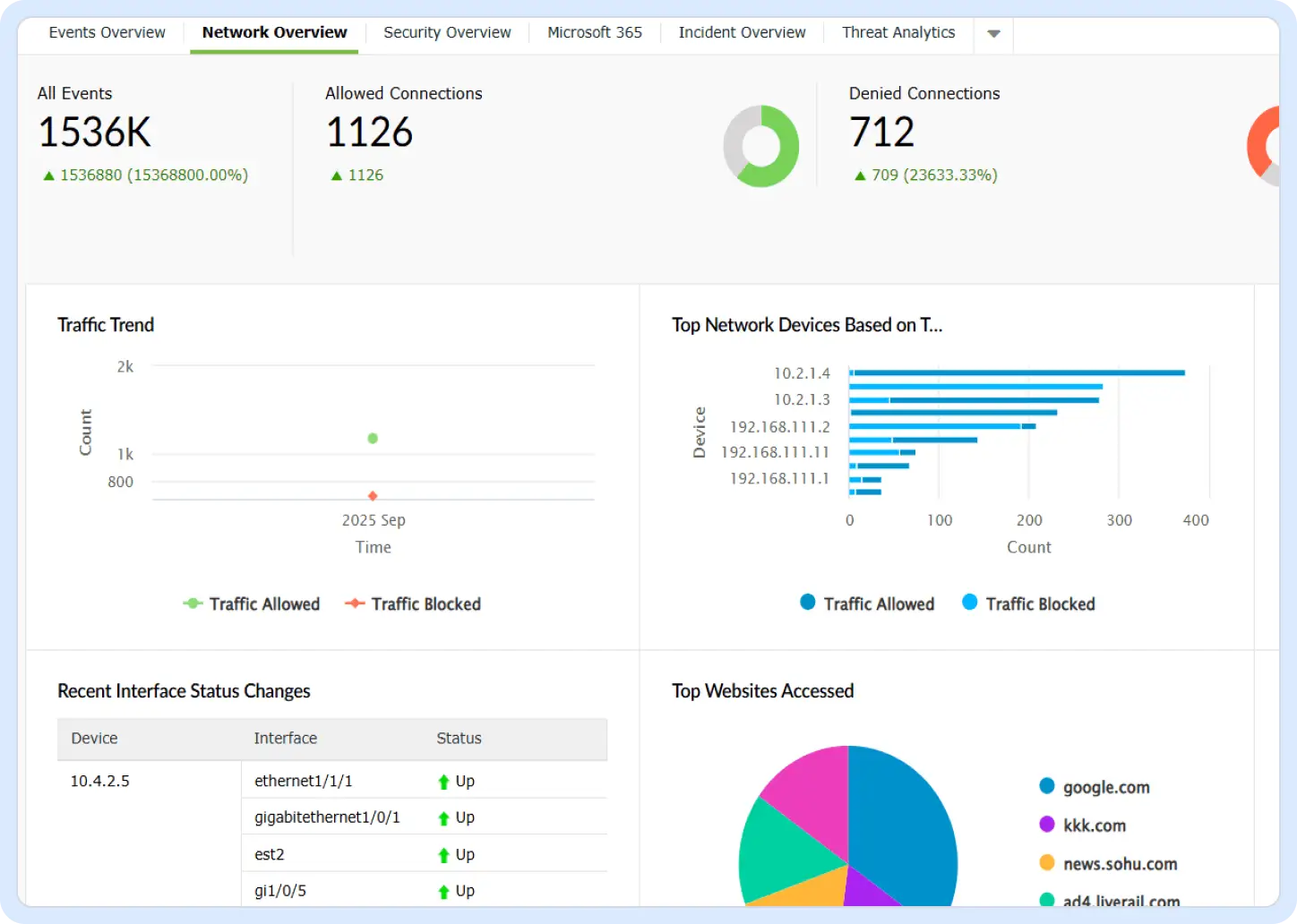
  • Gain unified visibility across your entire infrastructure by monitoring medical devices, VPNs, firewalls, IDS/IPS solutions, and routers from a single console.
  • Detect tampering with real-time monitoring of files, folders, and system configurations.
  • Monitor Exchange servers and Active Directory in real time to detect unauthorized access to healthcare systems and safeguard patient data.
  • Prevent credential-based attacks in healthcare with dark web monitoring.
  • Block connections to malicious websites and untrusted IP addresses before they can compromise your healthcare network.
  • Strengthen security for telehealth platforms to safeguard virtual consultations.
Learn more  
Stop public facing resource exploits

Book a personalized demo

Connect with our experts and explore how Log360 can transform your security operations for faster detection, smarter security, and greater resilience.
  •  
  •  
  •  
  •  
  •  
  • By clicking "Submit now", you agree to processing of personal data according to the Privacy Policy.

Demo Request Received

Thank you for your interest in ManageEngine Log360. We have received your personalized demo request and will contact you shortly.

Defend against cyberattacks and build resilience in healthcare

  • Ingest logs from over 750 sources, including loMT devices, cloud services, databases, servers, endpoints, network devices, and custom applications.
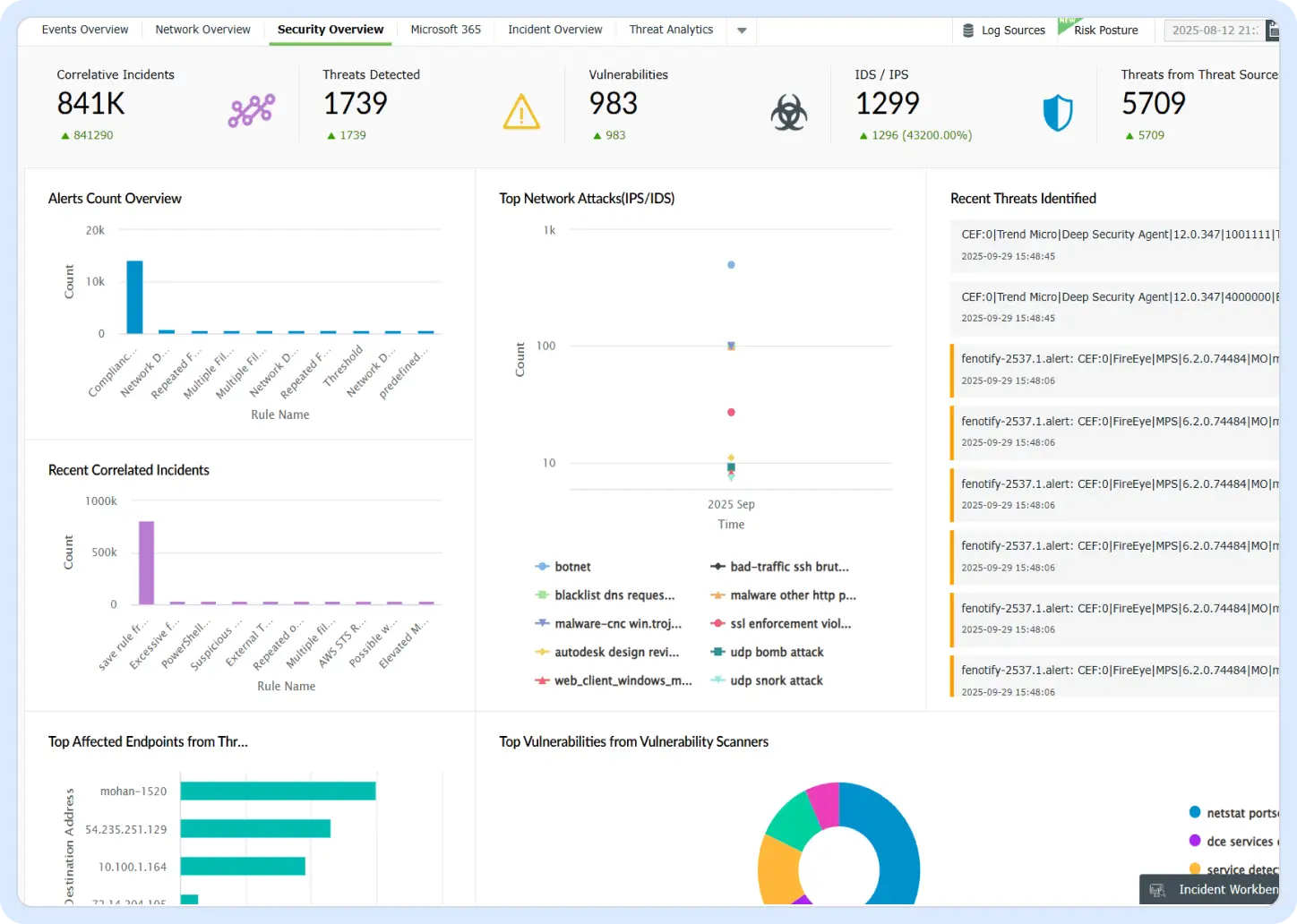
  • Leverage rule-based, signature-based, and ML-based threat analytics to detect and thwart healthcare cyberattacks.
  • Protect clinical endpoints with continuous behavioral monitoring and instant alerts for suspicious process execution, file modifications, and lateral movement.
  • Uncover hidden, multi-stage APT attack patterns that evade traditional detection, using UEBA.
  • Detect indicators of ransomware including unauthorized file changes, suspicious double extensions, and backup and restoration events.
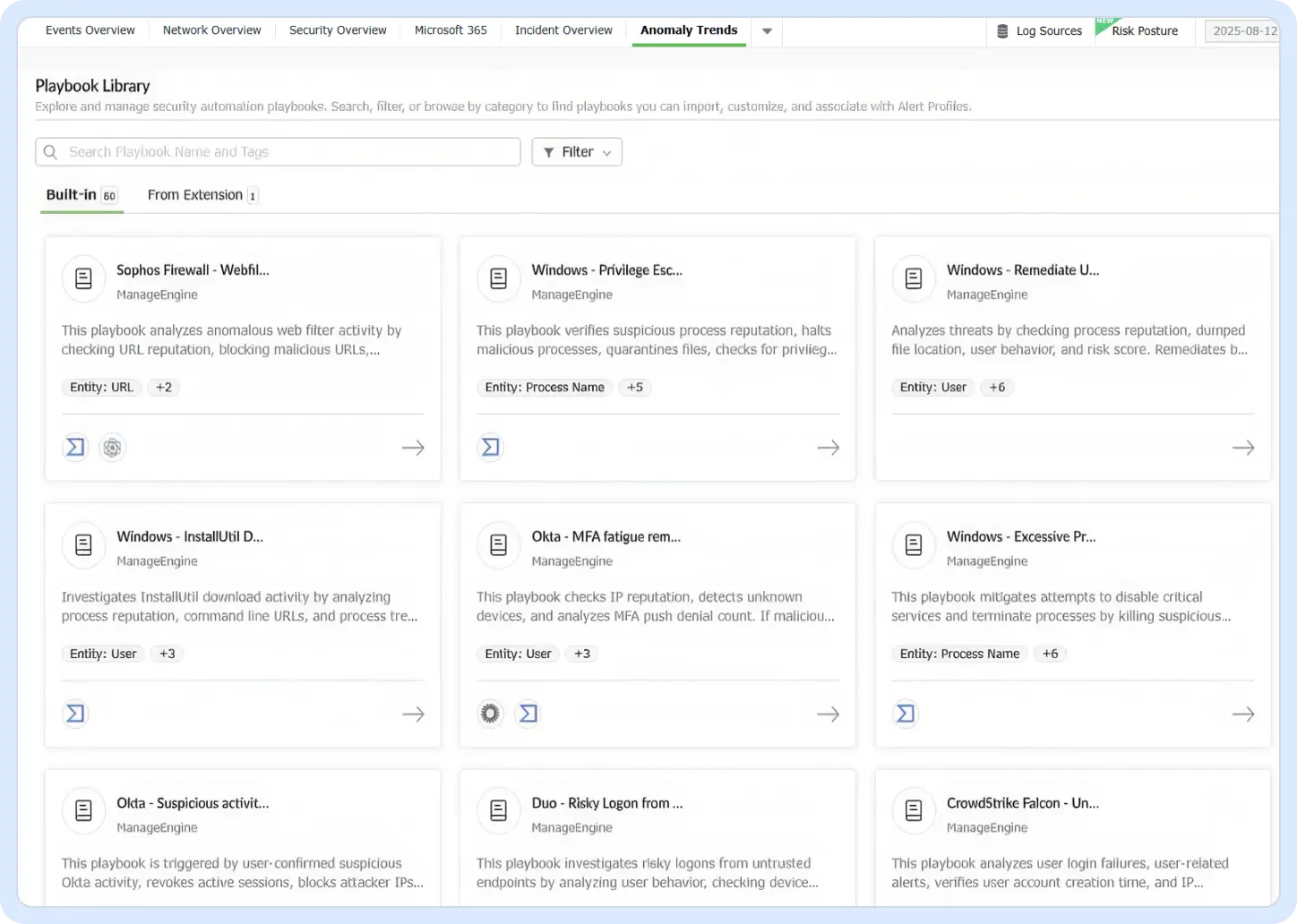
  • Automate ransomware incident response in healthcare with predefined and custom workflows and playbooks.
Learn more  
Stop public facing resource exploits

Detect and respond to insider threats in healthcare environments

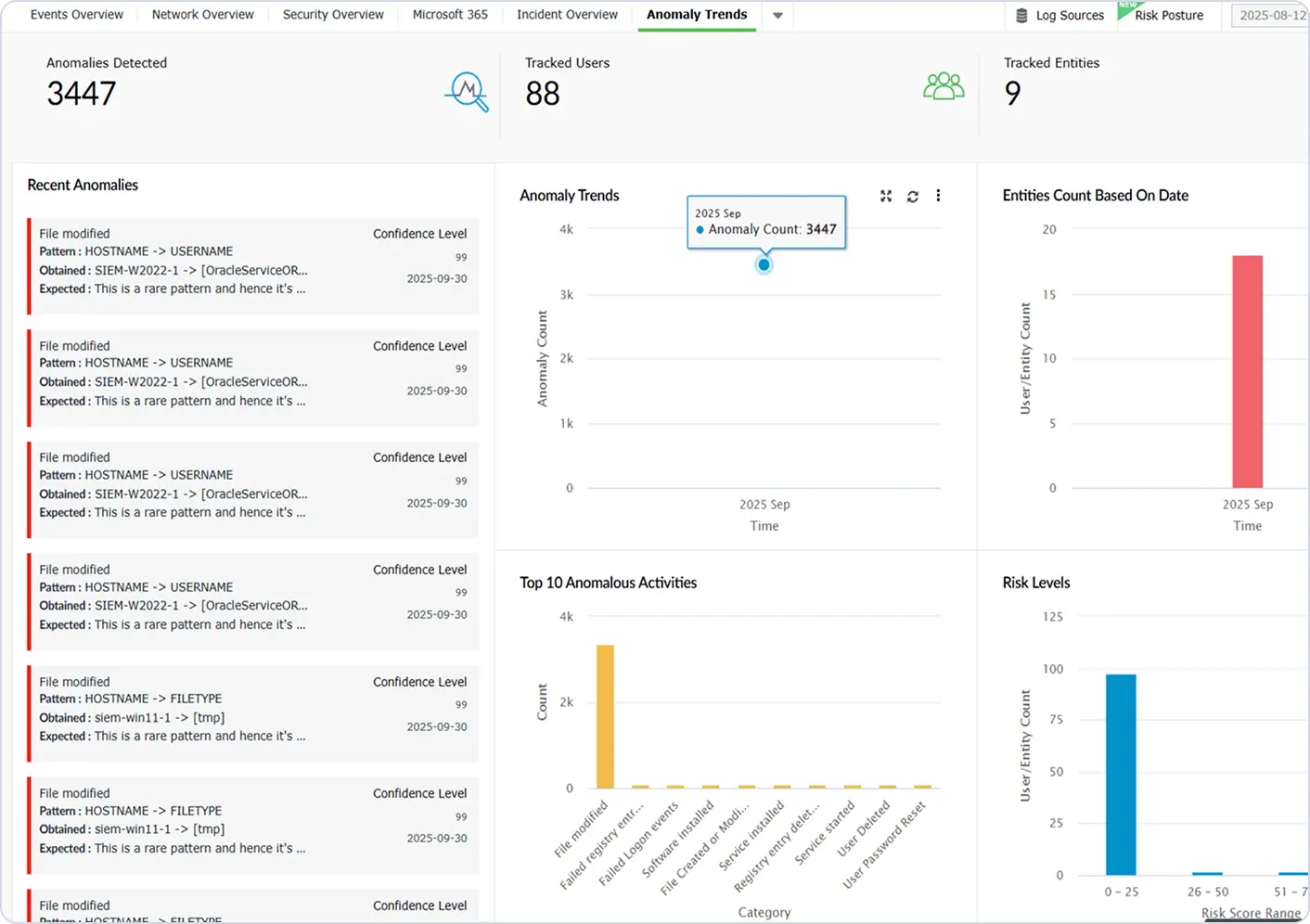
  • Identify malicious and negligent insider threats early using ML-driven anomaly detection across your healthcare network infrastructure.
  • Flag high-risk actions including unauthorized downloads of patient records, bulk access to sensitive health information, and privilege misuse by both clinical and non-clinical staff.
  • Track anomalies across hosts and users to build a complete picture of insider activity and preempt data theft or sabotage before it occurs.
  • Build custom anomaly models and customize risk scores based on your unique security requirements.
  • Spot risky behavior with dynamic risk scores and focus on high‑priority threats to reduce breach impact.
  • Leverage user identity mapping, peer group analysis, and seasonality modeling to improve the accuracy of insider threat detection and reduce false positives.
Learn more  
Stop public facing resource exploits

Ensure continuous patient safety with efficient incident management

  • Reduce mean time to respond to security incidents by automating incident response with workflows and playbooks.
  • Minimize clinical and operational downtime through proactive incident detection, assessment, and resolution.
  • Enhance accountability and streamline incident management with ticketing tools that tracks incident progress from detection to closure.
  • Eliminate delays caused by manual triage and assignment by automatically routing incidents to system administrators.
  • Reduce risks with automated remediation workflows tied to alert profiles.
  • Enable contextual incident investigation and visual process hunting with incident workbench
Learn more  
Detect rogue processes

Ensure HIPAA compliance and simplify regulatory audit reporting

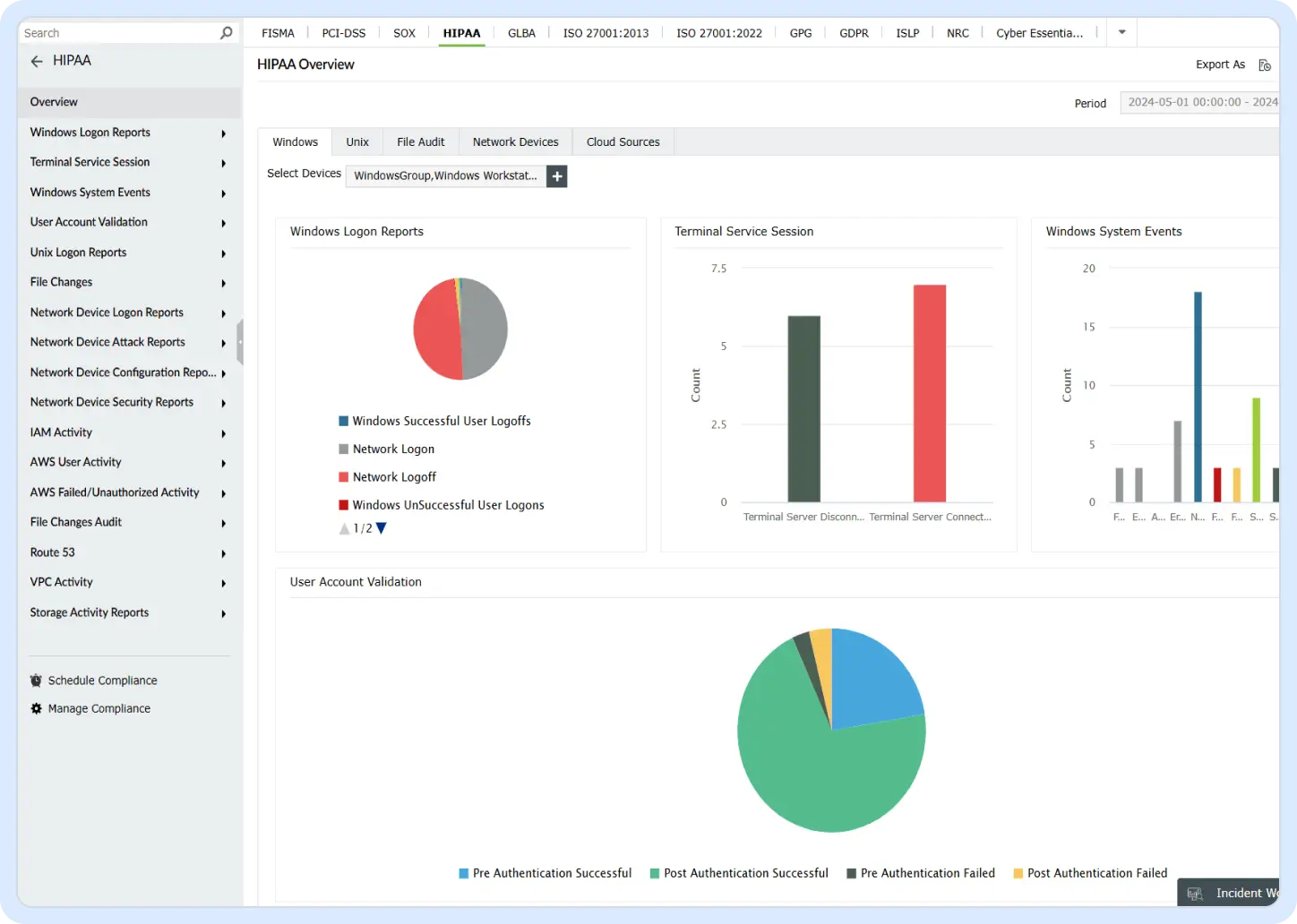
  • Meet HIPAA's audit control requirements with full visibility into user activity, IAM events, and endpoint behavior across clinical and administrative systems.
  • Strengthen access governance by capturing granular logs of permission changes, role modifications, and user provisioning events.
  • Simplify compliance with ready-to-use, audit-ready compliance reports for HIPAA and HITRUST CSF.
  • Track every file activity, including creation, modification, deletion, and renaming.
  • Enable quick response with real-time alerts for potential compliance violations.
  • Retain logs securely for conducting forensic investigations and demonstrating due diligence to auditors.
Learn more  
Identify and cut off malicious sources

Patient safety for clinicians. Cybersecurity excellence for IT teams.


Clinicians

Patient-care continuity

  • Uninterrupted EHR access, safeguarded by real-time monitoring
  • Continuous protection for PHI and sensitive patient data
  • Secure telehealth platforms for private virtual consultations
 

IT security teams

Cybersecurity operations

  • Unified visibility across 750+ log sources and medical devices
  • ML-driven detection of ransomware and insider threats
  • Automated response with audit-ready HIPAA reports

Awards and Recognitions


Transform healthcare security with a SIEM solution like Log360

  • Log360 is an essential component in our organization that made our job hassle-free, and I would definitely recommend it to other healthcare organizations that are seeking a SIEM solution.

    Lonnie Lehman
    Director of IT and cybersecurity operations at Crusader
  • I needed something that could centralize logging and make it easier to track who’s doing what and when across the environment—especially with user logins, AD changes, and Microsoft 365 activity.

    Napoleon Key
    Network administrator at Hendry Regional Medical Center
  • Once our network devices reboot, we would lose the logs previously…. [With Log360,] a device can lose power, and we'll be able to see what happened in the log. We’re able to drill down to the information we need right away, and we feel confident that if asked, we’d be able to provide the information needed [for HIPAA and NIST SP 800-53 audits].

    Toby D. Martinez,
    Administrator, The New Mexico Department of Health
1/4

Explore more resources

See all resources  
 
Healthcare

SIEM in healthcare cybersecurity:
Challenges, use cases, and compliance

Learn more
 
 
Healthcare

Cybersecurity in telehealth:
A strategic guide for CISOs in healthcare

Learn more
 
 
Healthcare

Cybersecurity threats in Indian healthcare:
6 strategies to tackle them

Learn more
 
 
Healthcare

10 AWS activities to track for improved cloud security in healthcare

Learn more
 
Third-party integrations

Key integrations and extensions

Log360 caters to enterprise security needs by offering native and third-party integrations and extensions. These integrations help enterprises reduce operational complexity and strengthen compliance through automated log management across multiple platforms.
Third-party integrations: Key integrations and extensions

Your privacy and security is our priority

Our compliance with global security and privacy standards is validated through continuous testing and certified assessments.


Frequently Asked Questions

What is cybersecurity in healthcare?

Cybersecurity in healthcare refers to the strategies, policies, and security tools used to protect healthcare systems, patient data, medical devices, and hospital networks from cyberthreats such as ransomware, phishing, insider attacks, and data breaches. It ensures the confidentiality, integrity, and availability of sensitive health information while also supporting regulatory compliance, patient safety, and uninterrupted care delivery.

Why is cybersecurity important in healthcare?

Healthcare organizations handle highly sensitive patient and research data, making them prime targets for cyberthreats. Effective cybersecurity measures help prevent data breaches, operational disruptions, financial losses, regulatory penalties, and risks to patient safety caused by cyberattacks.

What is the role of SIEM in healthcare cybersecurity?

A SIEM tool is a cybersecurity solution that collects, analyzes, and correlates log data from across healthcare environments. It helps security teams detect threats, investigate incidents, automate response workflows, and maintain compliance with healthcare regulations such as HIPAA and HITRUST CSF.

Can SIEM detect ransomware attacks in hospitals?

Yes. SIEM solutions can detect indicators of ransomware attacks by monitoring abnormal activity such as failed login attempts, unauthorized file encryption, unusual data transfers, and suspicious network behavior. Modern SIEM platforms also integrate with SOAR tools (or offer built-in SOAR capabilities) to automate containment and response actions.

How does SIEM protect ePHI?

SIEM solutions continuously monitor access to sensitive healthcare data and generate alerts for unauthorized access attempts, unusual user activity, or suspicious file modifications. They also maintain audit logs that help healthcare organizations demonstrate compliance with regulations like HIPAA.

Can SIEM secure telemedicine and cloud healthcare platforms?

Yes. SIEM solutions providing cloud security and CASB capabilities can monitor telemedicine applications, detect unauthorized access, enforce security policies, and identify suspicious activity across cloud-based healthcare environments.

What is UEBA and why is it important in healthcare?

User and entity behavior analytics (UEBA) uses machine learning to establish normal behavior patterns for users and entities. In healthcare environments, UEBA helps detect insider threats, compromised accounts, and unusual access to patient records or research data.

What is ManageEngine Log360 and how does it support healthcare cybersecurity?

Log360 is a unified SIEM solution with integrated DLP, CASB, UEBA, and SOAR capabilities built to help healthcare organizations detect threats, protect patient data, and maintain regulatory compliance. It centralizes log management across on-premises and cloud environments, provides real-time threat detection, and generates audit-ready reports for HIPAA, HITECH, and other data privacy regulations.

What types of cyberthreats targeting healthcare can Log360 detect?

Log360 detects a wide range of threats that healthcare organizations are frequently exposed to, including ransomware attacks on hospital networks, phishing campaigns targeting clinical staff, insider threats involving unauthorized access to patient records, credential-based attacks, and APTs. Its correlation engine links events across the network to uncover complex, multi-stage attack patterns that evade traditional detection tools.

How does Log360 protect ePHI?

Log360 uses integrated DLP capabilities to continuously monitor, detect, and block unauthorized transfers of ePHI across endpoints, email, cloud applications, and removable media. It scans for PHI stored in your environment, flags unauthorized access attempts, and generates real-time alerts to help healthcare security teams respond before data is exfiltrated.

How does Log360 address insider threats and privileged account misuse in healthcare?

Insiders with access to patient records, billing systems, or medical device controls pose a significant risk. Log360 uses behavioral analytics to flag unusual access patterns, excessive privilege use, or attempts to bypass security controls. This allows healthcare IT teams to contain internal threats before they compromise sensitive patient data or disrupt operations.

Does Log360 support compliance with regulations beyond HIPAA, such as HITECH or the GDPR?

Yes. Log360 provides audit-ready compliance reports and monitoring capabilities that support a range of healthcare and data privacy regulations, including HIPAA, HITECH, the GDPR, and other regional data protection mandates.