Eliminates manual hand offs between tools:
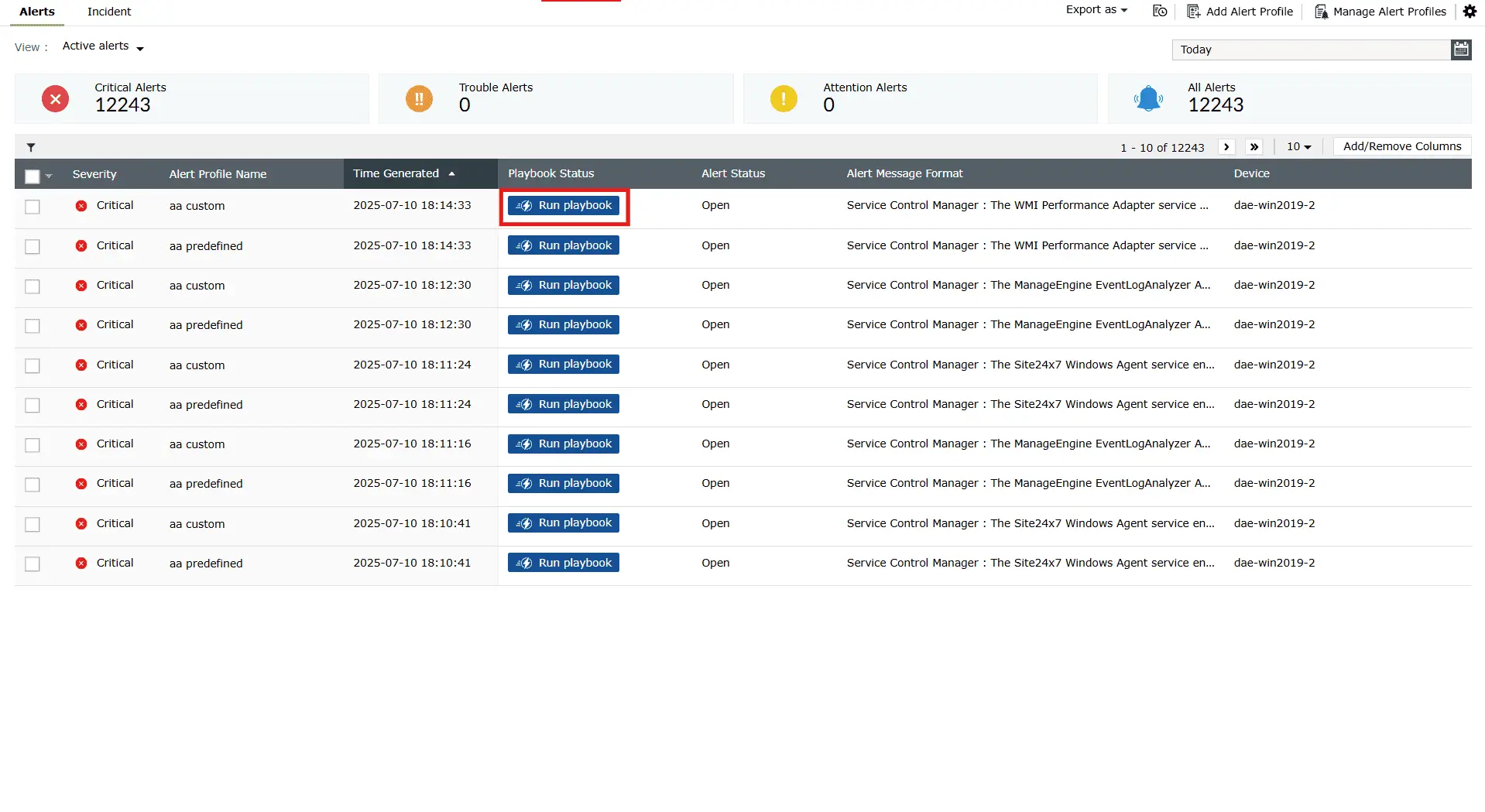
When an incident requires action across email, endpoint, identity, and ticketing systems, analysts typically copy and paste between consoles. Orchestration playbooks coordinate those multi-step actions into a single automated workflow, reducing mean time to respond (MTTR) by up to 60%.
Centralizes credential management:
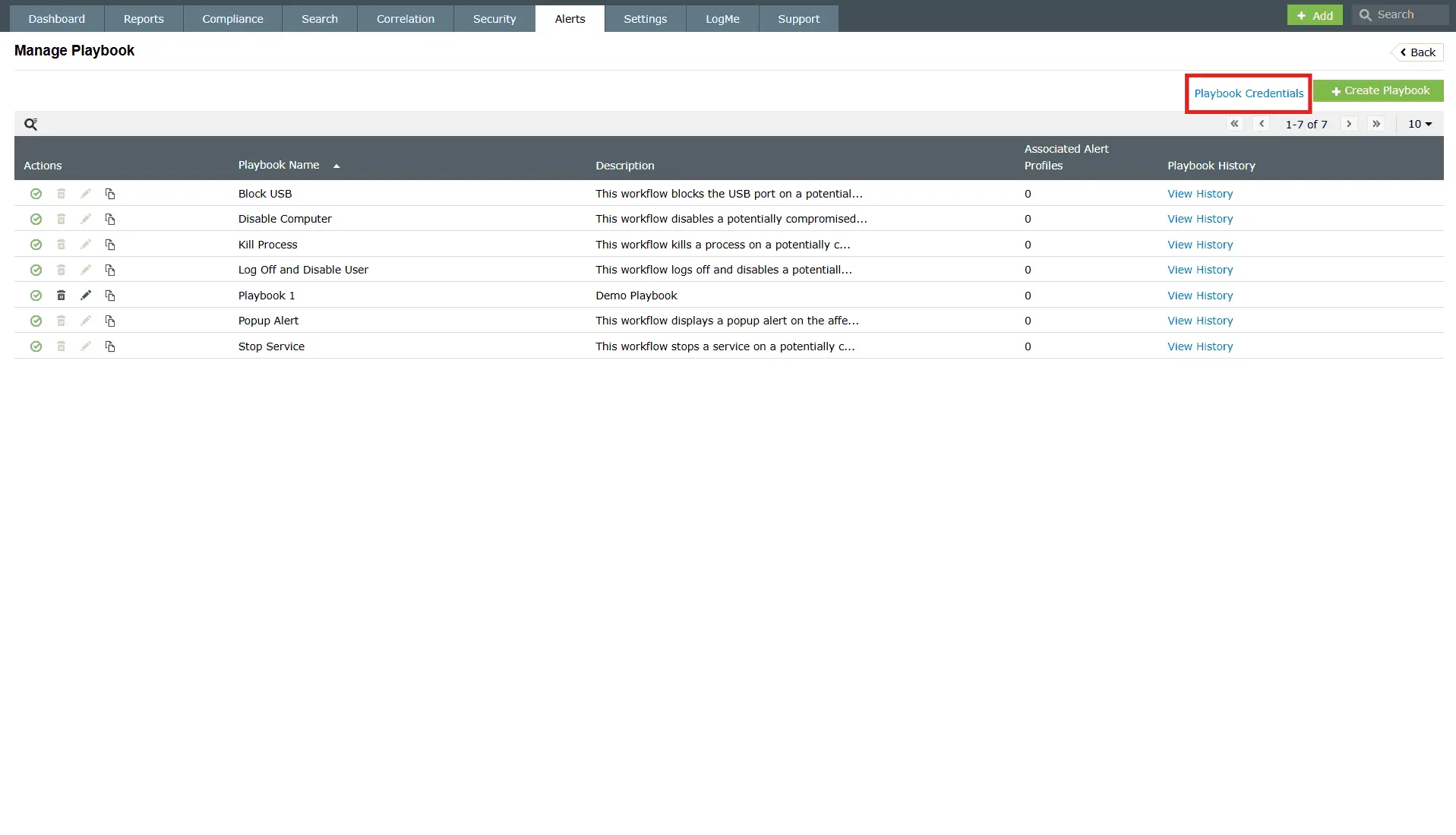
A hardened Playbook Credentials stores authentication credentials for Windows, Linux, firewalls, and cloud platforms. Playbooks reference stored credentials at runtime. Analysts never see or handle raw secrets.
Enables rapid response design:
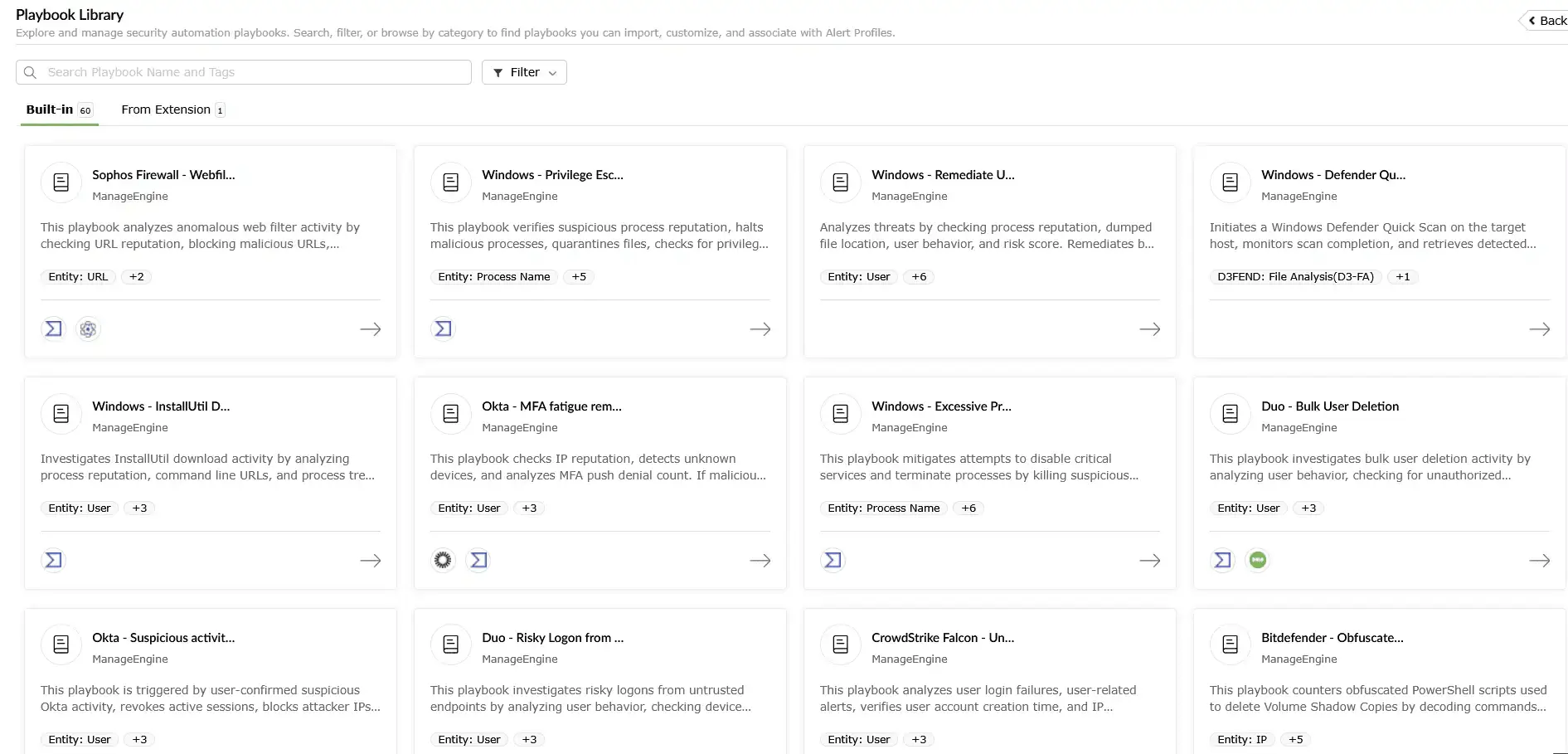
Drag-and-drop playbook builders (Zoho Qntrl engine for cloud, block-based builder for on-premises) let analysts design multi-step workflows without scripting. For advanced use cases, Python and Deluge custom functions are available.
Connects to your existing stack:
Bidirectional integrations with ServiceDesk Plus, Jira, ServiceNow, Zendesk, Endpoint Central, and security tools. Data flows in (alerts, context) and actions flow out (tickets, blocks, account changes) through prebuilt connectors.
Provides full execution auditability:
Every playbook run is logged with step-by-step status, timestamps, inputs, and outputs. Three months of execution history is retained per organization. Credential configurations and playbook associations are visible from a single management console.