Chapter 7:
Empower the human element
Great CISOs think like business strategists who happen to specialize in security. They consistently anticipate market shifts, regulatory changes, and emerging threats long before they become critical issues, positioning their organizations to capitalize on opportunities. Cybersecurity leaders need a forward-thinking approach to transform security into a competitive differentiator that drives sustainable growth. Let's take a look at some ways CISOs can stay on top of their game.
1. Build a strategy and not a stack
Security must serve business objectives, but that cannot be achieved by buying every new tool on the market. Instead of reacting to trends, it's important to stop and ask: “What risks matter to us right now?” and “How does security accelerate the company’s goals?” Whether the organization is scaling into new markets or migrating to the cloud, the successful CISO tailors their security roadmap to match that growth. They participate in strategic planning sessions, speak the language of business risk, and quantify security investments in terms that resonate with executive leadership. This approach avoids a bloated stack of underutilized products and creates a clear, purpose-driven security posture.
2. Measure what matters
Translate security outcomes into measurable, business-relevant KPIs. Going beyond vulnerabilities and alerts, CISOs should measure how security enables trust and operational continuity. For example, reducing the MTTD or MTTR or increasing the percentage of systems patched within SLA shows concrete progress. When these metrics are connected to larger goals, such as better uptime or improved audit outcomes, it builds credibility at the executive level.
3. Stay plugged into the threat landscape
Threat actors evolve constantly, and so should CISOs. For security leaders, staying informed through peer communities, threat intelligence feeds, analyst briefings, and security forums is crucial. More importantly, CISOs should tailor this data to their organization’s context. Instead of reacting to every alert, they assess which tactics, techniques, and procedures (TTPs) are most relevant to their industry or threat profile and build defenses around them.
4. Promote a security-first culture
Security isn’t effective if it lives in a silo. CISOs should emphasize engaging stakeholders across all levels of the organization. Why? Because their effort recognizes that the human element remains both the greatest vulnerability and asset in security. Rather than focusing solely on compliance-driven security awareness, CISOs should craft programs that drive meaningful behavior change. Whether it’s through training programs, gamified phishing simulations, or cross-functional drills, they normalize security as a day-to-day concern and not just an IT problem.
5. Seek feedback and evolve
No security program is ever “done.” No matter how advanced it is, there’s always room to improve. Successful CISOs actively look for feedback from their team, stakeholders, auditors, and even red team exercises. They use that feedback to refine policies, tooling, and workflows. This continuous improvement loop ensures their strategy remains adaptive and relevant, keeping the organization ready for new challenges and maintaining alignment with business needs.
6. Talent development
Build high-performing teams. CISOs should recruit for diversity of thought and experience, bringing in multiple perspectives to solve complex problems. Beyond technical skills, they value curiosity, adaptability, and communication skills. Security leaders stay ahead by investing in their team’s development, creating clear career paths, and mentorship opportunities. They encourage innovation and allow for calculated risks, knowing that a culture of fear stifles the creativity needed to out-think adversaries.
7. Risk-based approach
Rather than attempting to solve every security challenge simultaneously, CISOs should apply rigorous risk assessment methodologies to prioritize initiatives. They understand their organization’s risk tolerance and align security controls accordingly, implementing “just enough” security based on asset value and threat exposure. The focus is on using data-driven insights to maximize the impact of limited security resources. CISOs that clearly communicate residual risks to leadership and stakeholders ensure informed decisions about risk acceptance or mitigation.
Key CISO challenges when "everything is already in place"
Enterprises often achieve compliance while harboring serious security weaknesses, creating a “mature environment” paradox. This might be due to controls implemented (often poorly, with deviations from protocol) just to satisfy audit requirements, or siloed security data that lack supporting processes resulting in the illusion of completeness. Security teams might also miss hidden inefficiencies and gaps caused by tool sprawl and manual process dependencies. So, how can CISOs overcome this challenge? Let’s break it down with a use case.
Meet Mr. Justin Case, a young, smart, and overly-cautious (but well-meaning) IT leader. Justin joined a mid-sized regional bank as CISO where his predecessor had built what appeared to be a textbook security program. The previous CISO, backed by an experienced team and adequate resources for over seven years, was credited with excellent compliance scores, an enterprise-grade security stack, and recently passed a comprehensive regulatory examination with flying colors. By now, we know that if a CISO has inherited all three, they’ve either found the holy grail or walked into the setup for a very expensive joke.
A few months into his new role, Justin noticed hiccups in the supposedly well-oiled machine. The security team was drowning in time-consuming manual work. Analysts spent hours correlating alerts across security tools. A simple incident investigation required logging into multiple systems, manually copying data between spreadsheets, and coordinating through email chains. The digital banking initiative, critical for competitive survival, faced constant delays due to security review bottlenecks. Each new digital service required separate security assessments from different teams, with no standardized process. Business leaders viewed security as an obstacle to innovation. Furthermore, despite $2 million in annual security tool spending, the bank discovered a supply chain compromise only when their cyber insurance company’s threat intelligence provider notified them. The existing SIEM was perfectly configured for known attack patterns but missed behavioral anomalies that indicated advanced persistent threats.
Justin faced a difficult situation:
- Success trap: How do we justify changing a security program that regulators consider successful?
- Resource reality: The budget was fully committed to existing tools and staff, with little room for new investments.
- C-suite skepticism: Business leaders questioned why security needed attention when it appeared to be working fine.
As a first step, Justin went beyond the surface-level compliance reviews to uncover operational realities. She discovered that the bank’s eight security tools operated in complete silos. The SIEM ($400K annually) received logs but couldn’t automatically correlate with vulnerability scanner results. The endpoint protection platform ($150K annually) detected threats but couldn’t automatically trigger network isolation through the firewall. The identity management system ($300K annually) operated independently of the privileged access management tool, creating duplicate identity repositories.
Justin worked with his team to implement an integration-first architecture using SOAR and established a centralized data repository with API connectivity to all existing tools. Critical security processes like incident response, vulnerability management, and security reviews were automated.
The next phase involved advanced analytics. Justin set up a threat hunting program to conduct weekly automated hunts using behavioral analytics. With automated threat intelligence across tools, the program would identify priorities based on business asset criticality and threat landscape. Additional automated compliance reporting and executive-friendly dashboards help align teams and facilitate decision-making.
After 18 months, incident response time was reduced to 30-45 minutes through automation and the MTTD improved from weeks to hours because of the behavioral analytics integration. Digital banking security reviews were completed in days, accelerating product launches. Most importantly, the firm saw a 25% reduction in security operational costs while improving capabilities. Justin saw an opportunity to amplify the organization’s cybersecurity posture without having to tear an entire system apart, saving the bank millions in revenue.
Now, let’s revisit the supply chain compromise. Justin’s assessment revealed a critical blind spot: the security team treated vendors as trusted partners purely based on a signed contract. CISOs should treat the supply chain as an extension of their own infrastructure.
How can leaders audit this invisible perimeter?
-
1. Demand visibility:
Requiring a Software Bill of Materials (SBOM) from software vendors transforms a “black box” application into a transparent inventory of dependencies.

Parthiban
Periyasamy
Security Architecture
and Solutions
An SBOM plays a vital role in secure software development; understanding what’s inside a product is critical. Customers, especially from enterprises and government organizations frequently request SBOMs as part of their due diligence to ensure software security and compliance. As providers, it’s our responsibility to respond promptly and accurately to these requests. This ensures trust, aligns with regulatory compliance, and demonstrates our commitment to delivering secure and reliable products.
-
2. Prioritize integration:
Vendor risk data often lives in spreadsheets within the Legal or Compliance department, invisible to the SOC. By feeding vendor risk scores and alerts into the operational security stack (SIEM/SOAR), the security team gains the context needed to block compromised connections immediately.
-
3. Right to audit:
The CISO should partner with Legal to ensure every vendor agreement includes strict notification SLAs for breaches and the right for the organization to conduct independent security assessments when risk indicators spike.
Takeaways:
- Look beyond compliance: Perfect audit scores often hide serious operational gaps and inefficiencies.
- Integrate for change: Connect existing tools through automation and enable business goals.
- Quantify business impact: Show how security delays cost revenue and productivity.
- Start with quick wins: Deliver immediate improvements to build credibility for larger changes.
The first 48 hours in a breach
Under normal circumstances, a CISO builds and architects. However, when a breach is confirmed, the organization enters “wartime.” The CISO’s role shifts immediately to a crisis commander. The organization will look to security leadership for certainty. If the CISO panics, the business panics. If the security team speculates, they create legal liability. The first 48 hours define not just the incident, but the future of the company’s reputation.
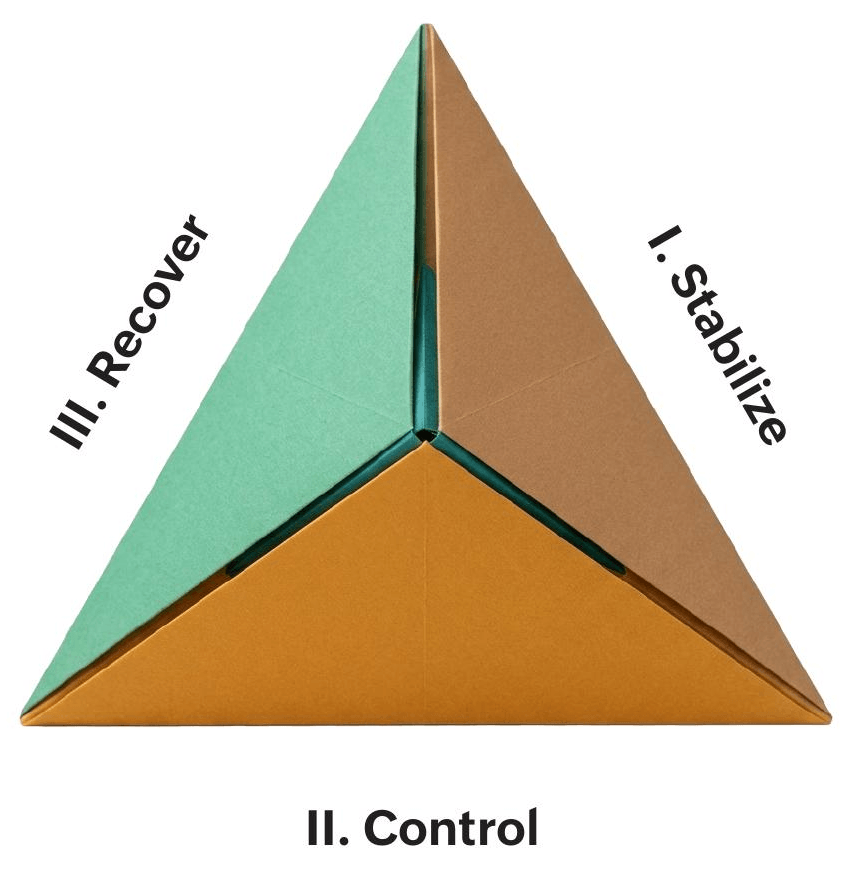
Phase 1: The fog of war (Hours 0-4):
The immediate moments after detection are defined by confusion. The primary goal is to stabilize the environment and establish command.
Activate out-of-band communication:
Security leaders must assume email, chat, and VoIP are compromised. The crisis management team should move to a pre-established secure channel to prevent the adversary from monitoring the response.
Establish legal privilege:
Before writing an incident report, the CISO should engage general counsel. The investigation should be directed by Legal to ensure that early drafts and findings are protected by attorney-client privilege.
The “stop the bleeding” decision:
The CISO might face the difficult decision of taking revenue-generating systems offline to contain the spread. This requires prealigned authority from the CEO to execute without delay or committee approval.
Phase 2: Controlling the narrative (Hours 4-24):
Once the technical team is working to contain the threat, focus shifts to the Board and the business. Here, organizations should follow the “one voice” rule. Information vacuums create rumors. The CISO should designate a single source of truth and no one else should speak to the status of the incident.
Phase 3: Resilience and recovery (Hours 24-48):
By day two, adrenaline fades and fatigue sets in. This is where critical errors often occur. Mandatory shift rotations for technical leads are essential.
Drafting the external statement:
If regulatory notification (for example, the GDPR, SEC) is required, the CISO works with Legal and Crisis PR to draft a statement that highlights transparency regarding impact.
Focus on business continuity:
While the SOC fights the threat, the CISO should pivot to business continuity planning. The value here lies in keeping the business alive while crisis management takes place.
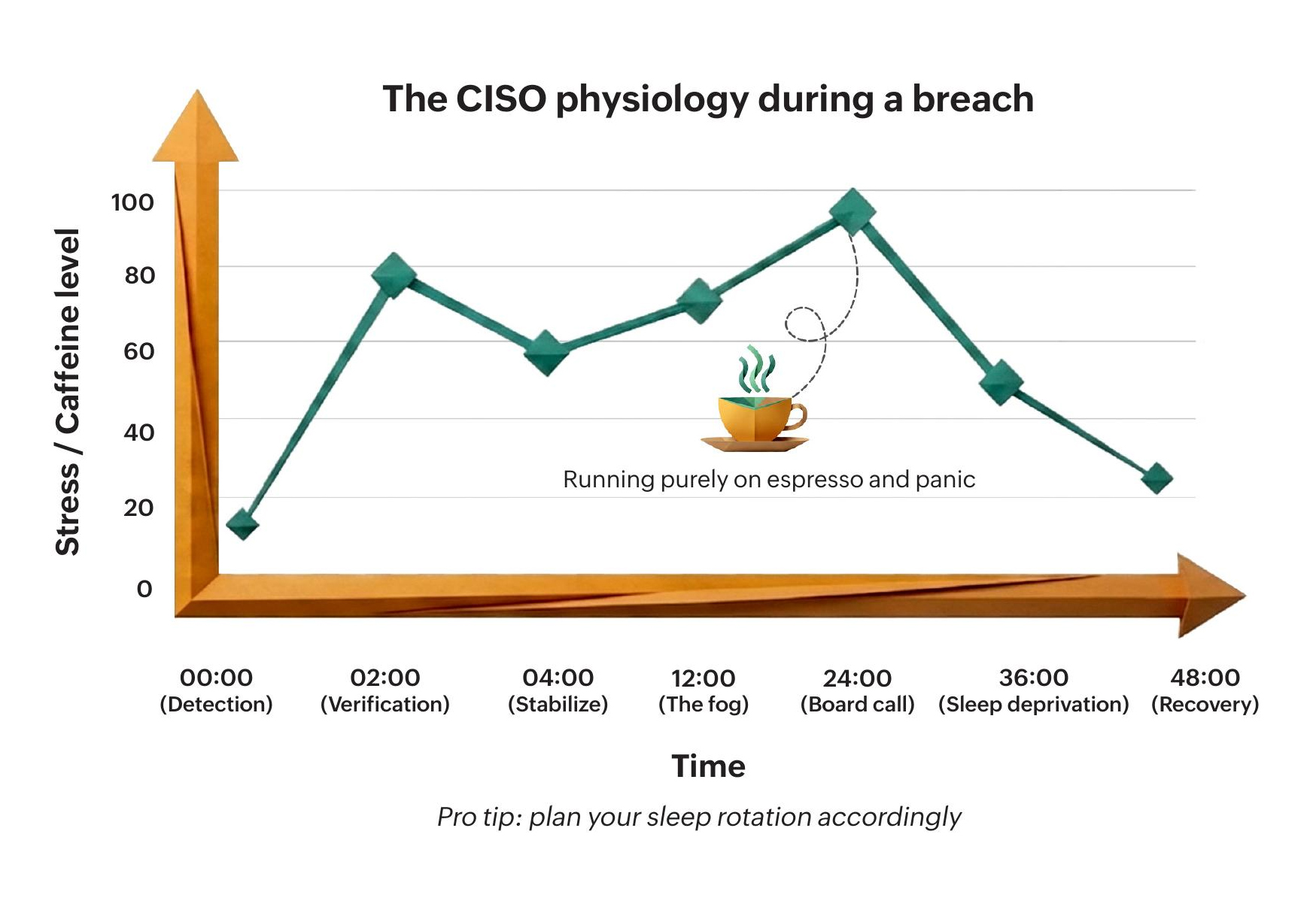
Ultimately, an organization’s survival during a breach is determined less by the sophistication of the attack and more by the discipline of the response. The CISO should be the calmest person in the room, communicating incident updates with clarity, options, and a strategic path forward. The objective is to navigate the chaos with enough precision to preserve trust and reputation for the recovery phase that follows.
Reducing burnout in a 24x7 threat landscape
Cybersecurity professionals face an unrelenting battle against constantly evolving threats. The stakes are high, and the pressure is constant. Security teams are often expected to be “always on,” responding to alerts, managing crises, and staying one step ahead. Over time, this creates a perfect storm for burnout, affecting both team performance and individual wellbeing. CISOs should recognize and address the systemic issues before it undermines their entire security program.
Infinite meeting loop
One major source of burnout comes from poor prioritization and fragmented schedules. Security teams frequently find themselves pulled into too many cross-functional meetings that don’t directly contribute to their core responsibilities. These disruptions eat into focus time and delay important tasks. While cross-functional collaboration is essential, CISOs need to implement meeting hygiene protocols that protect their teams’ time. This includes requiring clear agendas and objectives for every meeting and establishing workflows for escalations and collaboration.
Action items
- Well-defined chain of command
- Structured collaboration with DRIs only
“IT can fix it”
Organizations often position security teams as the ultimate safety net, creating an unrealistic expectation that they can protect the business regardless of others’ actions. This mindset leads to security being called in to “fix” problems created when other departments circumvent established security protocols. Skipping security reviews, introducing shadow IT, or neglecting patching responsibilities and then leaving the cybersecurity team to clean up the mess. This not only creates friction but also forces security teams into reactive firefighting mode. CISOs can combat this by clearly defining security responsibilities across the organization, implementing formal security exception processes with executive accountability, and ensuring security incidents caused by protocol violations result in documented learnings. This shifts the narrative from “security as the hero” to “security as a shared responsibility”.
Action items
- Planned roles, responsibilities, and exceptions
- Documentation for security protocol violations
Poor IT hygiene
If an organization doesn’t invest in strengthening its infrastructure, it leaves security teams constantly exposed. Teams end up spending more time applying band-aid fixes at the expense of building long-term resilience. This is worsened by unsupported legacy hardware and software that remain in use because replacing them is viewed as expensive or inconvenient. The result is a backlog of known vulnerabilities that the security team is held responsible for, but often has little authority to address directly. Here’s where CISOs must reframe these challenges from technical issues to business risks with quantifiable impacts. They can also create transparent risk registers that quantify exposure. This shifts accountability to business owners through formal risk acceptance, which will inevitably lead to necessary upgrades.
Action items
- Push for updated hardware and software
- Ensure decision-makers are aware of quantifiable risks
Security awareness gap
When employees fall for phishing attacks, store passwords insecurely, or bypass basic controls, the consequences fall on the security team. This reactive cycle prevents them from making progress on strategic initiatives. However, these are symptoms of a larger cultural gap. CISOs should transform awareness into an ongoing program targeting specific behavioral changes. Through personalized training for different roles and by celebrating security champions, they can design a realistic security program.
Action items
- Encourage user education
- Identify and support ground-level awareness initiatives
Beyond addressing root causes, CISOs should structure security operations to be sustainable. This includes implementing proper work shifts for 24/7 coverage, establishing clear escalation protocols, and ensuring no team member is perpetually assigned to high-stress responsibilities. Automated triage systems can reduce alert fatigue, while machine learning solutions increasingly filter out noise to focus human attention where it’s truly needed.