Chapter 4:
Architect a scalable defense
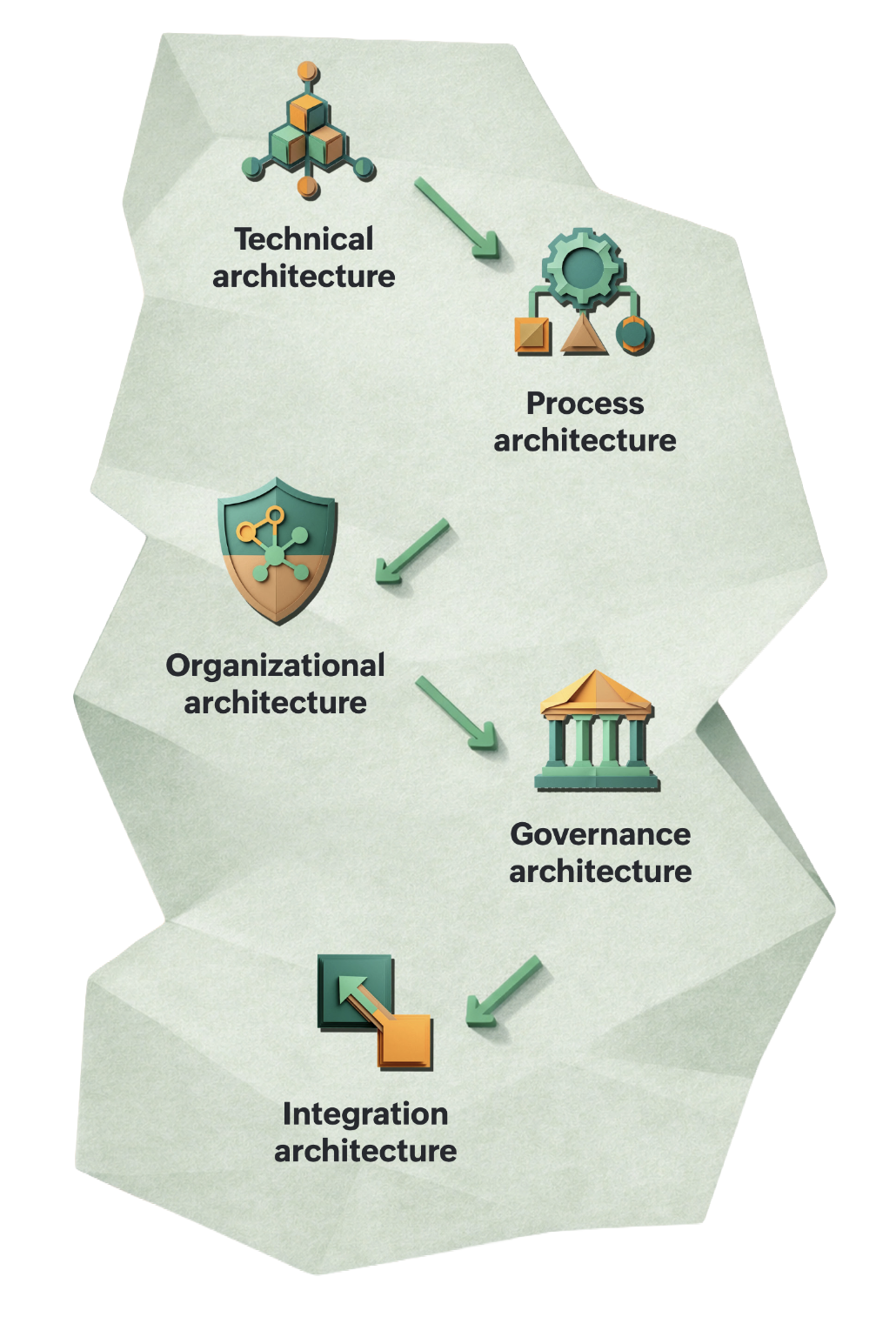
Technical architecture
Identify a standard that aligns with the industry. Without an assessment, your organization is essentially flying blind. It's easy to mistake the strength of a security program based on great audit scores, but how do we identify where we're actually vulnerable or wasting resources? An assessment provides concrete evidence to show executives what's working, what's broken, and what investments will provide the biggest risk reduction. It also helps prioritize limited budget and team resources on the areas that matter most to business instead of just adding more security tools randomly. Think of it as a health checkup for a security program: we need to know the current condition before creating an effective treatment plan.
NIST cybersecurity framework
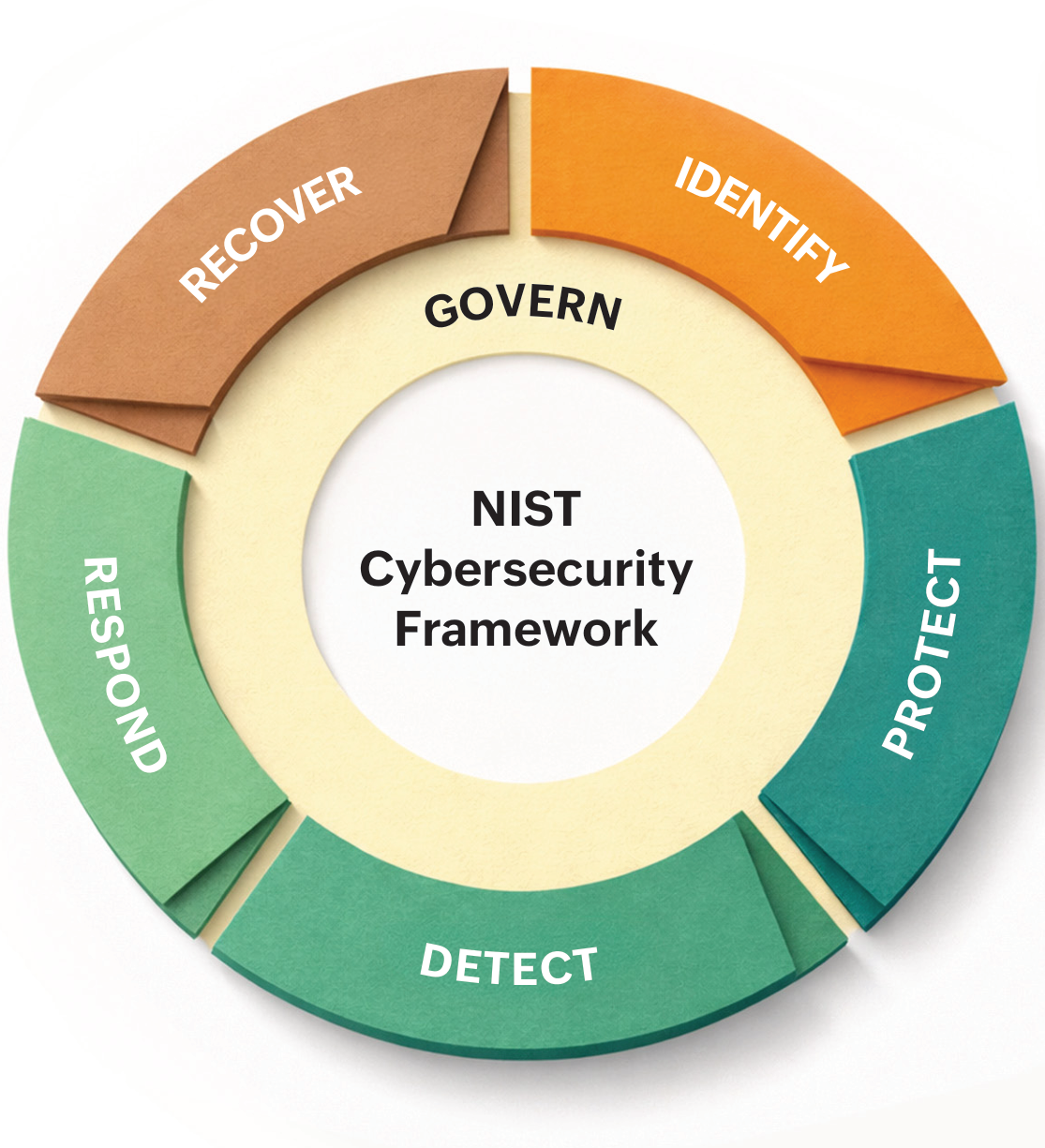
The NIST framework is ideal for organizations needing to balance multiple compliance requirements. Its five core functions (Identify, Protect, Detect, Respond, and Recover) ensure comprehensive security coverage while remaining technology-agnostic and scalable for organizations of any size. Essentially, NIST transforms cybersecurity from "we need better firewalls" into "we're reducing business risk by X% through these specific security investments."
Cloud security alliance controls
CISOs in cloud-heavy environments can work around cloud security alliance (CSA) because it's purpose-built for modern cloud architectures that traditional frameworks don't adequately address. It specifically tackles the complexities of shared responsibility models, clearly defining what the cloud provider secures versus what the organization is responsible for, and provides controls for multi-cloud, hybrid, and cloud-native environments. The framework addresses unique cloud challenges like container security, serverless computing, API security, and data sovereignty that aren't well covered by older frameworks designed for on-premises infrastructure.
ISO 27001/27002
ISO 27001 is ideal for businesses that demand formal, internationally recognized cybersecurity certifications. It requires third-party audits and certification, providing external validation of the security program, which is crucial when working with European customers or competing for contracts where security certification is a differentiator. While more rigid and expensive to implement than other frameworks, it delivers measurable business value through enhanced credibility and market access.
Factor analysis of information risk
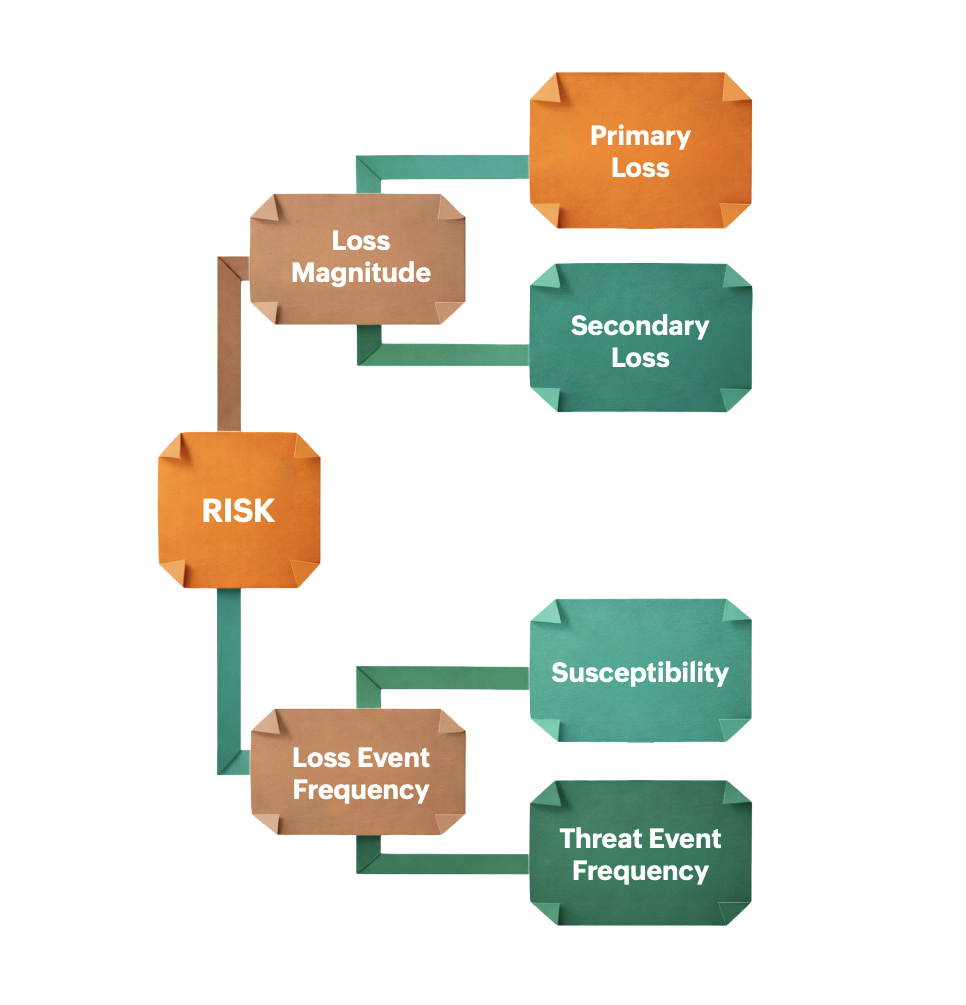
Unlike other frameworks that focus on implementing controls, factor analysis of information risk (FAIR) helps quantify the actual dollar impact of cyberthreats and the ROI of security investments. FAIR breaks down risk into two components: one, how often something bad might happen (frequency) and two, how much it would cost if it did (magnitude). It then uses data and scenarios to calculate probable financial losses. This approach is for CISOs who need to justify security budgets or prioritize investments based on business impact.
Technical architecture provides the underlying infrastructure and technology capabilities that support all security operations. CISOs should focus on designing technology systems that work together effectively and can evolve with changing business needs. In addition to the right security standard, there are five key players:
Process architecture
Process architecture defines how security operations function on a day-to-day basis, ensuring that excellent security technology translates into excellent security outcomes. For CISOs, this means:
- A scalable incident response framework that can handle any challenging scenario. This includes clear escalation criteria that help security teams focus on the most critical threats, communication protocols that keep stakeholders informed, and recovery procedures that restore business operations as fast as possible while preserving evidence for investigation and learning.
- Risk management and change management that don't work in silos. These guidelines should support time-sensitive decision making while integrating seamlessly with security operations at a broader level.
- Systematic vendor and third-party risk management, especially for enterprises that interact with hundreds of third-party services that might have access to sensitive data or critical business systems.
- Well-rounded compliance and audit management, such as comprehensive security controls, automated reporting processes that demonstrate ongoing compliance status, and exception management processes for situations where standard controls aren't appropriate or sufficient.
Organizational architecture
Organizational architecture determines how security teams are structured, how they interact with other business functions, and how security responsibilities are distributed across the organization.
In chapter one, we talked about the different models that can be adopted for operational efficiency and the skill development initiatives leaders should support. This should be combined with cross-functional integration. Organizational architecture should establish security liaison roles, create cross-functional governance committees, and develop shared metrics that align security outcomes with business objectives.
Above all, businesses need security culture and awareness, such as a systematic approach to create a security-conscious organization. This goes beyond traditional security training to include role-specific security education, security awareness campaigns that connect to business objectives, and incentive systems that reward security-conscious behaviors.
Governance architecture
How is security accountability distributed within an organization? Governance architecture provides clear decision-making processes while maintaining flexibility to respond to emerging threats and needs. The top priorities are:
- ◆ Governance structures: Clear roles and responsibilities
- ◆ Risk appetite and tolerance framework: Criteria to accept, mitigate, and avoid
- ◆ Security policies and standards: Deployment, communication, and training
- ◆ Resource allocation: Framework for investment priorities and budget planning
- ◆ Regulatory management: Maintaining positive relationships with regulators and auditors
Integration architecture
Integration architecture ensures that technical, process, and organizational components work together effectively rather than operating as independent systems. It defines information flow and sharing, ensuring that threat intelligence reaches the systems that can act on it, incident information is shared with stakeholders who need to make decisions, and security metrics and reporting provide insights that support continuous improvement. This is often the most challenging aspect of security architecture because of the large-scale coordination efforts it requires. CISOs should ensure communication strategies provide the right people with the right information such as executive leaders with business-focused security insights, and technical teams with operational security information.
Another key function for integration lies in workflows. For instance, embedding security requirements into procurement processes so vendor risk assessment happens automatically. Likewise, integrate security reviews into software development life cycles (SDLCs) to prevent security testing-related delays, and connect security incident response with business continuity planning to ensure security incidents are managed with appropriate business context.
Additionally, security tools should work together as integrated systems for technology platform integration. This can be done through API strategies for automatic information sharing between security tools, SSO and identity management systems, and data standards that ensure security information can be correlated and analyzed across different tools and timeframes.
Building a security team
Before we get into the specifics of a CISO's team, there's one important question we should answer: Does IT report to the CISO? Ideally, no. IT and security are individual entities that collaborate but maintain checks and balances.
Typically, the CISO reports directly to the C-suite to maintain independence in security decisions. The IT team reports to a CIO or IT director and focuses on maintaining the technical infrastructure and implementation. This separation helps avoid conflicts of interest. In other words, someone designing infrastructure cannot also audit it for security.
Organizations might have different roles and responsibilities under a CISO depending on their size, industry, regulatory obligations, risk appetite, and technological complexity. Smaller organizations often rely on a lean security team that handles a broad range of responsibilities, while larger enterprises have specialized roles. Highly regulated industries or those managing sensitive customer data require more robust security programs and dedicated compliance staff.
Here's what a CISO office might look like in a mid-sized or rapidly growing organization:
| Function | CISO | GRC lead | SOC lead | AppSec lead | IT security lead |
|---|---|---|---|---|---|
| Security strategy and governance[Budget, board reporting, policy] | R/A | C | I | I | I |
| Threat detection and incident response[Monitoring, hunting, crisis management] | C | I | R/A | C | C |
| Compliance and risk management[Audits, vendor risk, frameworks] | I | R/A | I | C | C |
| Infrastructure and access security[Network, IAM, endpoint protection] | I | C | C | I | R/A |
| Application security[Code review, secure SDLC, and testing] | I | C | I | R/A | C |
| Culture and awareness[Training, phishing simulations] | C | R/A | C | C | I |
RACI matrix for a CISO office