- HOME
- Compliance analytics
- Compliance reporting: How unified dashboards simplify continuous compliance monitoring
Compliance reporting: How unified dashboards simplify continuous compliance monitoring
- Last Updated: September 9, 2026
- 172 Views
- 6 Min Read


There is a reason behind the popularity of one-stop shop retail brands like Walmart and Costco. Instead of buying each of your monthly essentials from a different store, you can find everything together under one roof, saving time, effort, and unnecessary complexity. Otherwise, imagine the pain of getting groceries, decor, appliances, and utilities from separate stores each! Unfortunately for most organizations, compliance reporting comes with a similar toil of fetching compliance data spread across multiple monitoring tools.
The invisible challenge of compliance reporting
For most organizations, compliance reporting begins only when an audit is around the corner. Teams scramble to pull compliance data from multiple security, endpoint, identity, and IT tools, leaving very little room to actually remediate the compliance gaps discovered in the last minute.
Truth be told, compliance isn't a one-time exercise. It demands continuous monitoring. Regardless of the framework, the questions remain the same: Are endpoints patched? Is access controlled? Is malware contained? Are backups working? Is the network secure?
Without continuous compliance tracking and reporting, organizations discover the issues only when they're preparing for an audit, and not when they first appear, often resulting in a mad, last-minute scramble. This calls for a modern compliance reporting software that combines real-time compliance analytics with automated compliance reporting to keep organizations continuously informed, not just audit-ready.
Behind the scenes of compliance reporting
At first glance, compliance reporting seems straightforward: collect the required evidence, verify the data, and generate the reports. In reality, the process is far more fragmented.
Reality #1: Compliance data is scattered across disconnected systems
Compliance reporting heavily relies on data from firewalls, endpoint management, identity and access management (IAM), vulnerability management, backup, and other security tools. Since this compliance data resides in separate consoles, teams spend more time collecting evidence than understanding their overall compliance posture.
The lack of a centralized view makes compliance tracking and reporting a fragmented and ineffective process.
Reality #2: Compliance becomes a point-in-time activity
Many organizations treat compliance reporting as a ritual that begins only when an audit is approaching. Reports are generated, evidence is collected, and compliance gaps are identified at the last minute, leaving little room for remediation.
Without continuous compliance monitoring and automated compliance reporting, organizations remain unaware of emerging risks until they become audit findings.
Reality #3: Every new framework means starting over
Whether it's PCI DSS, Cyber Essentials, or Essential Eight, most compliance frameworks assess many of the same underlying security configurations. Yet, organizations often rebuild reports, remap controls, and recreate dashboards for every new framework. Instead of reusing existing compliance analytics, teams repeatedly invest time and effort into producing framework-specific reports manually.
The shift: Same compliance reporting, better experience
For improved outcomes and effortless monitoring, organizations should proceed in replacing manual, piecemeal evidence gathering with unified, continuous compliance monitoring.

Shift #1: One source of truth, purpose-built for every framework
By consolidating compliance data from across endpoint, identity, network, cloud, and security tools into pre-built, framework-specific dashboards, organizations gain a single unified view of their compliance posture. Whether the objective is PCI DSS, Cyber Essentials, or Essential Eight, each dashboard is already aligned to the framework's controls, removing the effort of building reports and mapping evidence manually.
Shift #2: Go beyond detection with contextual remediation
Knowing that a compliance gap exists is only half the battle. What further matters is understanding why it occurred, how it impacts the overall compliance posture, and which issues should be addressed first. By combining compliance analytics with contextual insights and decision intelligence, organizations can move beyond reactive reporting and prioritize remediation based on risk.
Shift #3: AI that works like a compliance advisor
Modern automated compliance reporting doesn't stop at generating reports faster. It also helps teams interpret them. Instead of manually digging through dashboards to understand what changed, AI-driven analytics can uncover trends, explain anomalies, identify root causes, and surface actionable recommendations, making continuous compliance monitoring far more proactive than traditional approaches.
Single solution, multiple compliance frameworks

Why navigate 10 different consoles for compliance reporting when one unified dashboard can consolidate scattered compliance data? Analytics Plus, ManageEngine's unified intelligence solution, offers pre-built compliance dashboards that consolidate the right metrics into framework-specific views, helping organizations simplify compliance reporting and maintain continuous visibility.
✔ PCI DSS
The Payment Card Industry Data Security Standard (PCI DSS) is the global standard for organizations that store, process, or transmit payment card data. It spans 12 requirement areas, covering everything from network security and vulnerability management to access control and security governance.
Since evidence for a PCI DSS assessment is typically spread across multiple tools, maintaining visibility can be challenging. The unified PCI DSS compliance dashboard consolidates compliance metrics across all twelve requirement areas into a continuously updated view, enabling a continuous compliance monitoring, remediation progress, and emerging risks from one place.

See how PCI DSS compliance reporting is now easier than ever in our latest blog.
✔ Cyber Essentials
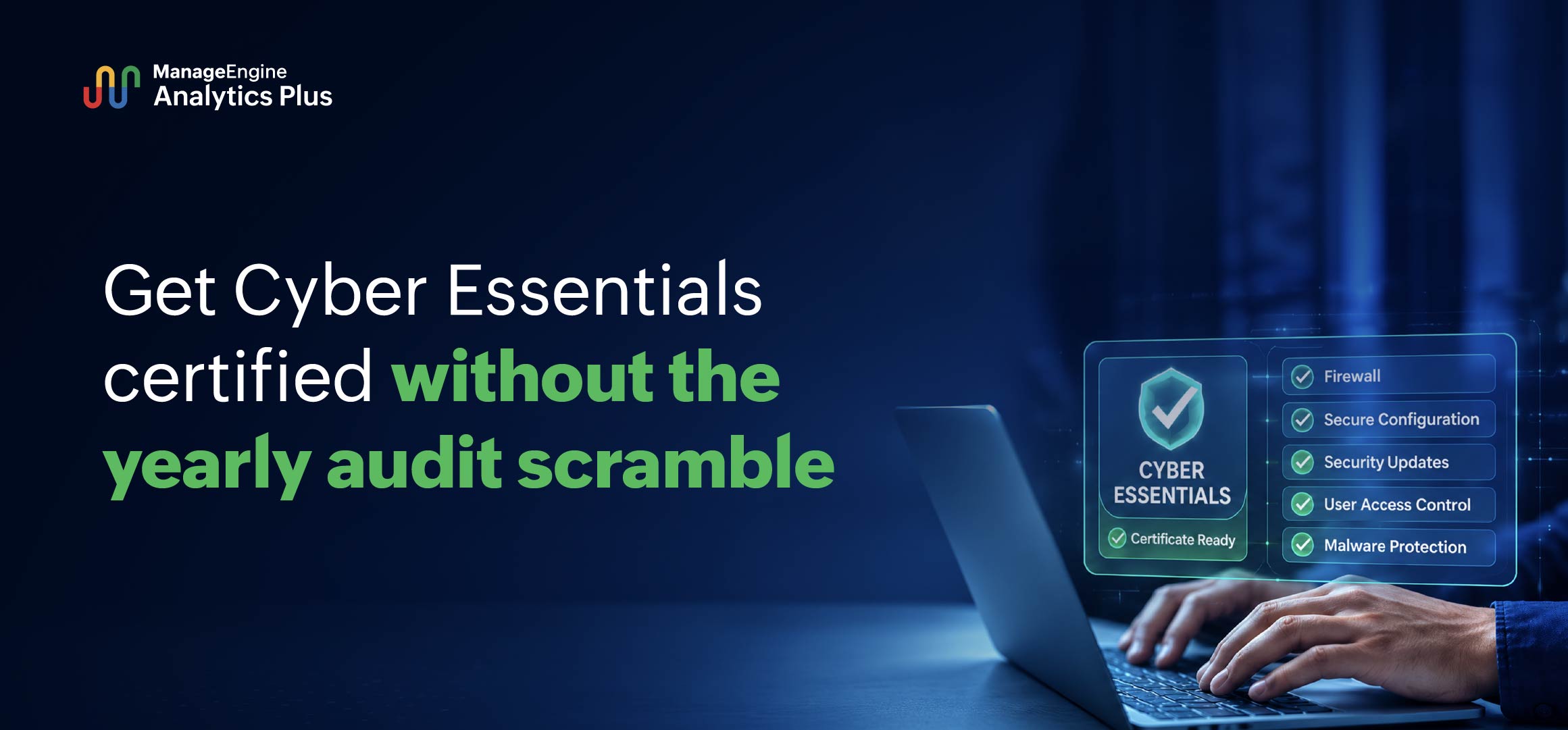
Cyber Essentials is the UK government's baseline cybersecurity certification, built around five technical controls: firewalls, secure configuration, security updates, user access control, and malware protection.
Preparing for certification also often requires manually consolidating information from multiple systems. The unified Cyber Essentials compliance dashboard continuously tracks these five controls, providing centralized visibility into security posture, compliance gaps, and remediation activities so organizations remain certification-ready throughout the year.

✔ Essential Eight
Developed by the Australian Cyber Security Centre (ACSC), Essential Eight is a maturity-based cybersecurity framework built around eight mitigation strategies, including patching, multi-factor authentication, privileged access management, application control, and backups.
Tracking these elements independently often creates fragmented visibility. The unified Essential Eight compliance dashboard consolidates metrics across all eight mitigation strategies into a unified maturity view, helping organizations with continuous compliance monitoring, prioritize improvements, and strengthen cyber resilience.

More compliance dashboards on the way!
We’re continuously expanding our library of prebuilt compliance dashboards to help organizations simplify reporting across more frameworks. If you’re searching for a specific compliance dashboard, reach out to us at analyticsplus-eval@manageengine.com.
Compliance reporting should be for your enterprise, not the audit
Compliance is not a one-time exercise. It requires continuous monitoring. The sooner compliance gaps, anomalies, and emerging risks are identified, the sooner they can be remediated. Waiting until assessment season to uncover them only turns compliance reporting into a reactive exercise instead of a proactive one.
With prebuilt, unified compliance dashboards for PCI DSS, Cyber Essentials, and Essential Eight, an intelligence solution like Analytics Plus simplifies continuous compliance monitoring while making compliance reporting more centralized, contextual, and audit-ready.
Ready to simplify your compliance reporting?
See how Analytics Plus unifies fragmented compliance data into pre-built, framework-specific dashboards for continuous compliance monitoring and year-round audit readiness.
FAQ
1. How to create a compliance report?
Creating a compliance report starts with collecting compliance data from the systems relevant to your compliance framework, such as endpoint management, identity and access management, vulnerability management, network security, and backup tools. The data is then mapped against the framework's controls to evaluate compliance status, identify gaps, and generate reports. Modern compliance reporting software simplifies this process by automating data collection, report generation, and continuous monitoring.
2. What is a compliance reporting tool?
A compliance reporting tool is a software that helps organizations collect, consolidate, analyze, and present compliance data from across their IT and security ecosystem. Such advanced analytics solutions also provide compliance analytics, automated compliance reporting, and complete visibility to help organizations continuously monitor their compliance posture and prepare for audits more efficiently.
3. What are the different types of compliance reporting?
The type of compliance reporting depends on the regulatory or cybersecurity framework an organization follows. Common examples include PCI DSS, Cyber Essentials, Essential Eight, ISO 27001, SOC 2, HIPAA, and GDPR reporting. While each framework has unique requirements, they all rely on accurate compliance data, continuous monitoring, and effective reporting to demonstrate that security controls are functioning as intended.
4. What is the process of compliance reporting?
The compliance reporting process typically involves collecting compliance data, assessing security controls against framework requirements, identifying compliance gaps, implementing remediation measures, and generating reports for internal reviews or audits. Organizations increasingly rely on continuous compliance monitoring and automated compliance reporting to streamline this process and maintain audit readiness throughout the year.
5. What is the meaning of compliance reporting?
Compliance reporting is the process of documenting and demonstrating that an organization's security, operational, or regulatory controls meet the requirements of a specific compliance framework or standard. It helps organizations evaluate their compliance posture, track remediation efforts, and provide evidence for audits through accurate, up-to-date compliance information.