Generative AI (GenAI) systems have fundamentally changed how organizations approach security. Unlike traditional software, where attackers exploit known software vulnerabilities to steal data or gain unauthorized access, GenAI platforms introduce new risks where sensitive data, user interactions, and AI behavior become potential targets. Attackers can manipulate AI behavior through techniques such as prompt injection, training data poisoning, and output manipulation, while everyday AI usage can lead to unintended data exposure, unauthorized information disclosure, and unsafe outputs. Because these risks extend beyond the application itself, they cannot be fully addressed using conventional security controls alone. Implementing AI-specific security best practices helps reduce these risks while enabling the safe adoption of GenAI applications.
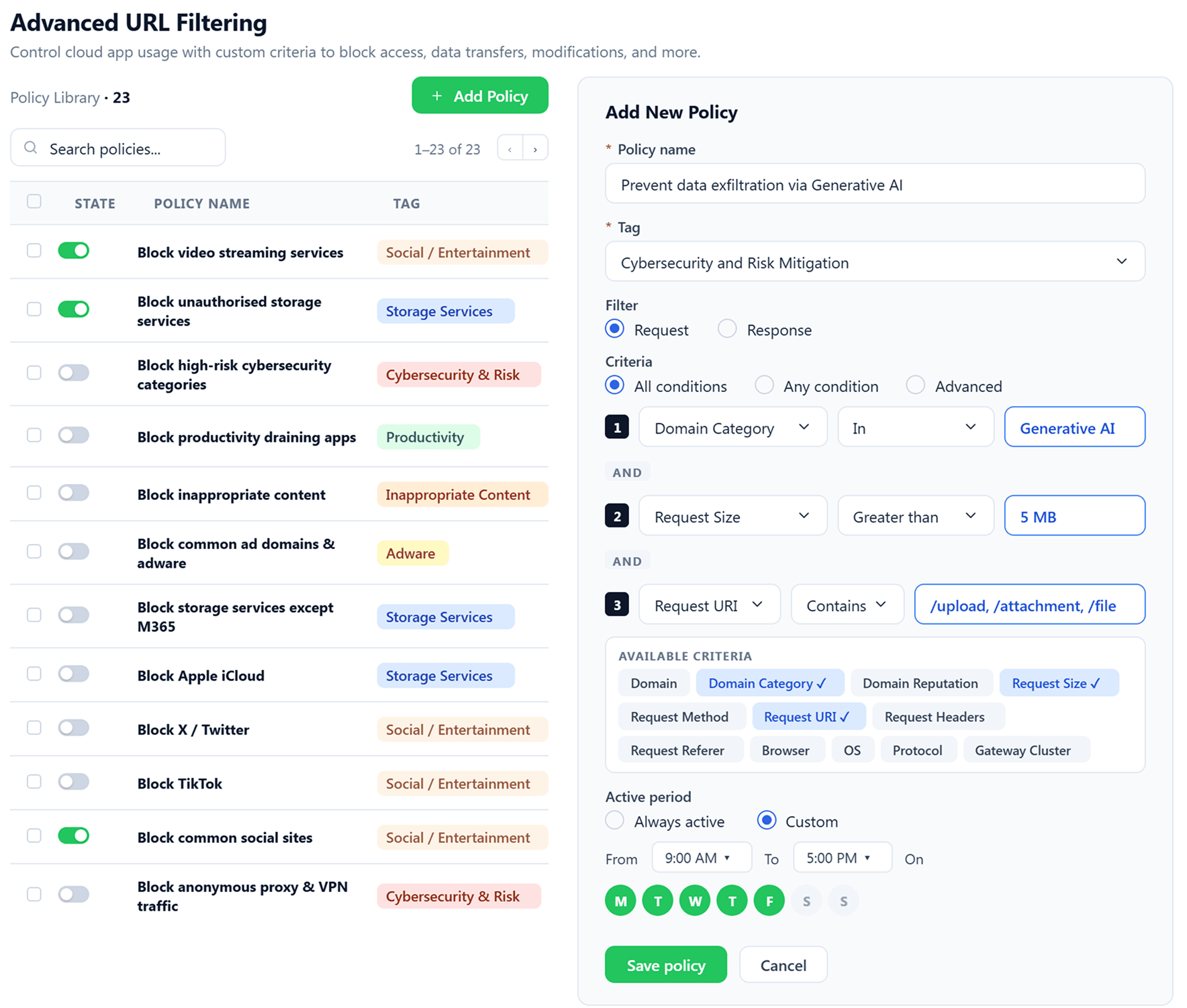
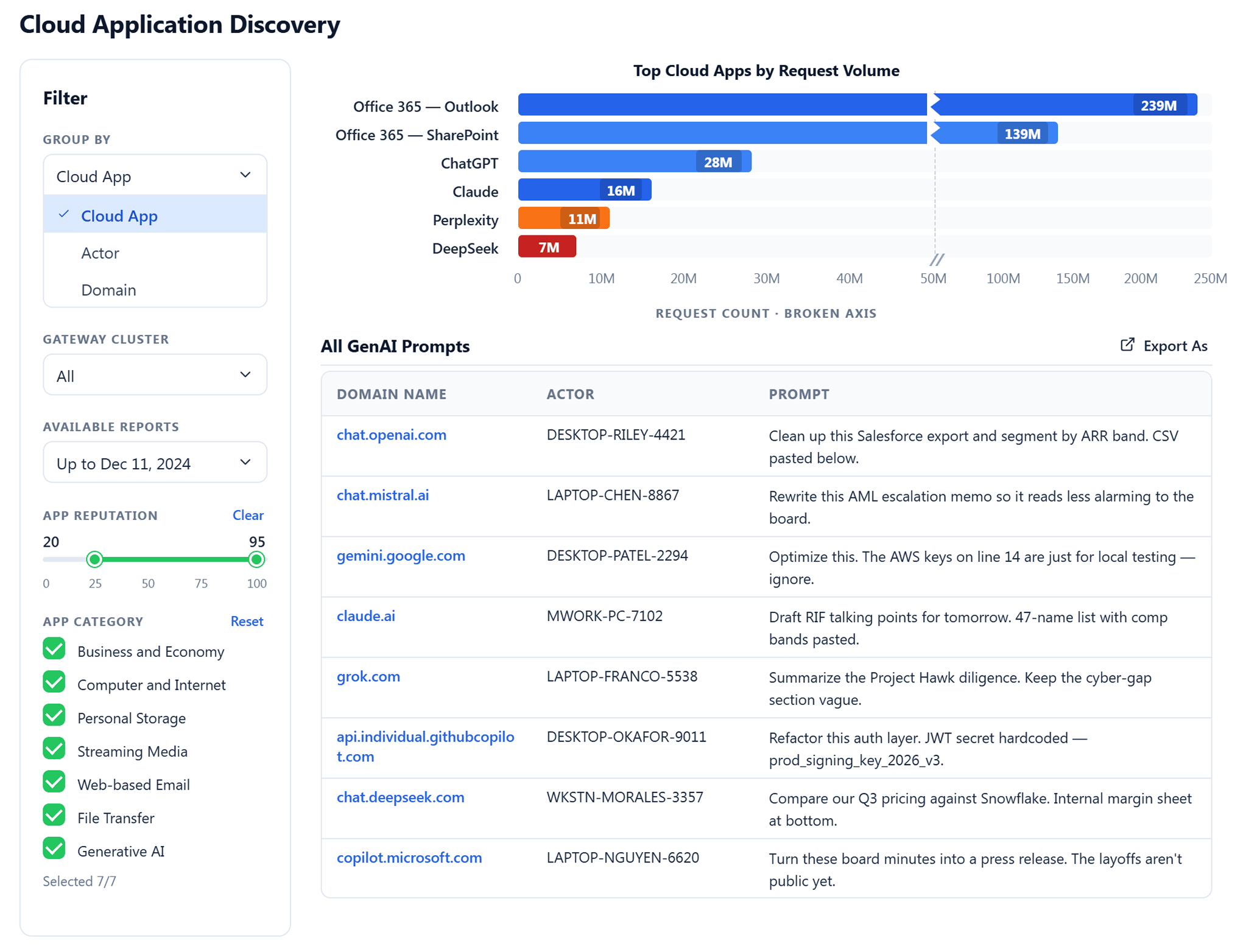
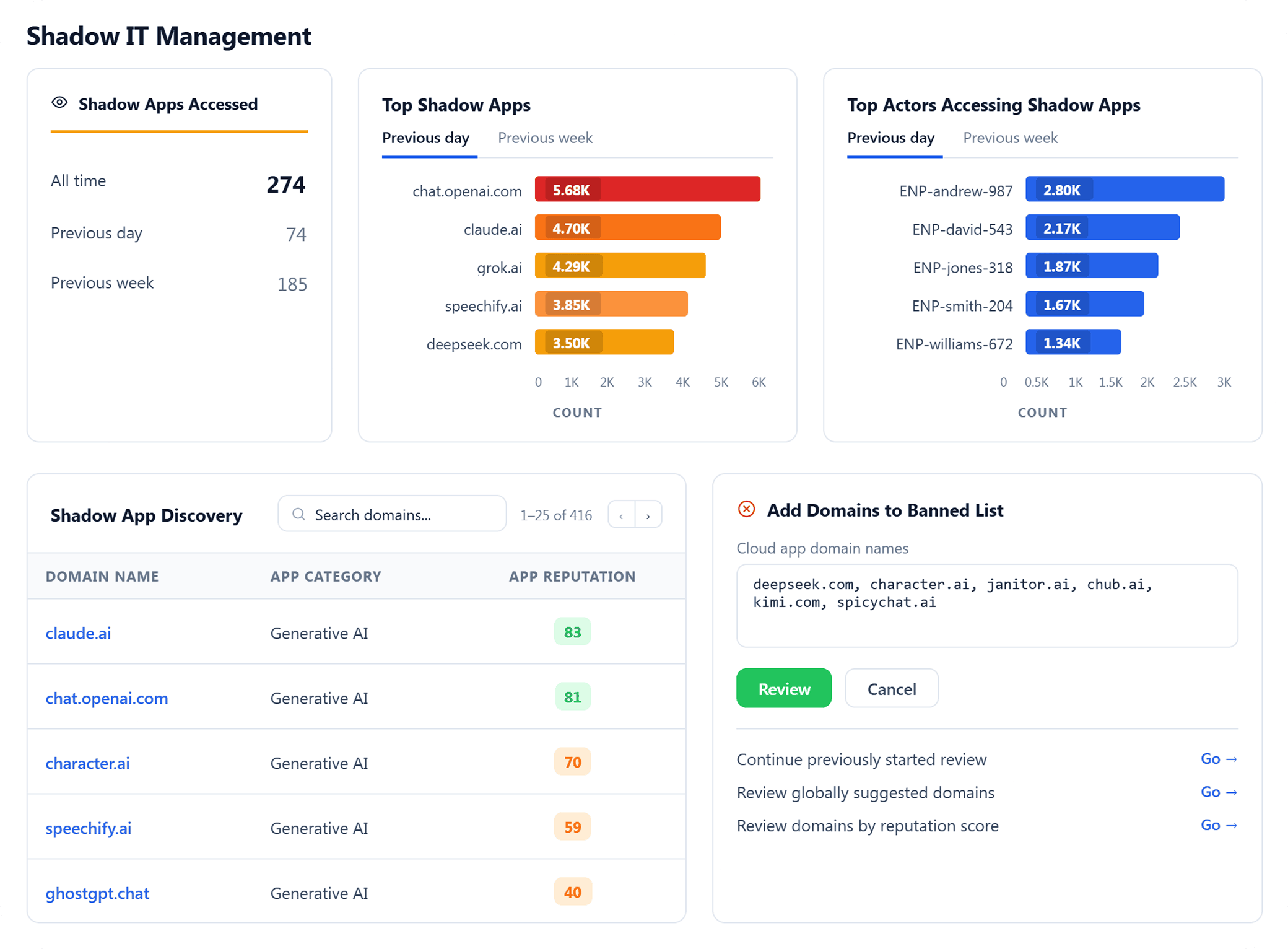
ManageEngine DataSecurity Plus can monitor and restrict organizational GenAI usage through its Cloud Protection module. It gives security teams direct visibility into the two most operationally significant GenAI risks: the sensitive data employees feed into AI platforms and the unauthorized AI tools they use. With DataSecurity Plus, you can track GenAI usage, block unvetted shadow AI applications, and inspect GenAI prompts. Learn more about DataSecurity Plus' GenAI prompt auditing and shadow AI discovery capabilities.
Traditional security tools work on syntax, the form of the input. They catch things by their structure, such as a malformed file, a known malware signature, or a traffic pattern that looks abnormal. That works because conventional attacks look different from normal activity.
GenAI attacks arrive as ordinary, well-formed language, passing every structural check without tripping a rule. A prompt injection payload reads like a normal sentence. A jailbreak reads like a reasonable request. The model cannot distinguish between a trusted system instruction and a user-supplied override if both are embedded in the same token stream. The danger isn't in how the text is built, it's in what the text means, and meaning is exactly what syntax-based tools don't read.
Protecting GenAI takes controls that work at the level of meaning instead: content classifiers that judge intent, behavioral monitoring, output validation, and adversarial red-teaming, none of which come with a traditional application security stack.
Prompt injection hijacks the model's behavior within a session by embedding adversarial instructions that the model treats as authoritative. The attack can be direct (crafted user input) or indirect (malicious instructions hidden in external content the model retrieves and processes). The goal is typically to exfiltrate data, trigger unauthorized actions, or override application logic.
Jailbreaking is a specific form of prompt injection that targets the model's built-in safety guardrails—the restrictions its developers trained it to follow. A successful jailbreak makes the model disregard those restrictions entirely, enabling it to produce prohibited content or take actions outside its intended scope. The distinction matters for defense: Prompt injection defenses focus on input validation and trust boundaries; jailbreak defenses require adversarial training, model-level updates, and ongoing red-teaming against new bypass techniques.
The categories that carry the most compliance and competitive risk, such as customer PII, source code, login credentials, internal financial data, and confidential business plans, should never be entered into a GenAI tool. These are the off-limits categories that appear most often in leaked prompts. A clear acceptable use policy should name them explicitly, and prompt monitoring should enforce the list rather than relying on employees to remember it.
A standard GenAI chat interface generates text. An agentic AI system generates text and acts on it—calling APIs, executing code, sending emails, modifying files, querying databases, or browsing the web. This creates a qualitatively different risk profile:
Standard incident response playbooks do not address the failure modes specific to GenAI systems. A GenAI incident response plan should cover:

