Simplify compliance workflows with DataSecurity Plus

Stay audit-ready with DataSecurity Plus by gaining complete visibility into critical data access, movement, usage, and storage risk. Meet critical audit requirements using prebuilt compliance reports for SOX, HIPAA, the GDPR, the PCI DSS, and other regulations, all from a single, intuitive console.

Start your free trial

Core features that support regulatory compliance


Sensitive data discovery

Use an automated discovery mechanism to locate where regulated data such as PII, ePHI, and financial information is stored. Classify data by sensitivity and risk to enforce appropriate security controls and help prevent unauthorized data access and leakage.


Permission risk analysis

Perform entitlement analysis to identify files with excessive, orphaned, or misconfigured access privileges. Track permission changes across critical files to reduce insider threats and ensure access controls align with security standards.


File integrity monitoring

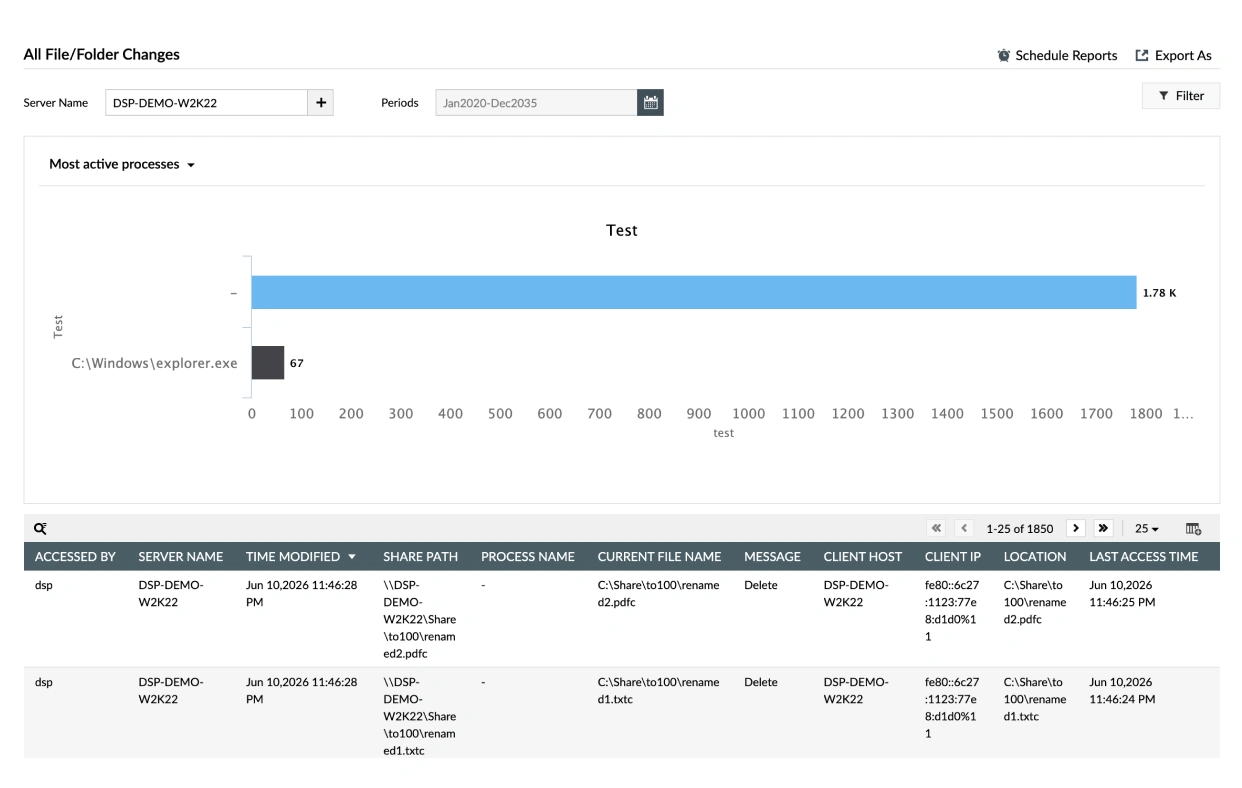
Monitor file activity in real-time by tracking who modified what, when, and from where. Generate alerts for suspicious activity, and maintain immutable, high-fidelity audit trails that support regulatory audits, compliance reporting, and forensic investigations.


Data leak prevention

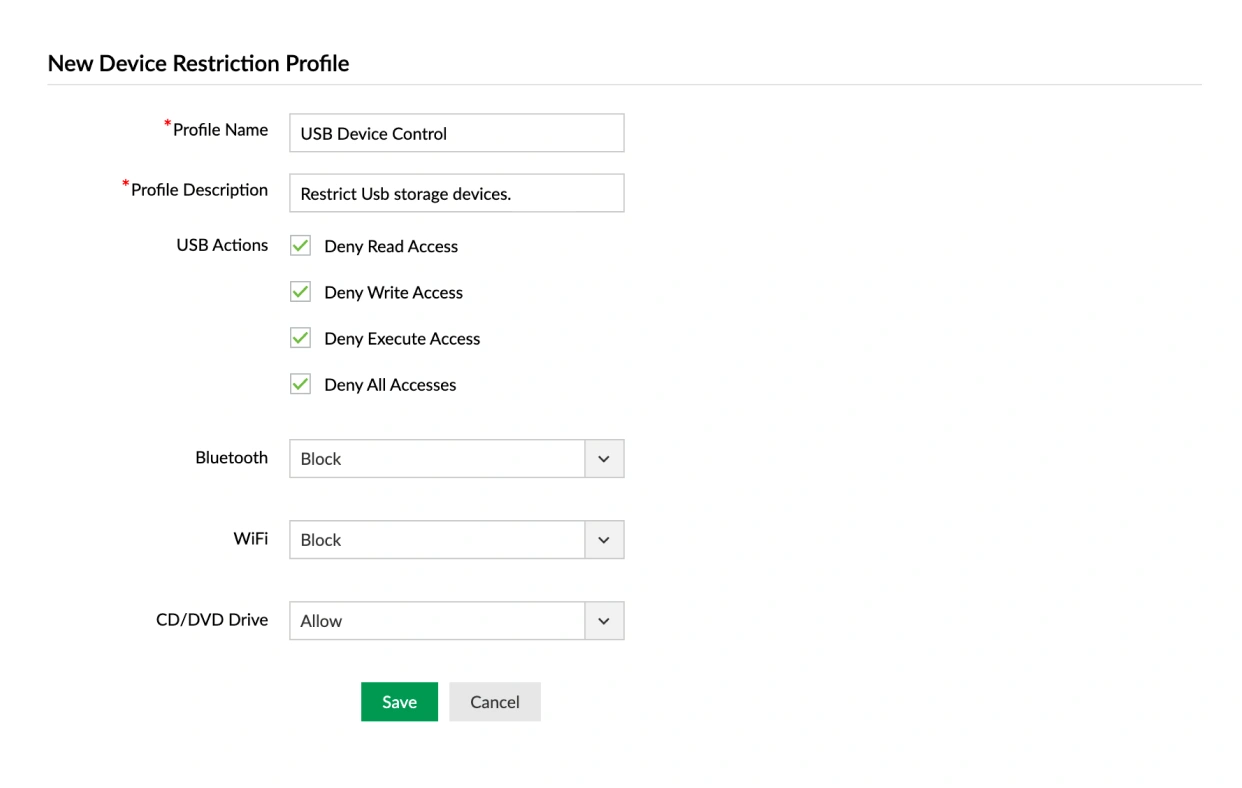
Enforce robust endpoint-level controls to prevent unauthorized data exfiltration. Govern activities such as clipboard operations, executable launches, removable media (USB) usage, and data transfers via email, print, SaaS, and other channels.


Cloud app security

Examine and manage cloud apps usage through continuous analysis of SaaS interactions. Apply policy-driven controls to block unwanted websites, restrict risky uploads and downloads, and regulate access by reducing shadow IT risk and enforcing adherence to compliance requirements.

Key compliance regulations supported by DataSecurity Plus

Whether you're preparing for a regulatory audit or an internal security assessment, DataSecurity Plus offers multiple capabilities that help you comply with several key standards.


Sarbanes-Oxley Act

Maintain the accuracy and integrity of financial data and mitigate fraud through stringent internet security controls and audit trails.


Health Insurance Portability and Accountability Act

Safeguard the privacy and security of sensitive protected health information (PHI) in the healthcare industry.


General Data Protection Regulation

Protect the privacy and personal data of EU residents through a structured framework for data security.


Payment Card Industry Data Security Standard

Discover where cardholder data resides, monitor access and changes in real time, and prevent unauthorized transfers to support PCI DSS requirements.


Protection of Personal Information Act

Track personal information wherever it resides, find who can access it, and audit every interaction to maintain POPIA readiness.


Federal Information Security Management Act

Discover where federal information resides, monitor access and changes in real time, and control transfers across selected channels to support FISMA's security safeguards and accountability conditions.


Gramm-Leach-Bliley Act

Find customer financial information, track access updates, and audit every interaction to support the foundation of GLBA Safeguards Rule compliance.


Simplifying compliance step-by-step

Discover and classify sensitive data

Discover and classify sensitive data
  • Scan file servers, endpoints, NAS devices, and workstations for regulated content such as PII, ePHI, credit card details, and other sensitive data.
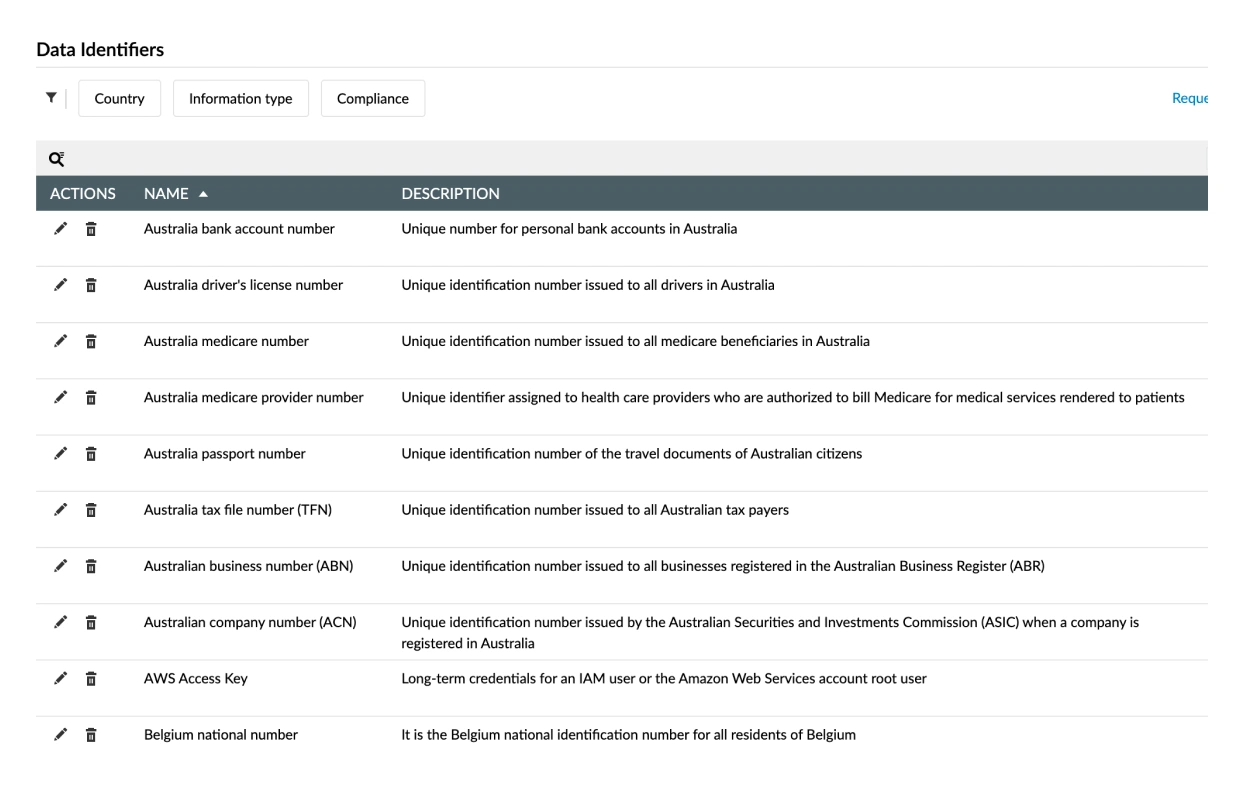
  • Use over 100 predefined data identifiers or build custom identifiers using regex and keyword matching to detect sensitive data across directories.
  • Auto-apply classification labels (Public, Private, Confidential, or Restricted) to discovered files based on their sensitivity and risk score.
  • Build a continuously updated sensitive data inventory to track where regulated data lives across your environment.

Assess risk and data exposure

Assess risk and data exposure
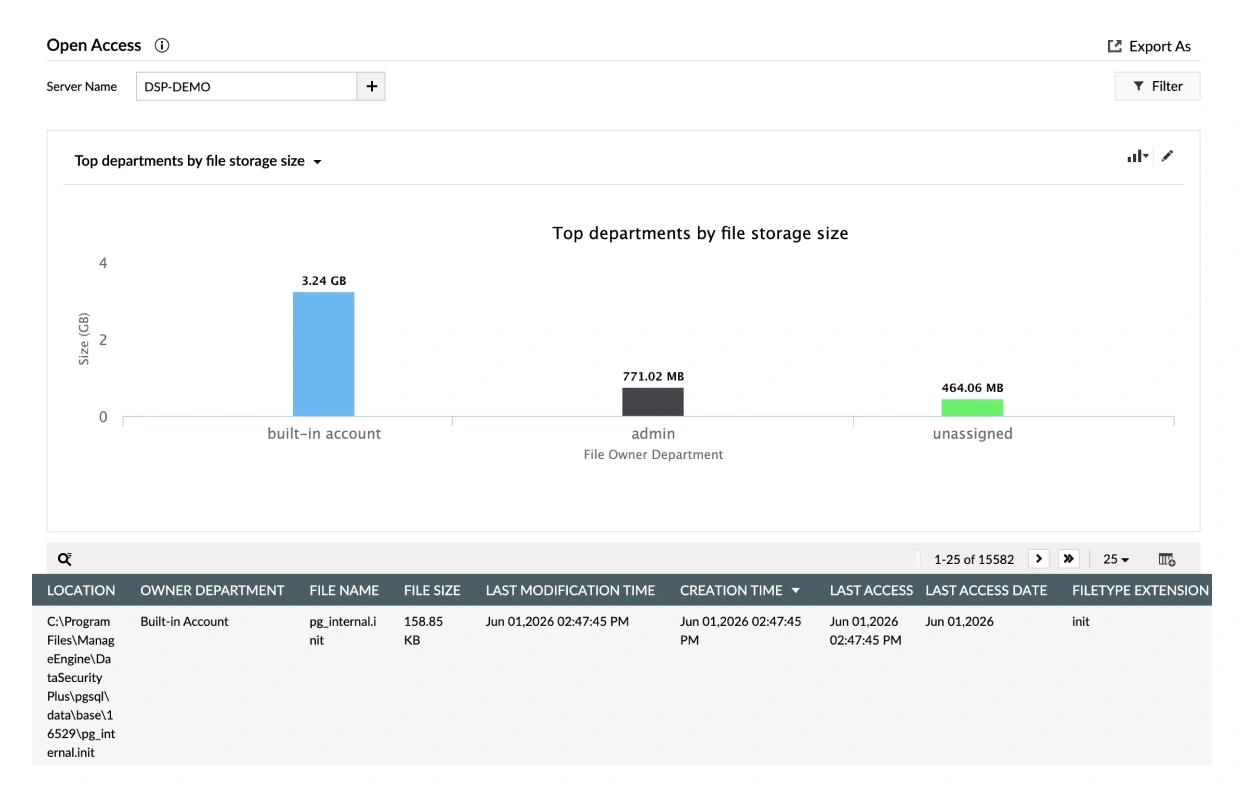
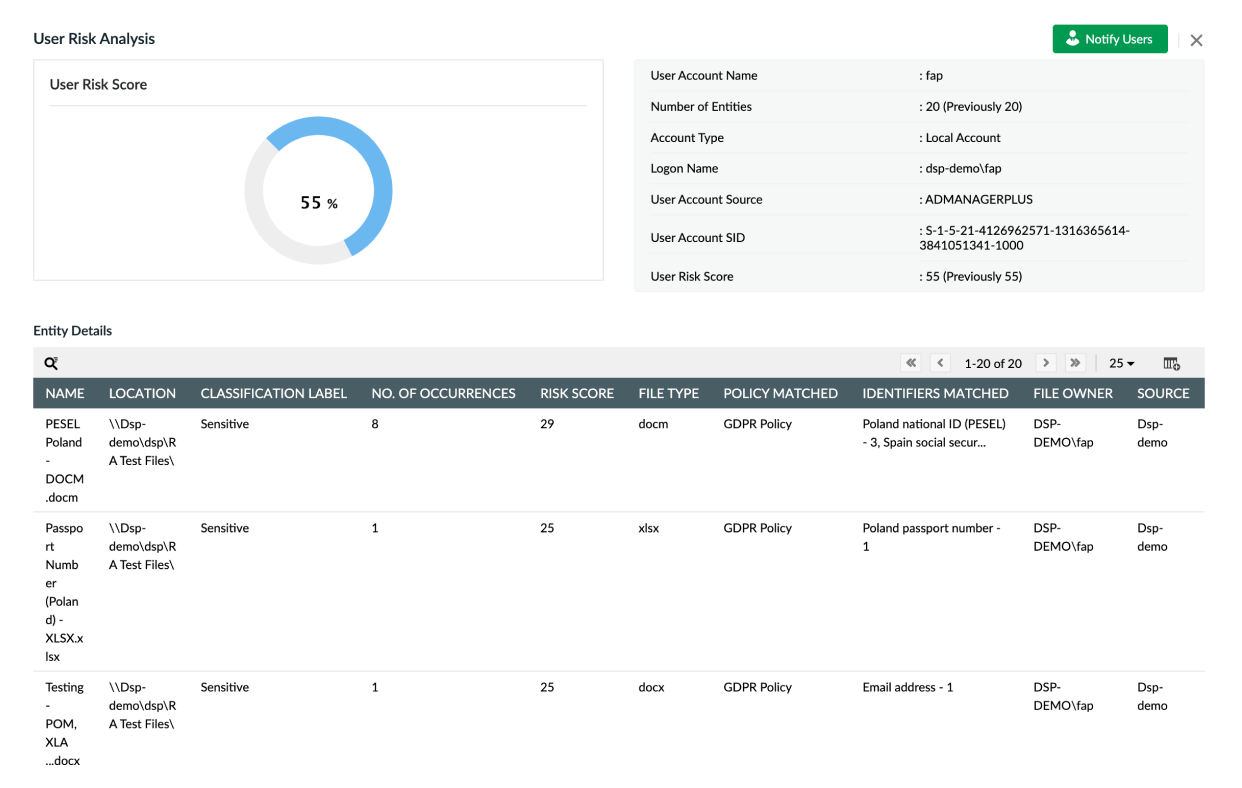
  • Calculate file-level risk scores based on the volume and type of sensitive data detected, file access frequency, data ownership, and permissions.
  • Identify over-privileged users, orphaned files, stale data, and hidden files that increase your organization's attack surface.
  • Detect high-risk configurations such as full control permissions, broken inheritance, and open access on folders containing regulated data.
  • Pinpoint regulated data hotspots, i.e., folders with excessive data concentration, redundant copies, and uncontrolled growth to prioritize remediation before they become audit liabilities.

Analyze ownership and access permissions

Analyze ownership and access permissions
  • Perform entitlement reviews across file servers to identify users and groups with access that exceeds their business role.
  • Detect misconfigured ACLs for files and folders to address dormant accounts that retain unnecessary permissions.
  • Examine access rights assigned to users who have changed roles or left the organization.
  • Generate permission change reports that log who modified access rights, on which folder, and when, creating a clear trail for compliance reviewers.

Detect and prevent data leakage

Detect and prevent data leakage
  • Enforce granular endpoint DLP policies to block or control data transfers via USB devices, email attachments, print jobs, and network shares.
  • Restrict the use of high-risk cloud applications and shadow GenAI services through URL filtering, and prevent unauthorized data transfers by controlling file uploads and downloads across endpoints.
  • Scan email outbound data in real time to detect files containing PII, ePHI, or payment card data, and block them before sensitive information leaves your environment.
  • Respond to policy violations with automated, customizable script-based responses, such as quarantining devices, terminating processes, or notifying administrators

Maintain audit trails and ensure compliance

Maintain audit trails and ensure compliance
  • Automatically capture and retain a complete, tamper-evident record of all file and user activity across your environment.
  • Monitor file integrity and permission changes in real time, attributing every event to a specific user, location, and timestamp.
  • Generate detailed, audit-ready compliance reports mapped to the specific requirements of regulations such as the GDPR, HIPAA, SOX, and the PCI DSS.
  • Deliver deep forensic insights through structured investigation reports that reconstruct the full timeline of a security incident.

Discover and classify sensitive data

  • Scan file servers, endpoints, NAS devices, and workstations for regulated content such as PII, ePHI, credit card details, and other sensitive data.
  • Use over 100 predefined data identifiers or build custom identifiers using regex and keyword matching to detect sensitive data across directories.
  • Auto-apply classification labels (Public, Private, Confidential, or Restricted) to discovered files based on their sensitivity and risk score.
  • Build a continuously updated sensitive data inventory to track where regulated data lives across your environment.

Assess risk and data exposure

  • Calculate file-level risk scores based on the volume and type of sensitive data detected, file access frequency, data ownership, and permissions.
  • Identify over-privileged users, orphaned files, stale data, and hidden files that increase your organization's attack surface.
  • Detect high-risk configurations such as full control permissions, broken inheritance, and open access on folders containing regulated data.
  • Pinpoint regulated data hotspots, i.e., folders with excessive data concentration, redundant copies, and uncontrolled growth to prioritize remediation before they become audit liabilities.

Analyze ownership and access permissions

  • Perform entitlement reviews across file servers to identify users and groups with access that exceeds their business role.
  • Detect misconfigured ACLs for files and folders to address dormant accounts that retain unnecessary permissions.
  • Examine access rights assigned to users who have changed roles or left the organization.
  • Generate permission change reports that log who modified access rights, on which folder, and when, creating a clear trail for compliance reviewers.

Detect and prevent data leakage

  • Enforce granular endpoint DLP policies to block or control data transfers via USB devices, email attachments, print jobs, and network shares.
  • Restrict the use of high-risk cloud applications and shadow GenAI services through URL filtering, and prevent unauthorized data transfers by controlling file uploads and downloads across endpoints.
  • Scan email outbound data in real time to detect files containing PII, ePHI, or payment card data, and block them before sensitive information leaves your environment.
  • Respond to policy violations with automated, customizable script-based responses, such as quarantining devices, terminating processes, or notifying administrators

Maintain audit trails and ensure compliance

  • Automatically capture and retain a complete, tamper-evident record of all file and user activity across your environment.
  • Monitor file integrity and permission changes in real time, attributing every event to a specific user, location, and timestamp.
  • Generate detailed, audit-ready compliance reports mapped to the specific requirements of regulations such as the GDPR, HIPAA, SOX, and the PCI DSS.
  • Deliver deep forensic insights through structured investigation reports that reconstruct the full timeline of a security incident.

Resources to help you stay audit-ready


E-book

Turn data discovery into your GDPR compliance advantage.

Get your free copy  
  •  
    How-to

    Follow the FBI's recommendation to keep ransomware at bay

  •  
    Checklist

    A step-by-step guide to staying PII compliant

  •  
    Blog

    Protect patients' trust in just 6 steps

Resources  

Ready to take control of compliance?

Stay one step ahead of audits and data breaches with real-time file visibility and automated compliance reporting.


 

Frequently asked questions

A compliance audit is an independent evaluation of how effectively an organization adheres to applicable laws, regulations, standards, and internal policies. It assesses whether internal controls and documented procedures align with both regulatory and organizational requirements.

Compliance audits help organizations detect non-compliance issues early, minimize legal and financial risks, improve operational efficiency, strengthen stakeholder confidence, and maintain continuous adherence to both internal policies and external regulations.

Organization should conduct compliance audit periodically—annually, quarterly, or based on internal risk assessments. Additional audits are warranted when new regulations are introduced, when major process changes occur, or potential non-compliance is suspected. Regular audits help ensure continuous adherence to legal and internal requirements.

Typical objectives include:

  • Confirming compliance with applicable laws and regulatory requirements.
  • Assessing whether internal policies are properly implemented.
  • Identifying gaps or weaknesses in the control framework.
  • Providing practical recommendations for corrective actions.

Common challenges include keeping up with constantly evolving regulations and ensuring all departments consistently follow required policies. Organizations may also face difficulties due to incomplete documentation, limited resources, or a lack of employee awareness. Additionally, identifying hidden non-compliance issues across complex processes can be challenging.

DataSecurity Plus provides real-time auditing that tracks file activity, access attempts, and permission changes and generates alerts for violations before external audits occur. Automated data collection, preconfigured reports, and real-time dashboards reduce the time and effort needed to gather evidence and compile compliance documentation.

Yes, ManageEngine DataSecurity Plus detects compliance violations using indicators such as privileged user activity, failed login attempts, permission changes on files and folders, file copy actions, the presence of PII, unusual spikes in activity, and more.

Email Download Link