High-performance DHCP management: Scale, automate, and optimize IP space with DDI Central
DHCP is one of the foundational services of any enterprise network. Every time a device connects to the network, it relies on DHCP to obtain an IP address and the configuration required to communicate with other devices and services.
As organizations expand across locations, onboard more users and devices, and adopt increasingly distributed network architectures, DHCP environments become more complex to manage. Large numbers of scopes, constantly changing leases, multiple DHCP servers, and growing IP address pools can increase administrative overhead and make it harder to maintain consistent configurations.
This is why organizations are moving toward modern, high-performance DHCP servers such as Kea. While DHCP operations have become faster and more capable, they also demand a smarter control plane that is capable of managing scalable infrastructure, intelligent IP allocation, automation, centralized management, high availability, and continuous visibility into DHCP operations.
ManageEngine DDI Central brings these capabilities together through a centralized platform for managing DHCP servers, scopes, policies, leases, and IP address resources. It helps network administrators simplify complex DHCP environments while maintaining the performance, scalability, and availability required by enterprise networks.
What makes DHCP management challenging at scale?
In a small network, configuring a DHCP scope or assigning an IP address may be a straightforward task. At enterprise scale, however, administrators may need to manage hundreds of scopes across multiple sites and DHCP servers while ensuring that addresses are allocated according to organizational policies.
Manual configuration can introduce inconsistencies, while limited visibility into leases and address utilization can result in inefficient IP usage or subnet exhaustion. At the same time, a DHCP server failure can prevent devices from obtaining or renewing their network configurations.
DDI Central addresses these challenges by providing centralized control, policy-based automation, monitoring, and high-availability capabilities for DHCP environments.
Key capabilities for high-performance DHCP management
DDI Central combines the capabilities needed to operate high-performance DHCP environments at enterprise scale—from deployment and automation to visibility, security, and high availability.
High scalable DHCP
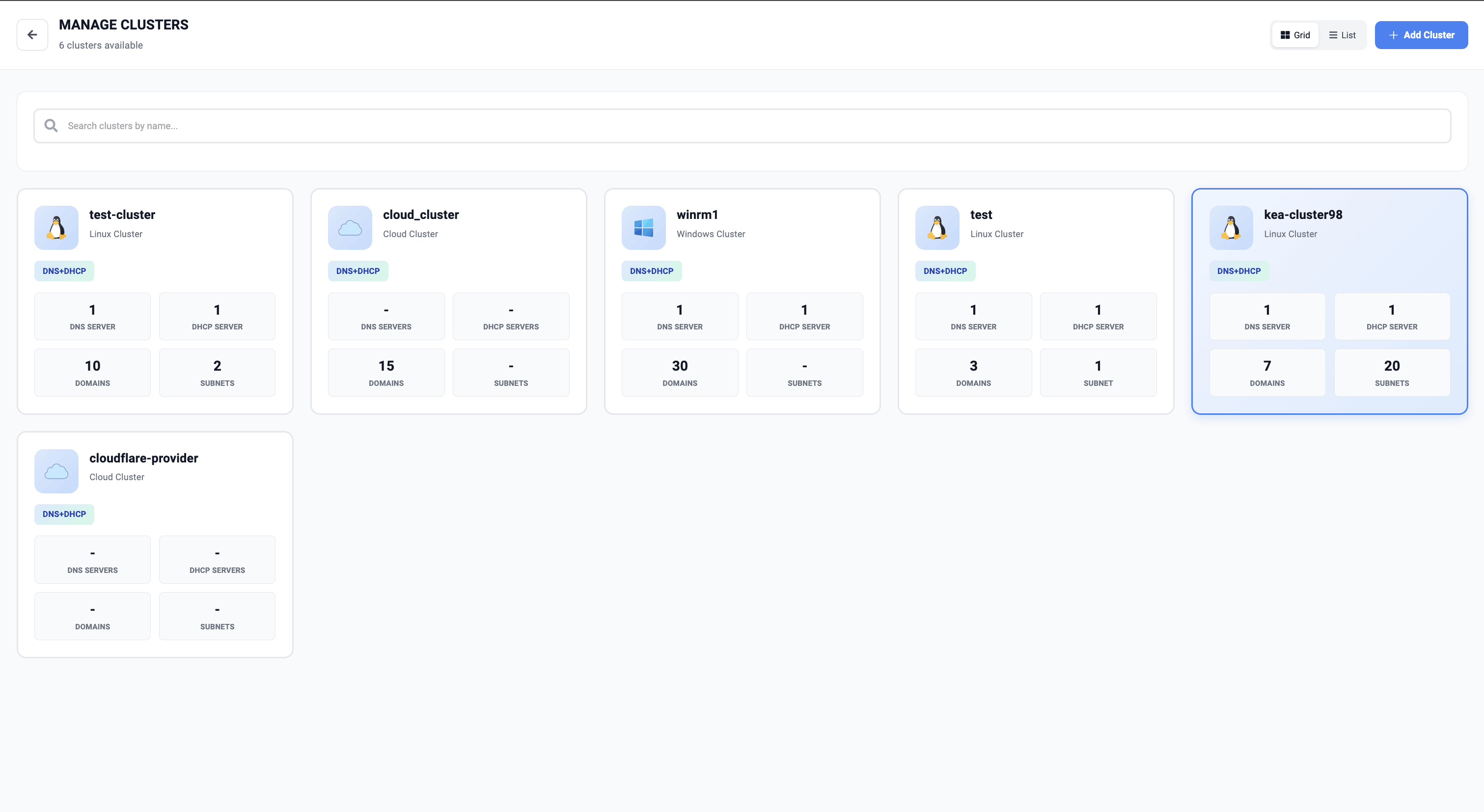
One installation, a complete DNS-DHCP node: Install DDI Central on any Linux server to get all DNS and DHCP configurations in one package. Add new clusters and sites as your network grows, while managing existing DHCP servers and their configurations from the same unified console.
Scale without rebuilding your infrastructure: Onboard existing DHCP servers and gradually expand to new sites, giving you unlimited scalability with centralized control over scopes, zones, address space, delegation, and monitoring.
Automating DHCP operations
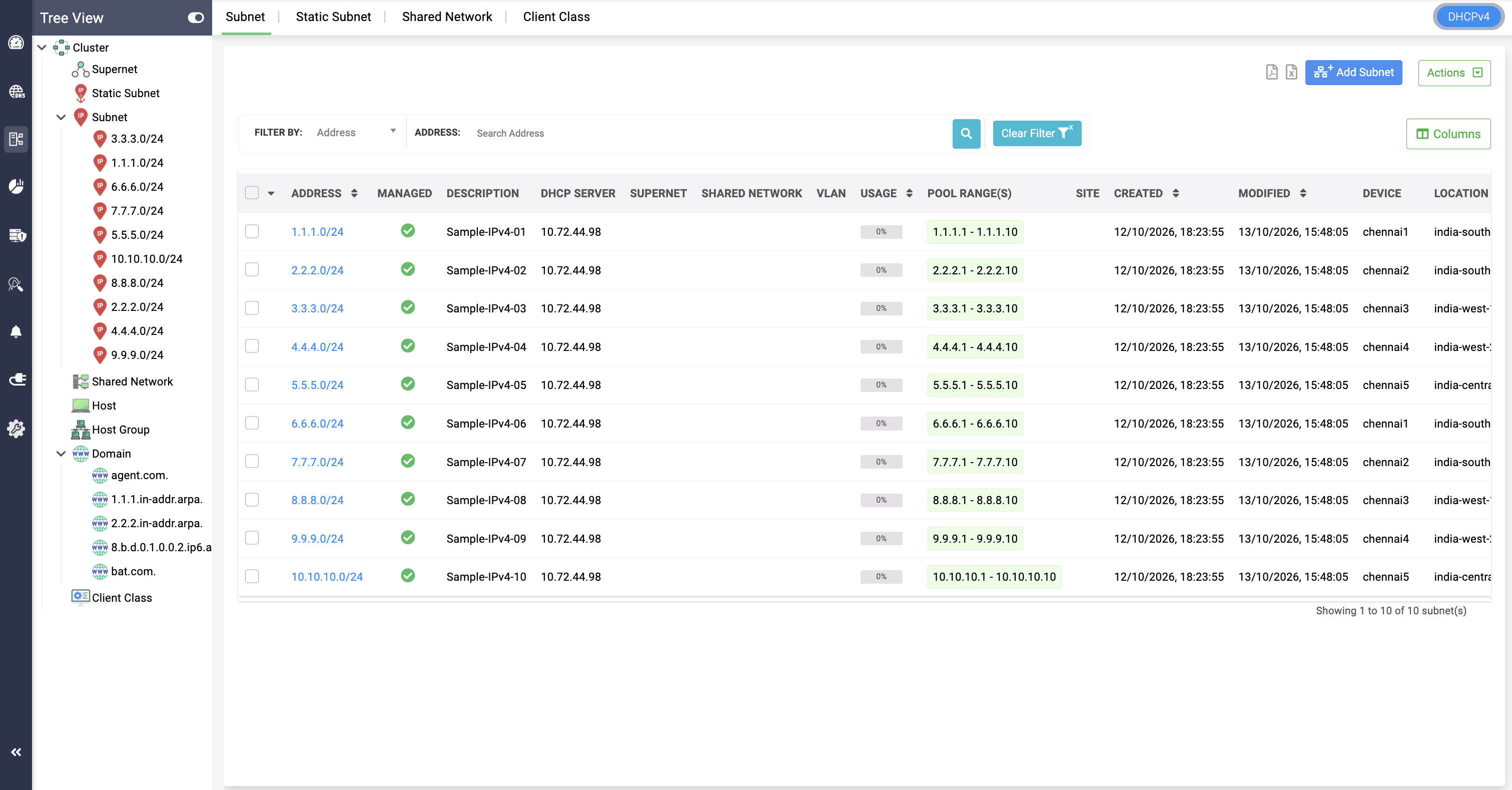
Smarter control plane: Centrally manage high performance DHCP servers across sites through a single, visual console, with unified control over servers, scopes, policies, and address spaces.
Pool policies and client management: Define client classes and automatically assign the right IP pools, DHCP options, PXE parameters, and policies based on conditions such as vendor, location, and device type.
Scheduling DHCP configurations: Schedule subnet, pool, policy, and reservation changes in advance, allowing DDI Central to automatically apply and track them at the right time.
DDNS workflows: Automate DNS updates by linking DHCP scopes with forward and reverse DNS zones, ensuring DNS records stay synchronized with DHCP leases as devices come and go.
Visibility and analytics
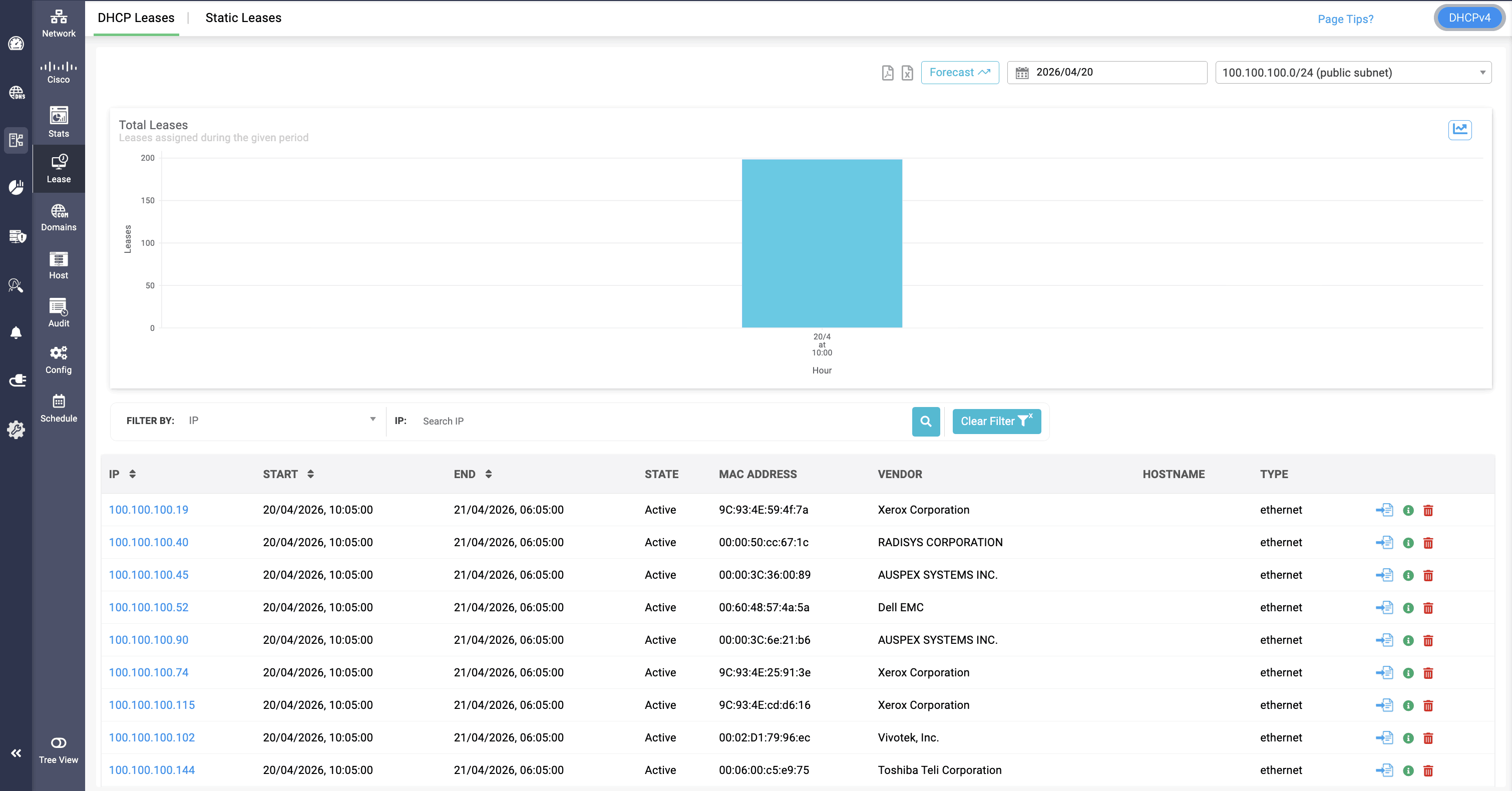
Lease analytics: Turn DHCP lease data into actionable insights with usage trends, metadata, DNS and device relationships, reservation management, and exportable reports.
Lease forecasts: Predict future DHCP demand, traffic spikes, and capacity pressure using historical lease data, helping teams plan address capacity proactively.
Automated PING checks: Monitor static, delegated, and unmanaged IP addresses through IPAM and verify their reachability without treating them as DHCP leases.
Risk-aware context: Enrich IP address information with device, disk, patch, and vulnerability data to provide deeper context for identifying potential risks.
Device diagnostics and L2 traceability: Trace devices beyond their DHCP lease to view availability, uptime, packet loss, resource health, switch and port dependencies, and network anomalies.
IP address management
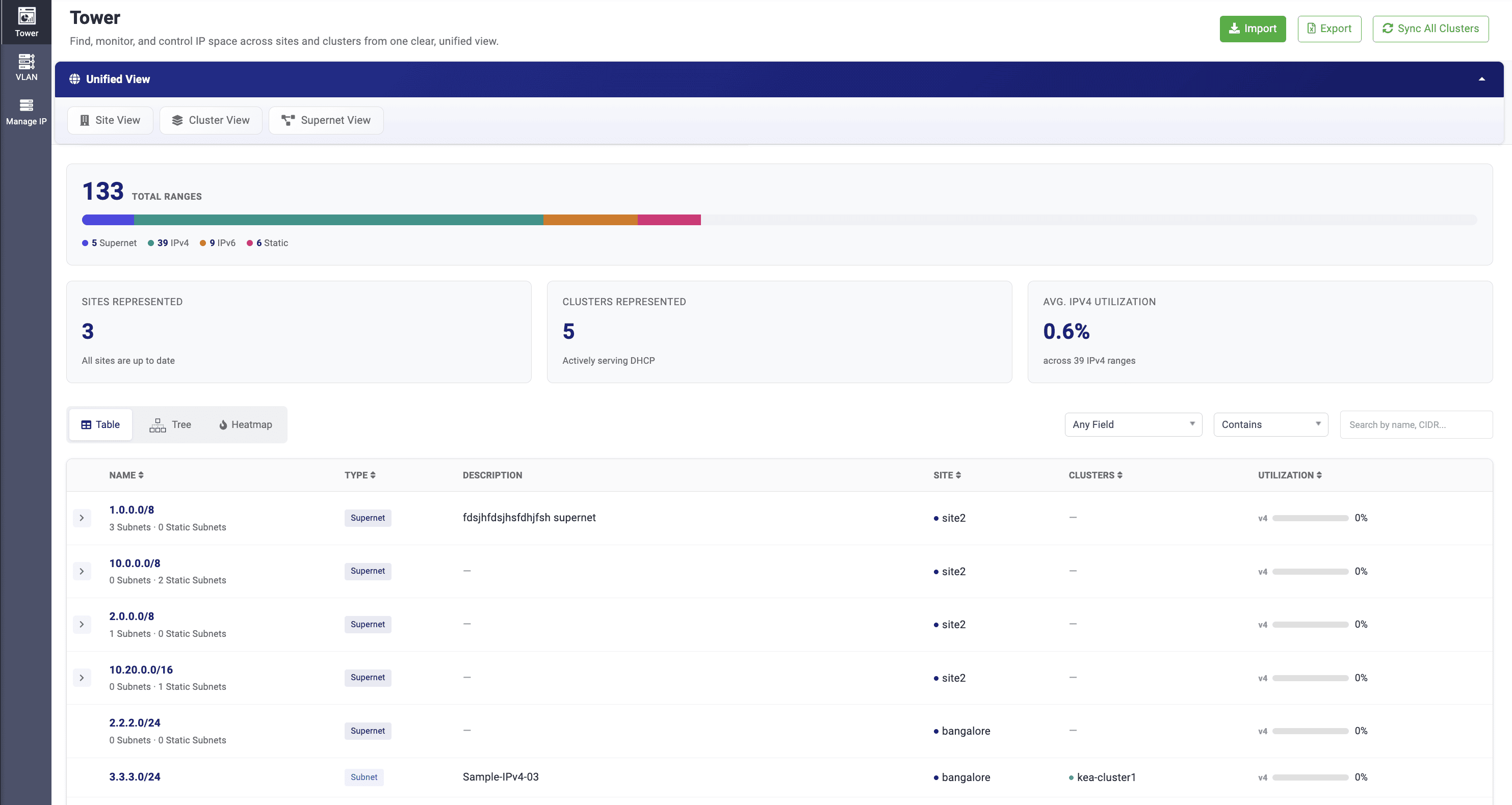
Unified IP space visibility: Gain a single view of every scope, cluster, and configured supernet across your distributed network, making it easier to navigate, understand, and manage IP address space from one place.
Visualize with heat maps: Display a color-coded view of utilization across supernets, subnets, and static subnets, making it easy to identify underutilized networks and quickly spot capacity risks.
Active DHCP security
Detect and contain abnormal behavior: Built-in protocol rules and machine learning continuously assess DHCP behavior and automatically quarantine clients when their risk exceeds the configured threshold.
Uncover rogue DHCP servers: Subnet discovery identifies unauthorized DHCP responders and provides endpoint context, helping administrators contain them before incorrect gateway or DNS configurations affect clients.
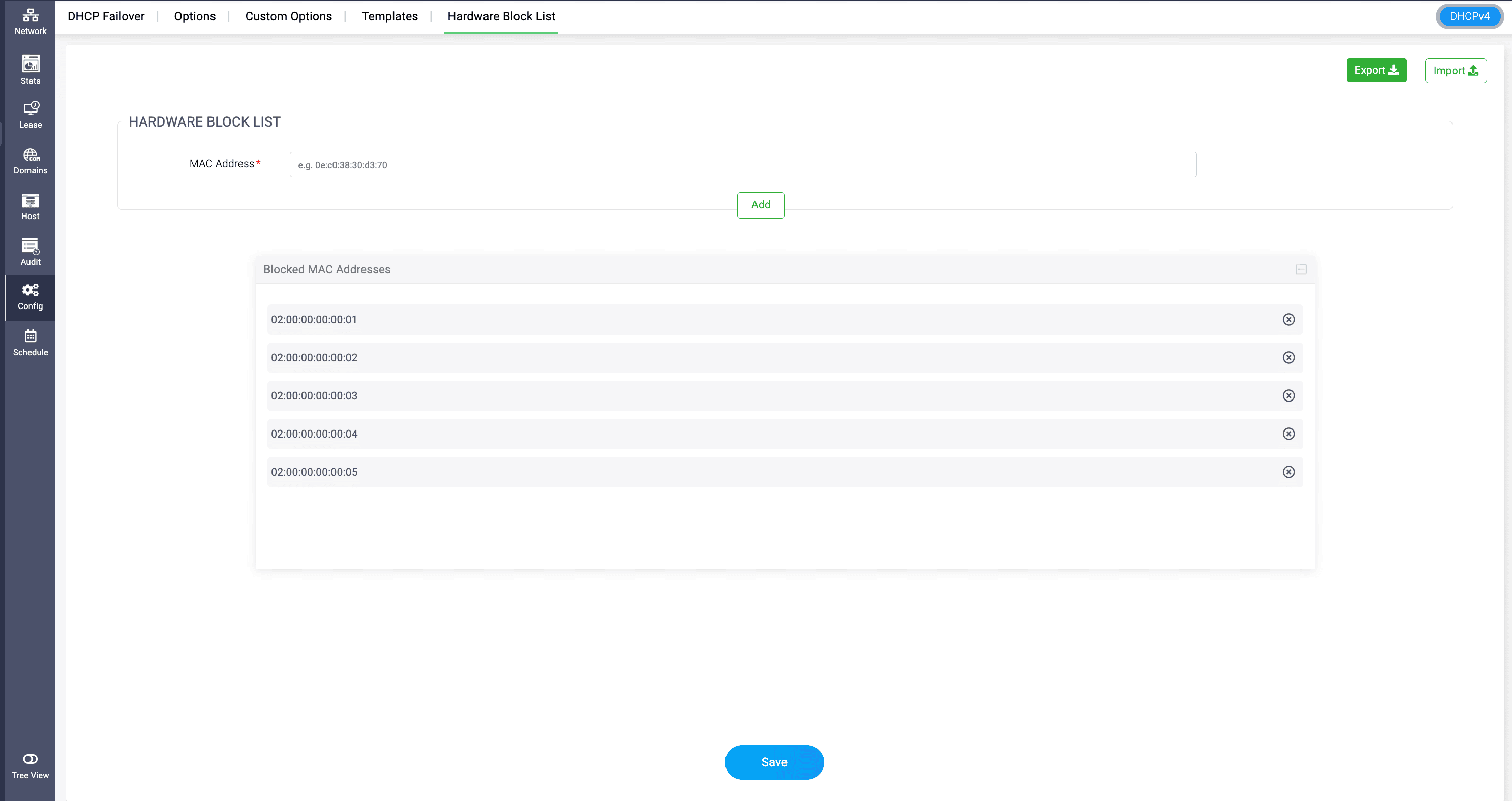
Block untrusted devices: Deny DHCP leases for specific hardware using MAC addresses for DHCPv4 or DUIDs for DHCPv6, with centralized management of blocked devices and denied hosts.
High availability and monitoring
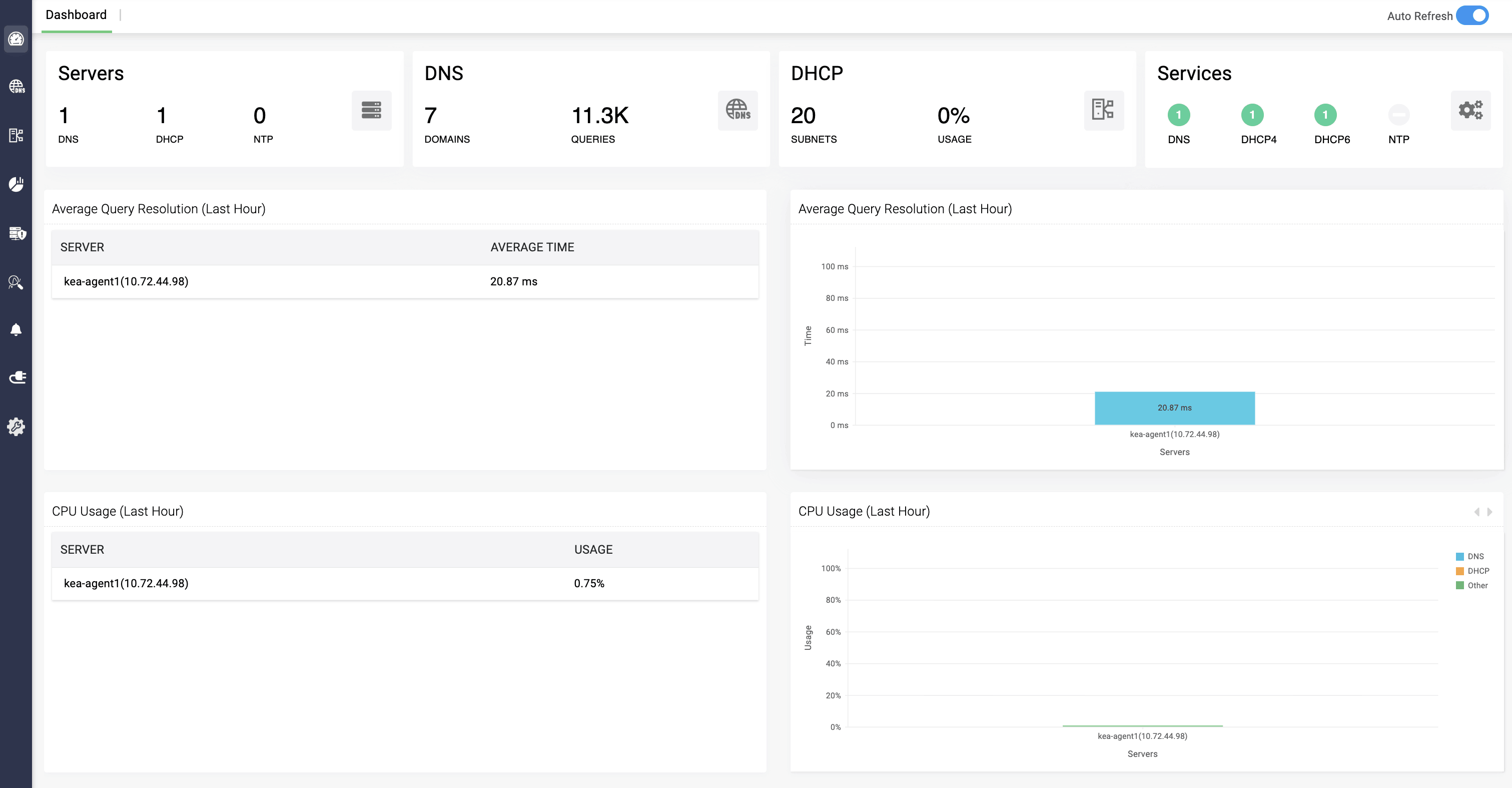
Monitor DHCP services and server health: Track DNS, DHCPv4, and DHCPv6 availability alongside CPU, memory, and disk usage to gain a complete view of service and host health.
Maintain visibility into failover status: Implement HA configuration to your servers and view their primary and secondary roles, maintenance states, synchronization status, and the last successful synchronization through a live topology view.
Configure failover with granular control: Pair your high performance DHCP servers in HotStandby mode and configure heartbeat, response, synchronization, and mutual TLS settings to maintain reliable and secure failover.
Build a high-performance DHCP environment with DDI Central
High-performance DHCP management requires more than a DHCP server capable of processing large volumes of requests. As enterprise networks grow, administrators also need a way to automate IP allocation, enforce policies, optimize address utilization, monitor server health, maintain high availability, and troubleshoot problems quickly.
ManageEngine DDI Central brings these capabilities together through centralized DHCP management and integrated DNS and IPAM visibility. By combining automation, policy-based allocation, high availability, monitoring, security, and IP address intelligence, DDI Central helps organizations build DHCP environments that can scale with their networks while remaining easier to manage.
Whether you're managing a large enterprise network, distributed branch infrastructure, or a growing IP address environment, DDI Central provides the centralized visibility and control needed to keep DHCP services scalable, reliable, and efficient.
Start your 30-day free trial. Install DDI Central on a Linux server and bring up your first Modern DHCP server in minutes.
Book a personalized demo. Talk to a DDI specialist about your migration and see how it fits your environment.