The rise of autonomous digital operations
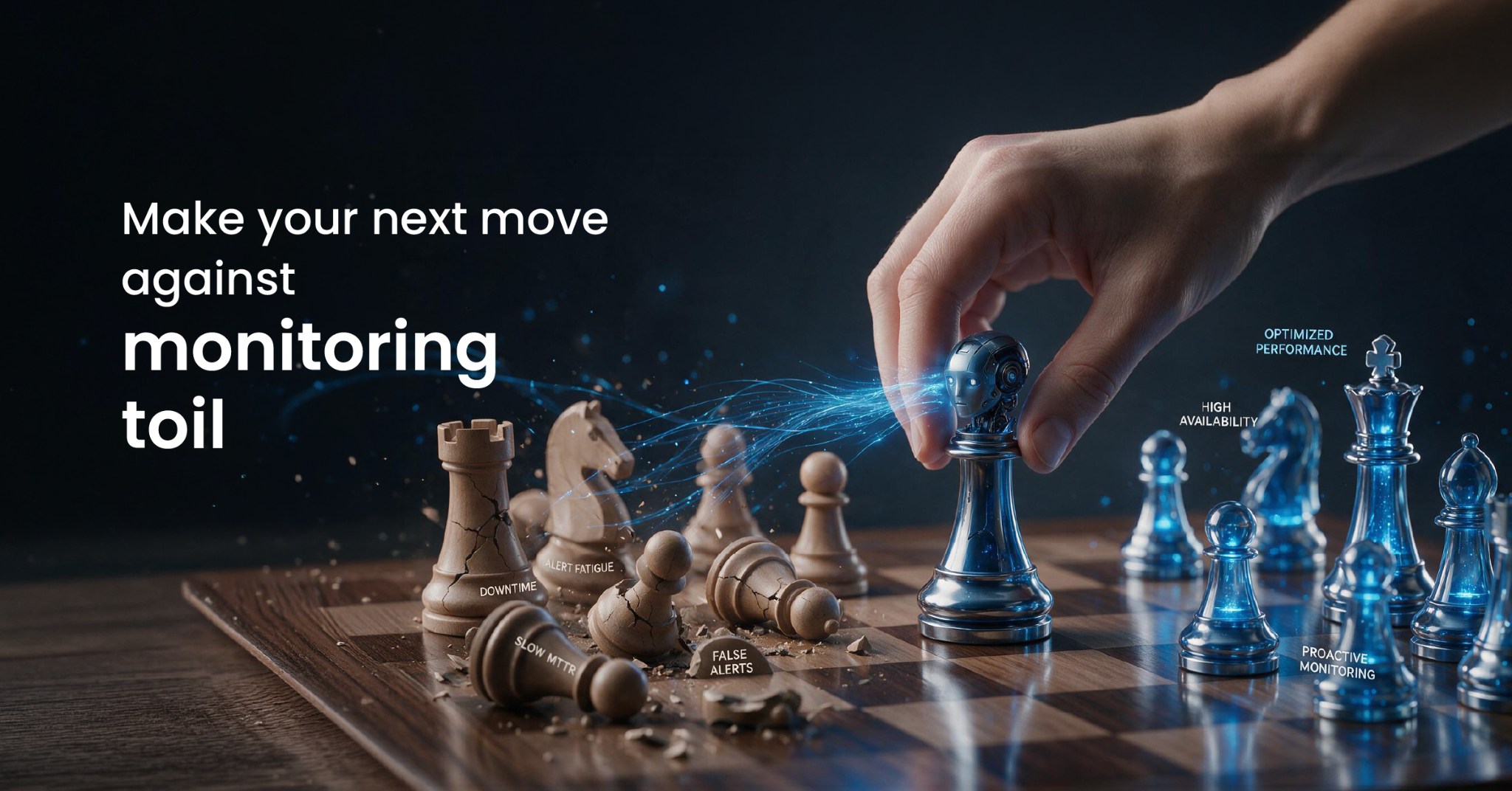 Monitoring has come a long way. Your team has dashboards, alerts, and automation that would've looked like magic a decade ago. Most days, things just work.
But underneath all that tooling, a lot of the actual work still happens manually. An alert fires, and you pull the page-load metric from one tool, the user session logs from another, the backend trace from a third, and line them up until the story makes sense. Ten minutes, maybe fifteen pass, then you are able to fix it and move on.
You would never call that a problem; it's just how the work gets done. That's exactly what makes it worth a closer look.
The monitoring problems you already know about
Some problems are easy to name. Your team feels them every day.
Too many alerts. Most of them don't matter, but you check anyway.
Too many tools. Real user data here, synthetic checks there, and your app traces somewhere else.
Slow root cause analysis. One incident, and you're jumping between five screens to find what broke.
These are the pains everyone in ITOps talks about. You know they slow you down, and you've probably tried to fix them.
The pain you've stopped noticing
Here's the harder part: The investigation you do in your head isn't the exception. It's most of the day, and doesn't feel like a problem.
You watch dashboards, waiting for something to turn red. You run remediation steps by hand that you've run a hundred times. However, the issue that comes back every few weeks. You fix it the same way each time, and never log it as a pattern, because closing it feels like progress.
None of this looks like wasted effort, but it adds up. The one alert that actually mattered gets buried under the hundred that didn't. Every extra minute you spend hunting a solution is a minute the problem stays live, and getting paged over and over for work a system could handle is what wears people down and makes good engineers quit. It's so normal now that you've stopped seeing the cost. Naming it is the first step to getting that time back.
From monitoring to autonomous digital operations
Most monitoring tools were built to deliver better alertsnot to act for you. So a person stays in the loop for every decision, correlation, and fix.
Autonomous digital operations changes that. Instead of fixed, trigger-based rules, you get agents that reason through a situation, decide what matters, and act across your stack. It's the difference between a tool that tells you something is wrong and one that handles it.
This isn't about working harder at the old routine. It's about removing the reason the routine ever existed.
How Zia Agents change the work
ManageEngine OpManager Nexus monitors your entire IT environment, from networks and servers to websites and cloud applications, tracking real user sessions, running synthetic checks, pulling in backend traces, and surfacing the performance data that tells you what your digital experience actually looks like. It correlates alerts across those sources, cuts through the noise to surface what's real, and runs workflow-based remediation when something needs fixing. Zia Agents, the AI agents inside the platform, build on that. Remember lining up the page metric, the user session, and the backend trace by hand? When event correlation groups related alerts into one problem, a Zia Agent takes it from there—analyzing what the problem actually means, identifying the probable root cause, and triggering the remediation workflow to resolve it.
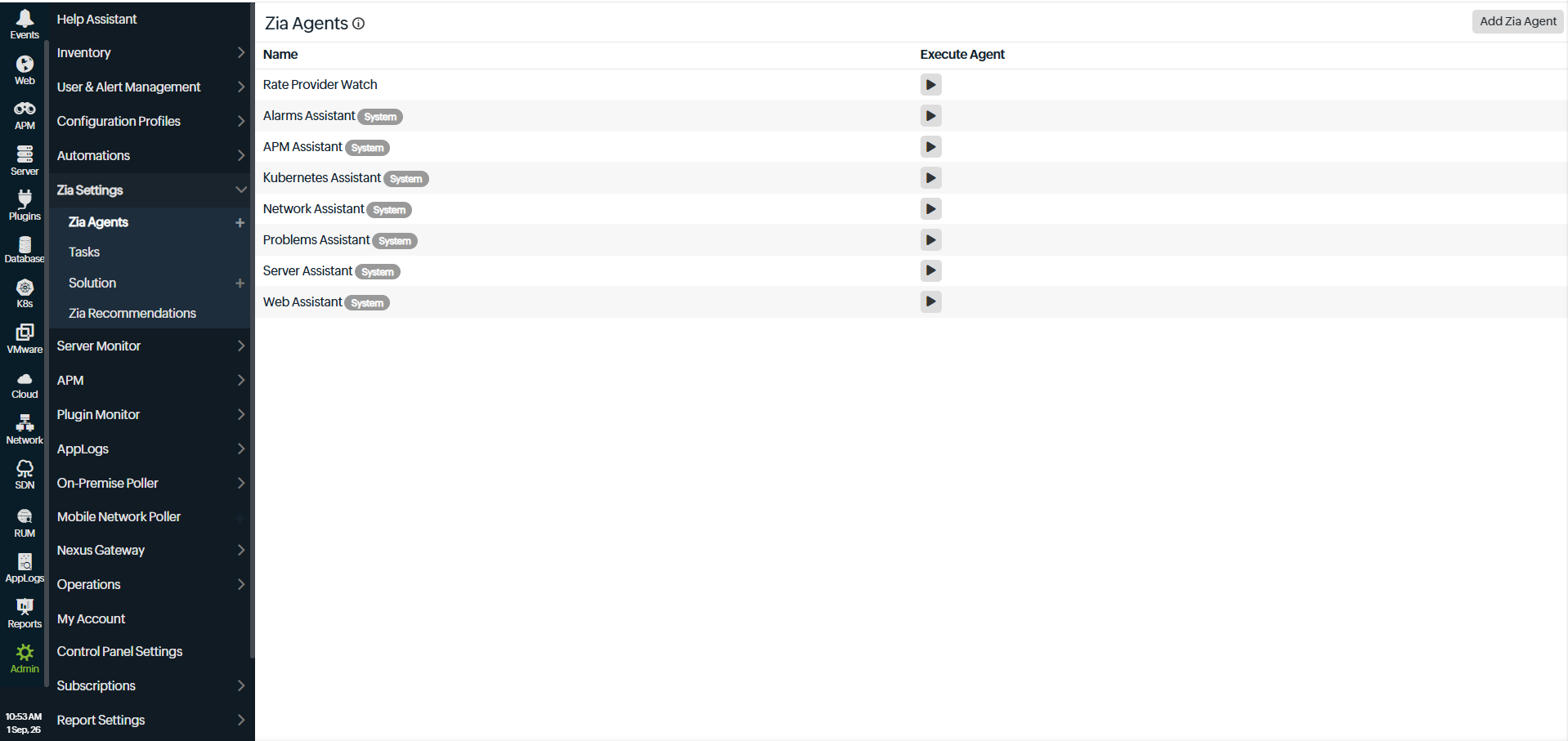
Remember the issue that keeps coming back? It investigates, points to the probable root cause, and can start the remediation workflow itself. You move from watching dashboards to supervising the work.
Here's what that looks like on a regular afternoon. Your checkout page starts loading slowly for real users. Rather than firing three separate alerts for the slow page, the API timeout sitting behind it, and the memory spike underneath that, a Zia Agent pulls all of them into one problem. Then it starts working. It checks when real user sessions began degrading, looks at what changed in the backend around the same time, and traces the likely origin. A memory leak in the payment service is pushing API response times up, which the frontend is reflecting back to your customers. The agent restarts the payment service, clears the cache, confirms the page is loading normally again, and logs the whole thing as a named pattern so the next time it happens, you already know what you're dealing with.
You open the console and see a resolved incident with full context. Not a page. Not a queue of alerts to sort through. Just what happened, what was done, and confirmation that it's fine now.
From doing the work to directing it
For years, getting better at operations meant getting faster at the manual parts: quicker correlation, tighter runbooks, and sharper instincts under pressure. Autonomous digital operations change what the load even is: The repetitive investigation and the same fix run for the hundredth time move off your plate. Your job shifts from doing that work to directing it, so your best people spend their attention on the problems that actually need a human.
That's autonomous digital operations in practice. In Part 2, we go further: how Zia Agents work inside specific incidents, what guardrails keep your team in control, and where the payoff actually shows up for users and leadership.
Ready to shift from doing the work to directing it? Try Zia Agents.
Frequently asked questions (FAQs)
1. What's the difference between Zia and Zia Agents?
Zia is the AI assistant built into OpManager Nexus. You ask it things, and it answers, for example: pull up an outage, check a monitor, or show you what's been alerting. You're still the one driving. Zia Agents go a step further. They don't wait to be asked. When an alert fires, an agent looks into it, works out the likely cause, and can kick off the fix on its own. The simplest way to put it: Zia helps you do the work, and Zia Agents do the work for you.
2. How does OpManager Nexus help reduce alert fatigue?
Most monitoring tools send you an alert for every symptom. OpManager Nexus correlates those alerts across your networks, servers, websites, and applications, so related signals get grouped into one problem instead of ten notifications. Zia Agents then investigate that problem, work out the probable cause, and can trigger the fix. Now, your team is responding to fewer alerts, and the ones that do come through actually matter.
3. Can Zia Agents handle recurring incidents on their own?
Yes. When an issue that your team has fixed before comes back, a Zia Agent can recognize it, investigate the probable cause, and run the remediation workflow without waiting for someone to step in. The same fix that used to eat twenty minutes of an engineer's day happens automatically. Also, unlike before, it gets logged as a pattern, not just closed and forgotten.
4. How do autonomous operations help DevOps and SRE teams?
They cut the repetitive toil that quietly fills a DevOps or site reliability engineering (SRE) day, like manual alert correlation, dashboard watching, and refixing recurring issues. With autonomous digital operations, those steps happen automatically, so your team spends time on the work that needs real judgment.
5. Do Zia Agents act on their own, or does a person stay in control?
Zia Agents can investigate and trigger remediation workflows autonomously, but engineers stay in the loop. The engineer can review the probable root cause, approve actions, set which workflows run automatically, and override or roll back anything. The goal is to remove repetitive steps, not human judgment on high-stakes changes.