
Credentials exposed on dark web forums and dump sites are often used for credential stuffing and account takeover. Early detection helps security teams reset passwords and block unauthorized access before attackers gain entry.
How to enable Dark web monitoring in Log360
Detect leaked credentials tied to your organization, employees, and vendors before attackers can exploit them.
Identify exposure of personal and financial information such as email addresses, usernames, passwords, and payment related data.
Accelerate investigation and response with contextual threat data and incident workbench insights.
Reduce supply chain risk by identifying compromised third party credentials and enforcing corrective action quickly.
With Log360, you can monitor the dark web for any mention of an organization's sensitive information, including domain names, employee credentials, and financial information, such as credit card numbers. Detecting this information early empowers you to take swift action and mitigate potential breaches.
The dark web facilitates the exchange of information and tools among cybercriminals, operating outside the reach of conventional cyber policing. By leveraging credible dark web intelligence, you can gain visibility into the security threats that plague the dark web. Data is collected through specialized tools and techniques that are used to crawl the dark web for relevant information; the data is then verified for accuracy and enriched with additional context such as threat indicators, and that information is turned into actionable alerts for swift response.
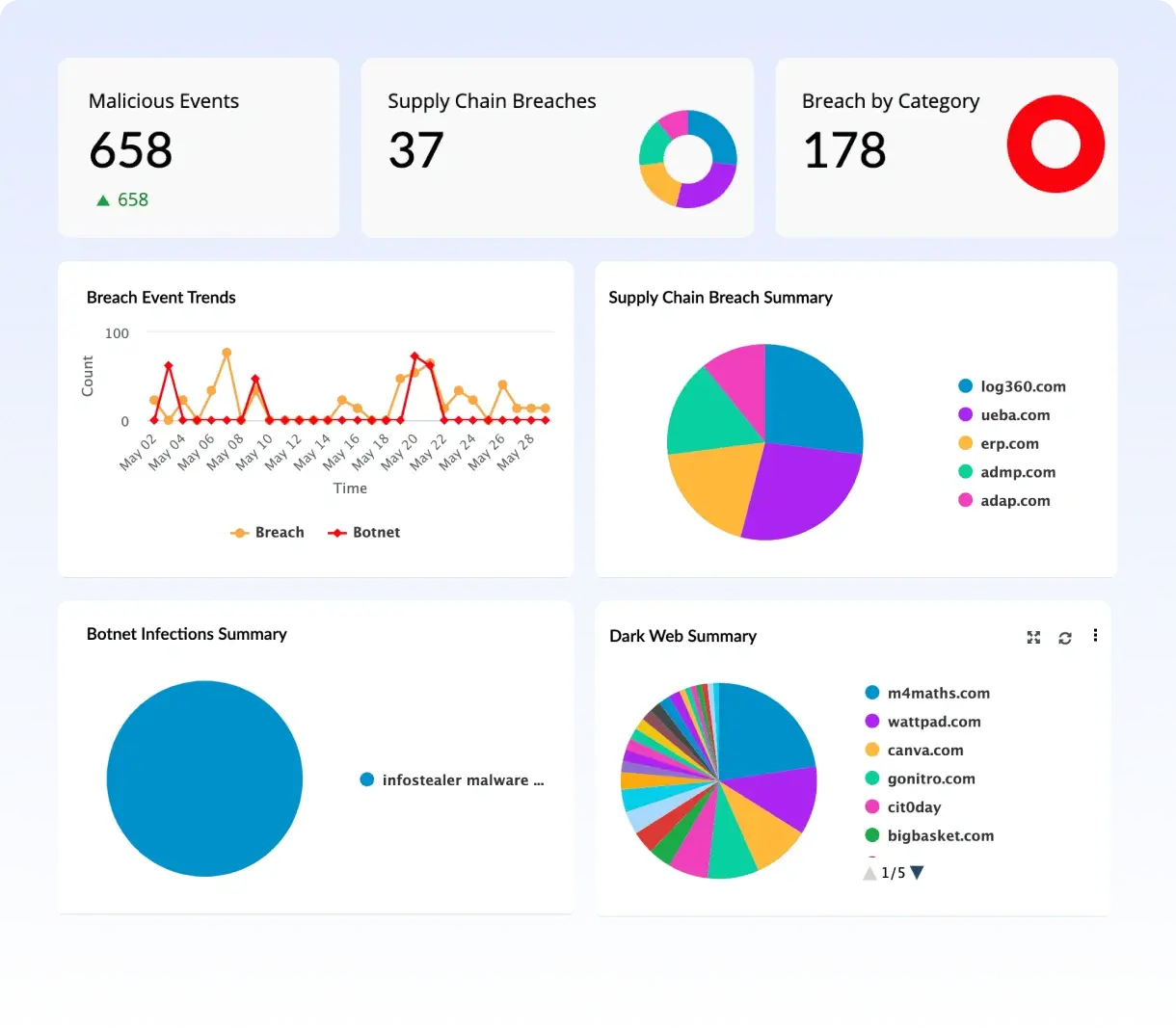
While malware injections, manipulator-in-the-middle attacks, and insider threats are common threats seen in supply chain attacks, attackers are increasingly targeting credentials through phishing and social engineering, bypassing traditional defenses.
Compromised employee credentials are a common entry point for attackers that is often overlooked. With its enhanced and global threat intelligence, Log360 can identify leaked credentials, enabling you to take action like enforcing password resets and implementing stricter access controls.
By automating incident response workflows, remediation can be performed by triggering password reset workflows on compromised accounts. This streamlines the response process and allows you to react swiftly to emerging threats.
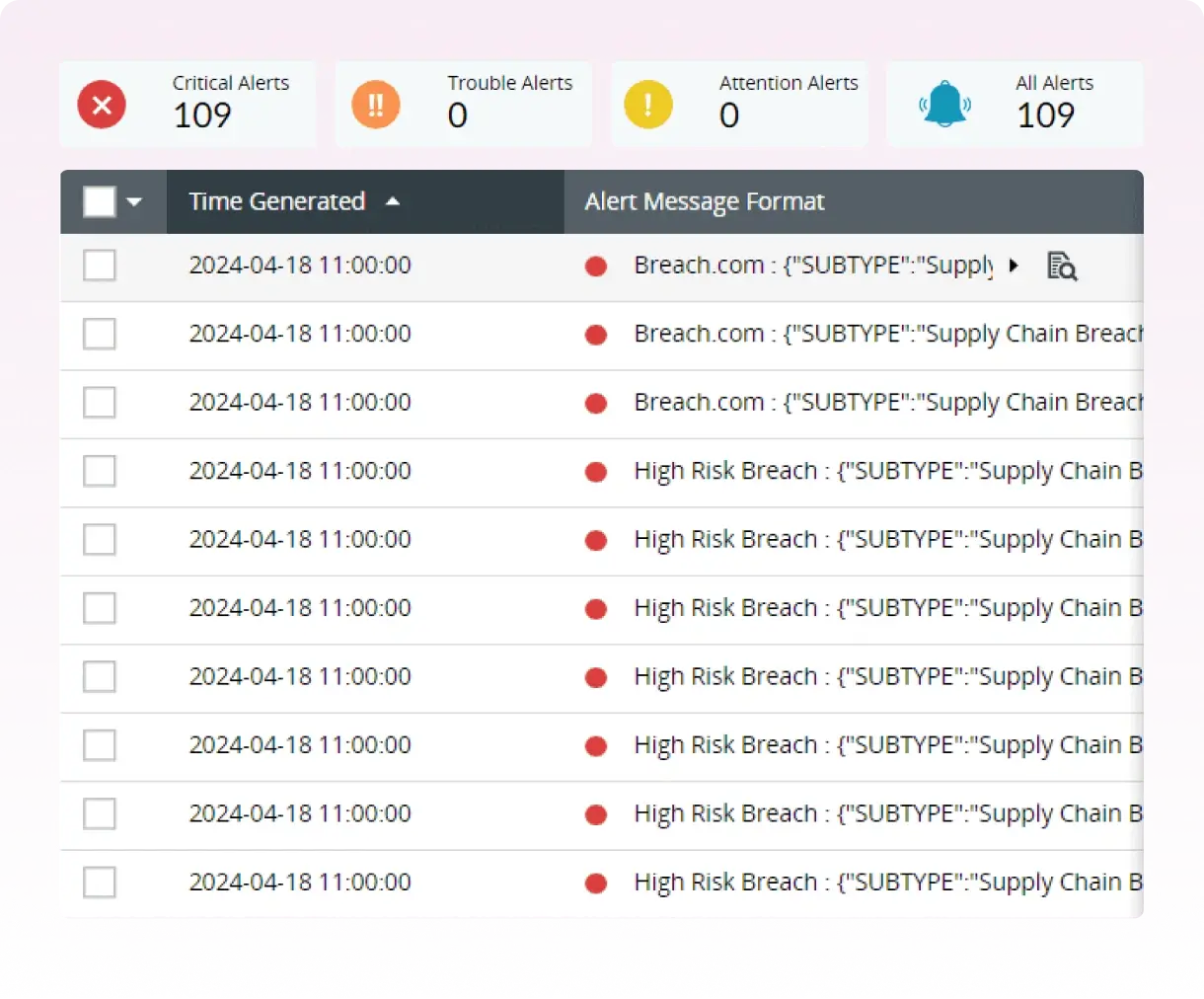
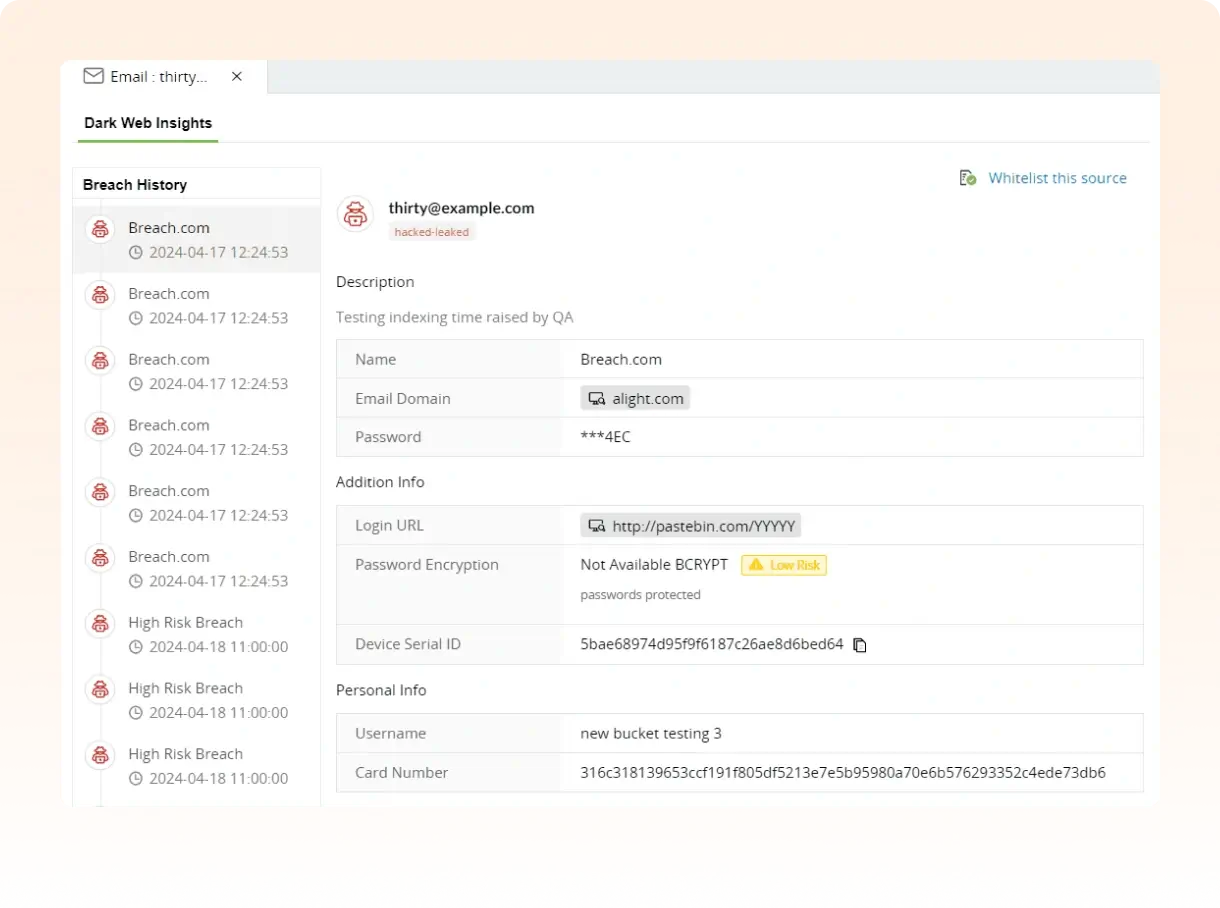
In the event of a compromised credential, by using the Incident Workbench to perform advanced analytics on the threat, you can track the attacker's next steps as they move laterally across the network or escalate their privileges. This enables you to effectively contain threats and minimize potential damage.
The Incident Workbench console adds contextual data, such as breach history, leaked data, usual login URL, password hash, and personal information, for effective threat hunting.
Credentials exposed on dark web forums and dump sites are often used for credential stuffing and account takeover. Early detection helps security teams reset passwords and block unauthorized access before attackers gain entry.
Leaked personal or payment-related information can trigger fraud, identity abuse, and regulatory risk. Continuous monitoring helps teams identify exposed records quickly and begin containment and notification workflows.
Vendors and partners can become indirect entry points into your environment when their credentials are compromised. Monitoring third-party related leaks helps reduce downstream supply chain risk and strengthens external access governance.
Dark web detections are most useful when paired with internal security context. Enriched incident data helps analysts validate impact faster, map affected users or systems, and prioritize high-risk compromise scenarios.
Delays in response increase the chance of breach escalation after credential exposure. Rapid actions such as forced password resets, MFA enforcement, and privilege review help contain threats before misuse occurs.

ManageEngine partners with Constella Intelligence for this integration. Constella Intelligence is a leading global digital risk protection business that works in partnership with some of the world's largest organizations to safeguard what matters most and defeat digital risk. Its solutions are broad, collaborative, and scalable, powered by a unique combination of proprietary data, technology, and human expertise—including the largest breach data collection on the planet, with over 100 billion attributes and 45 billion curated identity records spanning 125 countries and 53 languages.
Log360 scans the deep and dark web continuously for leaked credentials associated with organizations, their employees, and third-party vendors. This ensures that you are alerted about potential security risks before potential damage.
Personally identifiable information (PII) leaks, such as credit card and Social Security numbers, are detected and notified on in real time.
With Log360, you gain early visibility into potential supply chain vulnerabilities. This allows you to take action and prevent breaches before attackers can exploit these weaknesses.
Log360 tracks and immediately alerts on illegal credit card dumps and personal information leaks. This helps you to proactively approach unauthorized transactions and financial information leaks.
Log360 provides instant alerts whenever leaked credentials or critical information are found on the deep and dark web.
Most regulatory mandates, such as the GDPR and the PCI DSS, mention implementing security measures to prevent data breaches. Dark web monitoring is one of the best security measures that you can adopt to identify the early signs of attacks and prevent them even before they occur.
We wanted to make sure that one, we can check the box for different security features that our clients are looking for us to have, and two, we improve our security so that we can harden our security footprint.
Carter Ledyard
The drill-down options and visual dashboards make threat investigation much faster and easier. It’s a truly user-friendly solution.
Sundaram Business Services
Log360 helped detect insider threats, unusual login patterns, privilege escalations, and potential data exfiltration attempts in real time.
CIO, Northtown Automotive Companies
Before Log360, we were missing a centralized view of our entire infrastructure. Now, we can quickly detect potential threats and respond before they escalate.Log360 has been invaluable for improving our incident response and ensuring compliance with audit standards. It’s a game-changer for our team.
ECSO 911
The dark web refers to a part of the internet that is intentionally hidden and inaccessible through standard web browsers and search engines. It consists of encrypted networks and websites that require specific software, such as the Tor (The Onion Router) browser, to access. This anonymity-focused technology allows users and websites to operate without revealing their identity or location, making it a haven for both illicit and legitimate activities that require privacy. The dark web is often associated with illegal marketplaces, forums for hackers, and other activities outside of mainstream online activities.
Dark web monitoring involves actively tracking hidden online networks to detect and mitigate threats, including stolen data and illicit activities. It provides early detection of compromised information and helps organizations respond swiftly to potential cybersecurity risks before they escalate.
Dark web monitoring tools observe hidden sites, underground forums, and breach sources that aren’t visible through normal browsing. They compare information found in these areas with your company’s domains, accounts, and identity attributes. When exposed data appears, the system alerts your security team so they can take corrective steps before the information is misused.
The deep web includes all online content that isn’t indexed by search engines such as emails, cloud storage, banking portals, and internal business applications. It is legal and widely used for everyday private online activities that require privacy.
On the other hand, the dark web is a deliberately hidden portion of the deep web that requires specialized browsers like Tor to access. Its anonymity often attracts illegal marketplaces, stolen data exchanges, and cybercriminal forums. Dark web monitoring focuses on this high-risk space to identify early signs of compromised information.
When your email address appears on the dark web, it usually means it was exposed in a data breach or leaked through an insecure service. Cybercriminals may use the email and any associated information such as passwords, usernames, or personal details to launch targeted attacks. This often leads to:
Monitoring dark web activity helps you detect this exposure early so you can reset credentials, strengthen authentication, and prevent attackers from gaining further access.
Once data is leaked to the dark web, it cannot be fully removed. Copies of the same information may circulate across multiple hidden marketplaces, breach forums, and private groups. What you can do is reduce the impact: reset compromised passwords, revoke exposed credentials, enforce MFA, and notify your security team to investigate the source of the breach. Implementing continuous dark web monitoring ensures that any new appearance of compromised data is detected early, enabling your security team to act quickly and minimize the impact of future breaches.
Accessing the dark web itself is not illegal in most regions. However, engaging with illegal marketplaces, purchasing stolen data, downloading prohibited content, or interacting with cybercriminal networks is unlawful. Security teams often use controlled, compliant monitoring tools to detect exposed corporate data without directly accessing illegal sites.
Use Log360 to monitor the dark web, investigate exposure faster, and respond before breaches spread.