Chapter 6: AI and sustainability
Investing in AI is a double-edged sword depending on how organizations implement it. While it offers powerful capabilities to optimize energy usage and enhance operational efficiency, it also comes with significant challenges. AI-driven systems require substantial computational power, which can increase energy consumption and carbon emissions if not managed responsibly. The key lies in balancing technological advancement with responsible implementation to ensure AI contributes to an organization’s environmental goals instead of undermining them.
Positive impact:
- Optimizing cloud infrastructure: AI helps optimize server workloads and energy consumption in cloud data centers. For instance, AI-driven workload management distributes computing tasks across servers more efficiently, reducing idle energy use and carbon emissions.
- Improved software efficiency: AI can refine the design and operation of SaaS platforms, making them lighter and more efficient, which reduces computational demand. AI-powered code optimization tools streamline applications to use less processing power and memory.
- Enhancing collaboration: AI can improve the efficiency of collaboration tools (e.g., video conferencing, cloud storage), enabling remote work and reducing the need for commuting and office space. For example, AI-powered video compression reduces data usage and energy consumption for remote meetings.
- Implementing sustainability solutions: AI-powered platforms can help both organizations and their customers track and reduce their carbon footprint and improve sustainability metrics like supply chain emissions or environmental compliance.
- Facilitating smarter energy use: AI models can predict energy needs and adapt infrastructure to use renewable energy sources. Organizations can utilize AI-driven energy management systems to predict peak loads and shift workloads to data centers powered by renewable energy.
Negative impact:
The most evident consequence of AI is the technology’s high energy consumption. Training and deploying AI models require substantial computational resources, increasing energy demands. Furthermore, relying on AI can lead to shorter hardware cycles. AI workloads demand advanced hardware (e.g., GPUs, TPUs), which accelerates hardware obsolescence and contributes to e-waste. While businesses may want to adopt AI sustainably, the lack of transparent green energy options or clear regulations can make the efforts more challenging.
What is Zoho Corp. doing about it?
AI-driven video processing
Raja Gopal and his team work on accelerating complex workloads on hardware. As part of their sustainable AI initiatives, the team is working on AI-driven video processing, or optimizing video workflows with hardware acceleration.
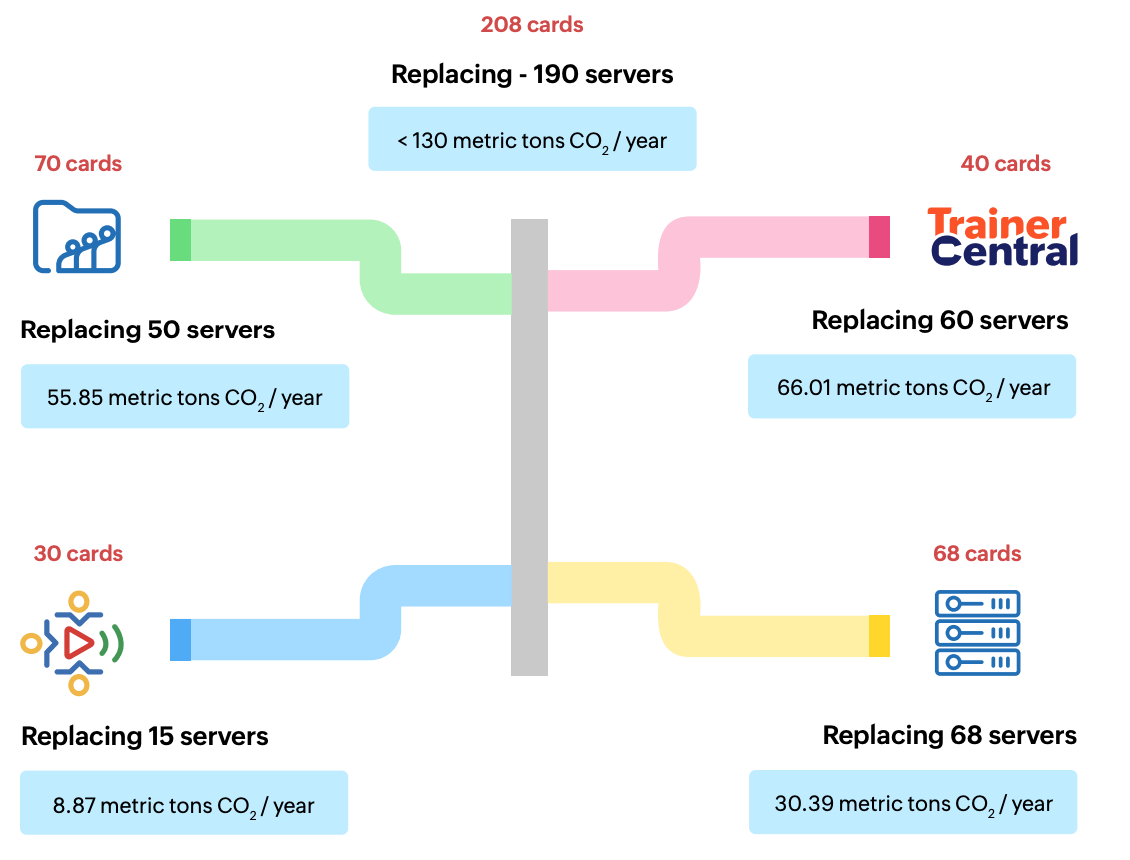
The problem with using traditional servers for video processing is that they consume vast amounts of power. For Zoho and ManageEngine combined, the sheer number of servers that would be required for operations is economically unfeasible. To address this, the team is experimenting with field-programmable gate array (FPGA) cards designed for video transcoding solutions. Cards like MA35D and U30 are built for real-time, high-volume streaming, allowing service providers to reduce latency per card and reduce overall expenses.
What does this mean?
Typically, a server uses approximately 200-450W per hour. For a video to be captured, compressed, and sent over a network, we need four servers, i.e., 1kW per hour. A 3rd Gen CPU or card would only require 25W—a drastic change in workload. FPGA cards reduce energy consumption and server footprint in data centers, contributing to overall sustainability. To begin with, the cards have been adopted and integrated with select Zoho products, reducing carbon emissions by around 130 metric tons per year.
The results are encouraging, strongly indicating that the R&D team is headed in the right direction. They will continue phase-wise implementation across Zoho Corp.’s product suite and support sustainable AI. Additionally, the team is also working on running quantized models on CPUs instead of power-hungry GPUs. Quantization compresses models by reducing the precision of weights, making them faster to execute and easier to deploy on standard CPUs for lightweight tasks. Consequently, this reduces the need for powerintensive cooling equipment and lowers environmental impact.
Operational performance boost with embedding
When trying to find matching text, the most obvious method is pattern matching, i.e., looking for specific characters, words, or sentence structures. However, this can be inefficient when searching through large amounts of text. Just as images are made up of pixels and sounds are made up of digital signals, the ZLabs team uses a similar method to represent text, especially for advanced tasks like retrieval, classification, or semantic search. That’s where text embedding comes in.
The ZLabs team used a tool known as Sentence Transformers with a small, English-language AI model to convert text into numbers called text embeddings. This makes searches smarter by understanding the meaning of the query and not just the exact words. The embedding functionality is then used to power other AI workloads.
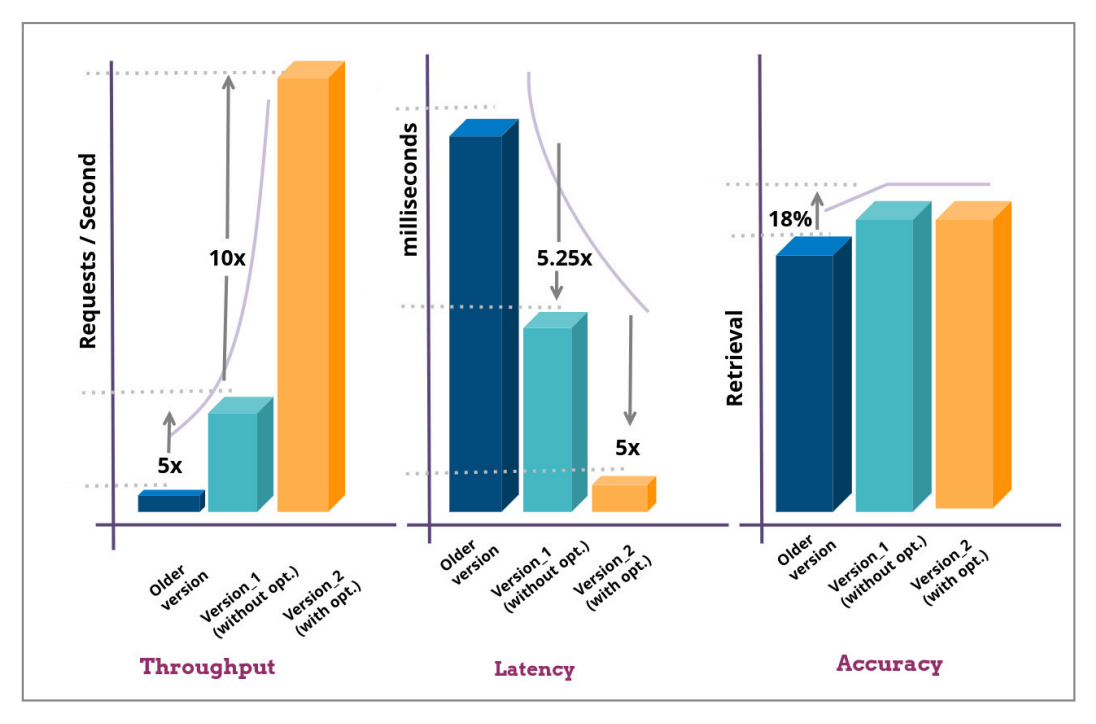
Product teams (in beta testing) observed an 18% increase in accuracy, 5x increase in throughput (processing capacity), and 5.25x reduction in inference time. From a sustainability standpoint, this has allowed teams to switch from GPUs to CPUs, resulting in significant reduction in both cost and emissions.
Going green with low-code
The foundation of Zoho Corp.’s sustainability efforts at the HQ rests on our in-house low-code IoT platform. As with any large infrastructure, the only way to attain efficiency is by having complete visibility over operations. IoT devices are crucial for green operations because you can’t optimize what you can’t measure. Let’s take a closer look at how we made this happen.
Pain points
1. High energy consumption
One of the biggest challenges we faced was unmonitored high energy consumption across the HQ campus. Lights, fans, and HVAC systems often ran even when unoccupied, either due to user negligence or the absence of automated controls, leading to unnecessary power usage. Similarly, air handling units (AHUs) and chillers continued to operate at high capacity regardless of occupancy or temperature conditions. Without real-time insights and automation, inefficient energy use became a major challenge for the admin team.
2. Lack of real-time monitoring
The lack of a centralized system to monitor utility consumption in real time led to delays in detecting overconsumption or waste. Electricity and water consumption data was collected manually, making it difficult to identify patterns or sudden anomalies. For instance, a minor water leak in a restroom or cooling tower could go unnoticed for a few days, resulting in water being wasted before it was noticed and corrected. Similarly, without real-time energy monitoring, facility managers couldn’t determine when power usage spiked due to faulty equipment or unnecessary loads.
3. Limited data-driven decision making
The admin team relied on historical data and manual reporting to make critical decisions regarding energy and resource management. Without a unified system that consolidates and analyzes data from various sensors and equipment, decision-making was often reactive rather than proactive. For example, HVAC adjustments were typically based on predefined schedules rather than real-time occupancy data, leading to either under-utilization or excessive cooling or heating. Likewise, budgeting for utilities and maintenance was done based on past trends rather than predictive insights, which meant technicians could not anticipate potential spikes in energy demand or upcoming maintenance needs. The lack of AI-driven analytics further complicated forecasting, making it difficult to identify opportunities for cost savings and efficiency improvements.
Implementation
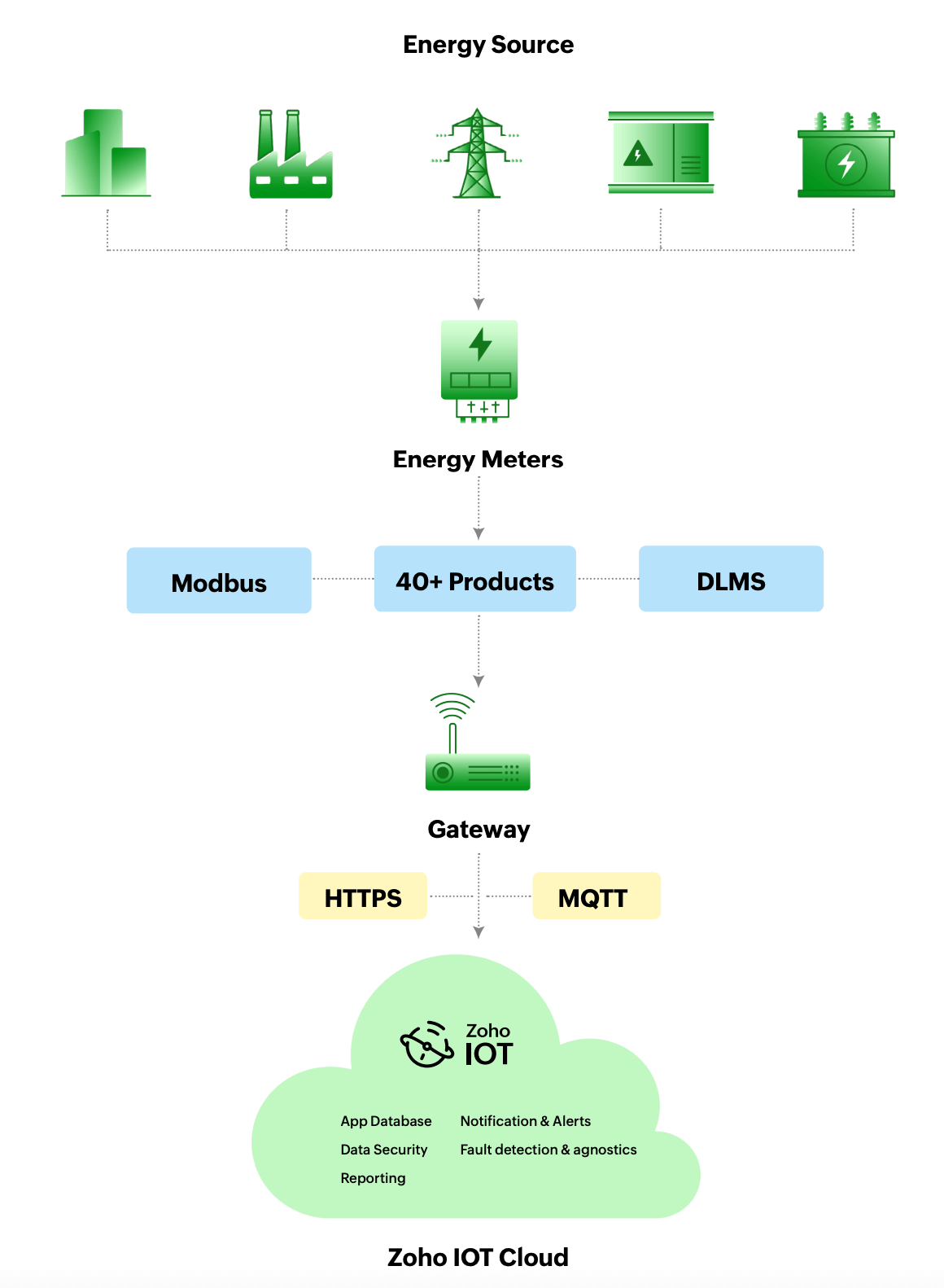
To tackle high energy consumption and operational inefficiencies, we deployed our in-house IoT energy management solution across the entire campus, integrating a broad range of assets including ACs, lights, fans, AHUs, chillers, diesel generators (DGs), solar panels, water systems, electricity meters, and surveillance cameras.
Each energy-consuming and critical infrastructure component was connected to the platform using a layered hardware integration model. For instance, smart energy meters were installed at main distribution boards, sub-distribution panels, and critical load points to measure kWh, kVA, power factor, voltage, current, and harmonics. Temperature sensors were deployed in workspaces, server rooms, and AHU supply/return ducts to capture ambient conditions. Populated areas like lunch halls used occupancy sensors to detect human presence for conditional actuation of lights, fans, and HVAC loads. All sensors and equipment were connected to local IoT edge controllers and gateways that pre-processed data, buffered it in case of network failure, and pushed it to the cloud platform over MQTT/HTTPS.
With all sensors and assets connected, the IoT platform provided the facility team with a centralized cloud dashboard for real-time visibility into energy and resource usage across the campus. The dashboard offered multi-layered views—allowing monitoring at the campus, building, floor, and individual device levels. Teams could track key metrics such as energy consumption, power factor, water usage, and asset uptime from a single interface. The system also enabled real-time alerting through threshold-based rules. Any spike in power demand, abnormal diesel generator fuel consumption, or signs of a water leakage would trigger immediate notifications via email, SMS, or mobile push. Device health metrics were also tracked to ensure that sensors, gateways, and controllers were communicating reliably. This allowed the admin team to stay ahead of anomalies, prevent wastage, and maintain a high level of operational control across all zones.
Usage could be compared across time-of-day segments, helping teams detect inefficiencies during non-working hours when systems were expected to be idle.
Beyond monitoring, the platform empowered the admin team to automate energy usage through rule-based controls that responded to real-world conditions. Lights in common areas and meeting rooms were configured to turn off automatically if no movement was detected for a set duration. HVAC systems, including AHUs and chillers, were dynamically modulated based on real-time data from temperature and occupancy sensors. For example, variable frequency drives (VFDs) allowed the system to reduce airflow when fewer people were present or when cooling demand dropped. Diesel generators were also managed more efficiently—they only activated when both grid and solar power sources were insufficient, using real-time load and capacity data to avoid unnecessary runtime. In high-demand periods, the system could automatically disable non-critical loads to prevent peak penalties. All control rules could be configured, tested, and updated remotely from the platform, giving the operations team precise control over when and how energy was consumed across the campus.
The platform collected and stored time-series data which was analyzed through analytics and custom ML models to extract operational insights:
- Electricity bill forecasting: Historical consumption data was correlated with tariff slabs and seasonal patterns to project upcoming utility costs.
- Load disaggregation: Energy consumption was broken down by asset category (e.g., HVAC, lighting, DG, plug loads) to assess where energysaving interventions were most effective.
- Anomaly detection: Algorithms flagged equipment that deviated from baseline behavior (e.g., a chiller running longer than normal or a DG showing excessive fuel burn at low loads).
- Predictive maintenance: Vibration and runtime data from HVAC systems and pumps were used to estimate maintenance windows before potential failures occurred.
With this implementation, the campus achieved a 20% reduction in energy consumption over 2.5 years. Device lifespan improved, anomalies were detected and resolved faster than ever, and admin budgets were no longer a challenge. Ultimately, the increased visibility and accountability supported sustainable performance across departments.
Scenario: Water leak detection in cooling tower saves thousands of liters
A cooling tower responsible for regulating temperature in the server block was consuming significantly more water than usual, but the increase was gradual and didn’t raise immediate flags. Since water meters were read manually once a week, the leak went undetected for nearly two weeks, resulting in excessive water usage and a risk of operational downtime due to the cooling system’s reduced efficiency.
To automate the process, water flow sensors and leak detection sensors were installed on water pipelines and cooling towers to monitor the system in real time and detect microleaks or sudden pressure drops. With the sensors installed, the platform continuously monitored flow rate, pressure, and total water consumption. The platform detected a sustained increase in flow rate from the cooling tower’s return line without a corresponding rise in ambient temperature or load demand. Simultaneously, pressure sensors registered a slight but consistent drop, suggesting a possible leak or line breach.
Once this anomaly was captured by the IoT platform, the data was pushed into the integrated analytics tool for correlation. The analytics team built a dashboard that overlaid cooling tower water consumption with temperature trends, occupancy levels, and equipment schedules. This data clearly showed that while demand remained stable, water usage spiked—pinpointing a likely leak that would not have been noticed without this multi-metric analysis.
With this information, the facilities team traced the leak to a hairline crack in one of the return pipes. Since it was not visible externally, traditional inspections would have taken much longer to find the issue. The pipe was repaired within 24 hours, and water consumption normalized immediately, saving an estimated 8,000+ liters of water per week. Water pressure returned to baseline, reducing stress on the cooling equipment. A custom alert was configured to notify teams of any similar flow-pressure mismatches in the future.
IoT tools empower organizations to improve their sustainability efforts by providing real-time visibility into energy, water, and resource usage across operations. This enables data-driven decisions that reduce consumption, lower emissions, and extend equipment life, making sustainability an actionable goal.
Tools for change
How does Zoho Corp. implement in-house tools to bolster its sustainability efforts?
Low-code
Enables the efficient development of custom applications for various operational needs. Facilitates digital transformation and reduces paper usage, contributing to environmental sustainability.
IoT
Supports real-time monitoring of energy consumption, power quality, and carbon footprint tracking. Aids in setting and measuring sustainability goals and achieving net-zero targets.
Remote monitoring and management (RMM)
Permits remote monitoring of energy consumption in buildings, devices, and cloud infrastructure. Helps MSPs implement green IT practices and comply with sustainability regulations.
IT asset management
Enables comprehensive management of IT assets, including hardware and software inventory, license compliance, and life cycle management. Promotes the efficient use of resources, reduces electronic waste, and supports sustainable procurement practices.
Remote support and access
Provides remote IT support and access to devices from anywhere, minimizing the need for travel and on-site assistance.