Chapter 3: Measuring progress
Key sustainability metrics
For an enterprise, sustainability metrics should cover two primary areas: operations and product impact. These metrics help track environmental, social, and economic performance and align with sustainability goals. In this section, we’ll go in greater detail about the metrics that can help monitor progress in an organization’s sustainability efforts.
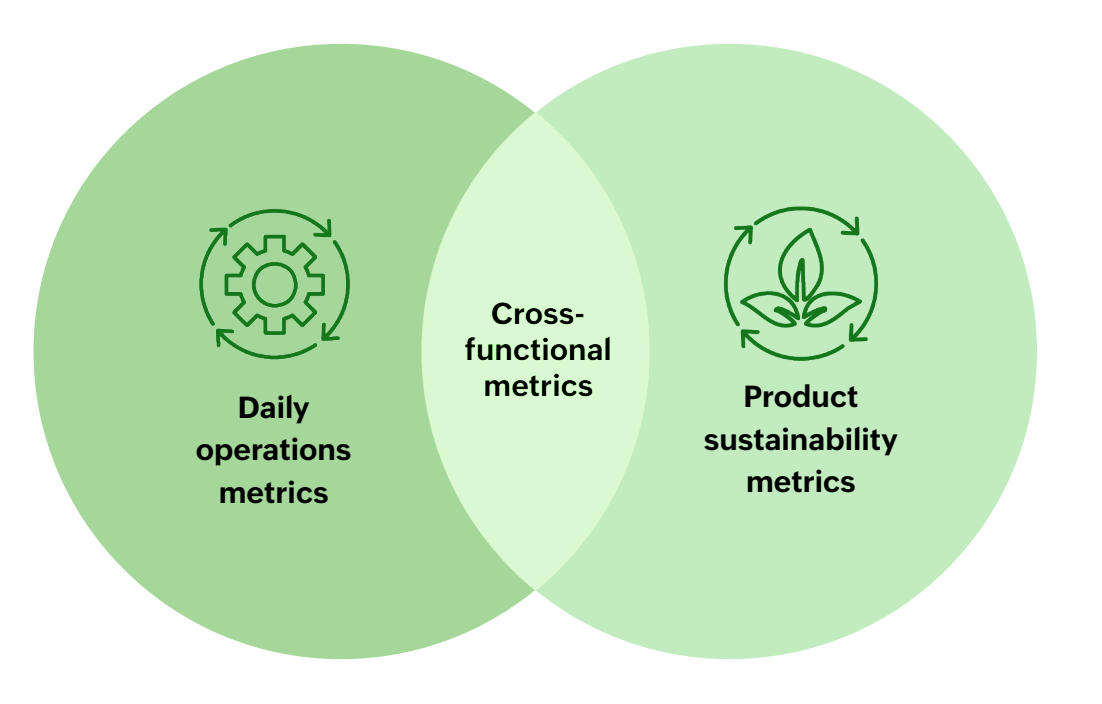
Daily operations metrics
1. Energy consumption
Tracks the total energy usage across offices, data centers, and operations. This helps assess the overall carbon footprint and effectiveness of energy efficiency programs. For instance, Zoho Corp. measures energy consumption (kWh) from renewable vs. non-renewable sources in global offices and data centers.
2. Carbon emissions
Measures the greenhouse gas emissions resulting from company operations, including energy use, business travel, and supply chain activities. This helps organizations set reduction targets and transition toward carbon neutrality.
It's important to measure scope 1, 2, and 3 emissions:
- Scope 1: Direct emissions from owned assets (e.g., company vehicles).
- Scope 2: Indirect emissions from energy purchases (e.g., electricity for data centers).
- Scope 3: Emissions from the supply chain and employee commuting.
3. Waste management
Monitors e-waste, general waste, and recycling rates. Good waste management practices help reduce landfill contributions and promote circular economy practices. For example, organizations can report the percentage of e-waste properly recycled through certified vendors.
4. Water usage
Tracks the amount of water consumed in facilities, manufacturing, and cooling systems for data centers. Organizations can use metrics like water usage per employee and compile reports on rainwater harvesting or greywater recycling capacity.
5. Employee commute and travel
Calculates the carbon footprint associated with employee commuting and business travel. Zoho Corp. actively monitors the percentage of employees using green commuting options (shuttle services) vs. private vehicles.
6. Renewable energy usage
Tracks the percentage of total energy sourced from renewable sources. For instance, Zoho Corp. evaluates the share of energy that comes from solar installations at the hub offices.
Product sustainability metrics
These metrics assess the environmental and social impact of products throughout their life cycle, from development to usage and disposal. They help ensure that products are designed, built, and maintained in a way that minimizes the environmental footprint while maximizing efficiency for customers.
1. Product energy efficiency
Measures the energy consumption of software and infrastructure to help minimize environmental impact and reduce operational costs. The primary goal is to introduce optimization efforts that can reduce the software’s energy demands, especially during off-peak hours.
Examples:
- Power consumption of servers running cloud applications.
- Energy required to process transactions or user interactions i.e., energy consumed per user session or per 1,000 operations.
2. Carbon impact
Tracks the greenhouse gas emissions generated by hosting and delivering cloud-based products. Carbon emissions must be a part of sustainability plans for B2B enterprises like ManageEngine, because it allows customers to make eco-conscious decisions.
Examples:
- CO2 emissions per customer or per data transaction.
- Percentage of cloud operations powered by renewable energy.
3. Sustainable product design
Evaluates how products are built to minimize resource consumption and support long-term usability on various devices. This helps users avoid unnecessary hardware replacements and reduces e-waste.
Examples:
- Software compatibility with older devices to extend their lifespan.
- Use of lightweight coding to minimize computing resource consumption.
- Compatibility with energy-saving hardware.
4. Customer impact metrics
Assesses how products help customers reduce their environmental footprint through digital transformation and efficiency improvements. This provides measurable value for customers looking to achieve their ESG goals.
Examples:
- Number of documents that were e-signed instead of printed.
- Energy and water saving metrics.
5. End of life (EOL) recycling and reusability
Monitors the ability to recycle, refurbish, or responsibly dispose of products after their life cycle ends. It encourages a circular economy and minimizes landfill contributions.
Examples:
- Customer engagement in take-back or recycling programs.
- Usage of eco-friendly packaging for physical products or accessories.
Cross-functional metrics
Cross-functional sustainability metrics span across departments and business functions to align the entire organization with sustainability goals. These metrics ensure sustainability efforts are integrated into company culture, decision-making, and external partnerships.
1. Sustainability awareness and engagement
Measures employee participation and understanding of sustainability initiatives within the organization. Awareness is crucial to build a sustainability-focused culture and encourage innovative solutions.
Examples:
- Employee participation in sustainability initiatives and training.
- Internal green campaigns and volunteer efforts.
2. Supplier sustainability compliance
Evaluates suppliers’ adherence to environmental and ethical standards in their operations and supply chains. It allows businesses to ensure compliance with global environmental standards.
Examples:
- Supplier adherence to environmental and ethical standards (e.g., fair labor practices, use of sustainable materials).
- The proportion of purchases from certified green vendors.
- The percentage of IT hardware sourced from vendors with sustainability certifications like ENERGY STAR or EPEAT.
3. Sustainable event practices
Tracks the environmental impact of corporate events, including waste reduction and carbon offset efforts. As an enterprise pursuing sustainable operations, Zoho Corp.’s goal is to set an example for customers, partners, and other solution providers.
Examples:
- Sustainability efforts at corporate events, such as using eco-friendly materials and minimizing waste.
- Carbon offset initiatives tied to events.
- Usage of waste sorting and recycling stations at conferences.
4. Circular economy metrics
Assesses how well an organization incorporates reuse, refurbishment, and recycling into its supply chain and operations. This enhances the company’s green credentials and supports a closed-loop system.
Examples:
- Participation in circular economy programs with vendors.
- Reduction in waste generated by operations.
- Implementation of internal IT asset refurbishment programs, allowing older laptops and devices to be redeployed instead of discarded.
5. CSR initiatives
Measures the organization’s contribution to environmental and social welfare programs. CSR promotes employee participation in meaningful environmental efforts and boosts brand image.
Examples:
- The amount of funding allocated to environmental CSR projects.
- Volunteer hours contributed to sustainability-focused initiatives.
- Track the number of trees planted as part of CSR programs.
6. Sustainability reporting and transparency
Tracks the organization’s commitment to regularly sharing progress and data on sustainability efforts with customers. This builds trust with customers and demonstrates a commitment to continuous improvement.
Examples:
- Frequency and depth of sustainability reporting.
- Customer feedback on sustainability efforts.
- Annual sustainability report showcasing progress in emissions reductions, energy savings, and social impact.
Key certifications for data centers
1. ISO 14001: Environmental management system (EMS)
ISO 14001 helps organizations implement an effective EMS, offering a structured approach to manage environmental responsibilities. The standard encourages continuous improvement in environmental performance, ensuring compliance with regulations and alignment with global sustainability goals.
For data centers, ISO 14001 ensures that service providers adopt processes to minimize environmental impact, such as reducing energy consumption, managing waste, and optimizing water usage. From construction to operation and decommissioning, it is crucial to follow sustainable practices to avoid penalties. An ISO 14001 certification demonstrates environmental responsibility, helping to build trust with customers.
Key principles:
- Environmental policy: Establish an environmental policy that aligns with strategic organizational goals and commitments to sustainability.
- Planning: Identify environmental risks, set objectives, and establish processes to achieve them. This includes assessing aspects like energy usage, waste generation, and emissions.
- Implementation and operation: Develop action plans, allocate resources, and establish roles to ensure environmental objectives are met.
- Monitoring and evaluation: Track environmental performance using key metrics and ensure compliance with legal requirements.
- Continuous improvement: Use feedback from audits and evaluations to refine processes and improve environmental impact over time.
Examples:
Zoho Corp.’s data center in Dublin is certified for ISO 14001. This means we follow practices like energy-efficient cooling technologies, renewable energy sources to power operations, and recycling programs for e-waste.
2. ISO 50001: Energy management system
ISO 50001 is a standard that provides a framework for improving energy performance, including energy efficiency, use, and consumption. It focuses on helping organizations establish systems and processes to reduce energy consumption systematically and continuously.
For data centers, ISO 50001 supports methods to optimize energy-intensive processes like cooling, power distribution, and IT hardware operation. It focuses on reducing power usage effectiveness (PUE), a critical metric for data center energy efficiency. ISO 50001 encourages providers to identify inefficiencies and adopt emerging technologies that can achieve significant energy cost reductions.
Key principles:
- Energy policy: Develop an energy policy outlining commitments to improving energy performance
- Planning: Identify significant energy uses, establish energy baselines, and set measurable objectives for improvement.
- Implementation and operation: Integrate energy management practices into daily operations, including the procurement of energy-efficient equipment and training employees.
- Performance monitoring: Measure and analyze energy performance metrics against established baselines.
- Review and improvement: Regularly audit the energy management system and make necessary adjustments to enhance performance.
Example:
Zoho Corp.’s data center in Amsterdam is certified for ISO 50001. This means we follow practices like real-time energy monitoring, predictive scaling for servers and workloads, use high-efficiency power supplies, and sustainable building designs.
Combining ISO 14001 and ISO 50001 ensures that data centers address their environmental impact holistically, covering both energy and other resources. Certification also demonstrates leadership in sustainability, which can help attract environmentally conscious customers. Finally, it ensures adherence to environmental laws and standards, reducing the risk of fines or operational disruptions.
Leadership in Energy and Environmental Design (LEED)
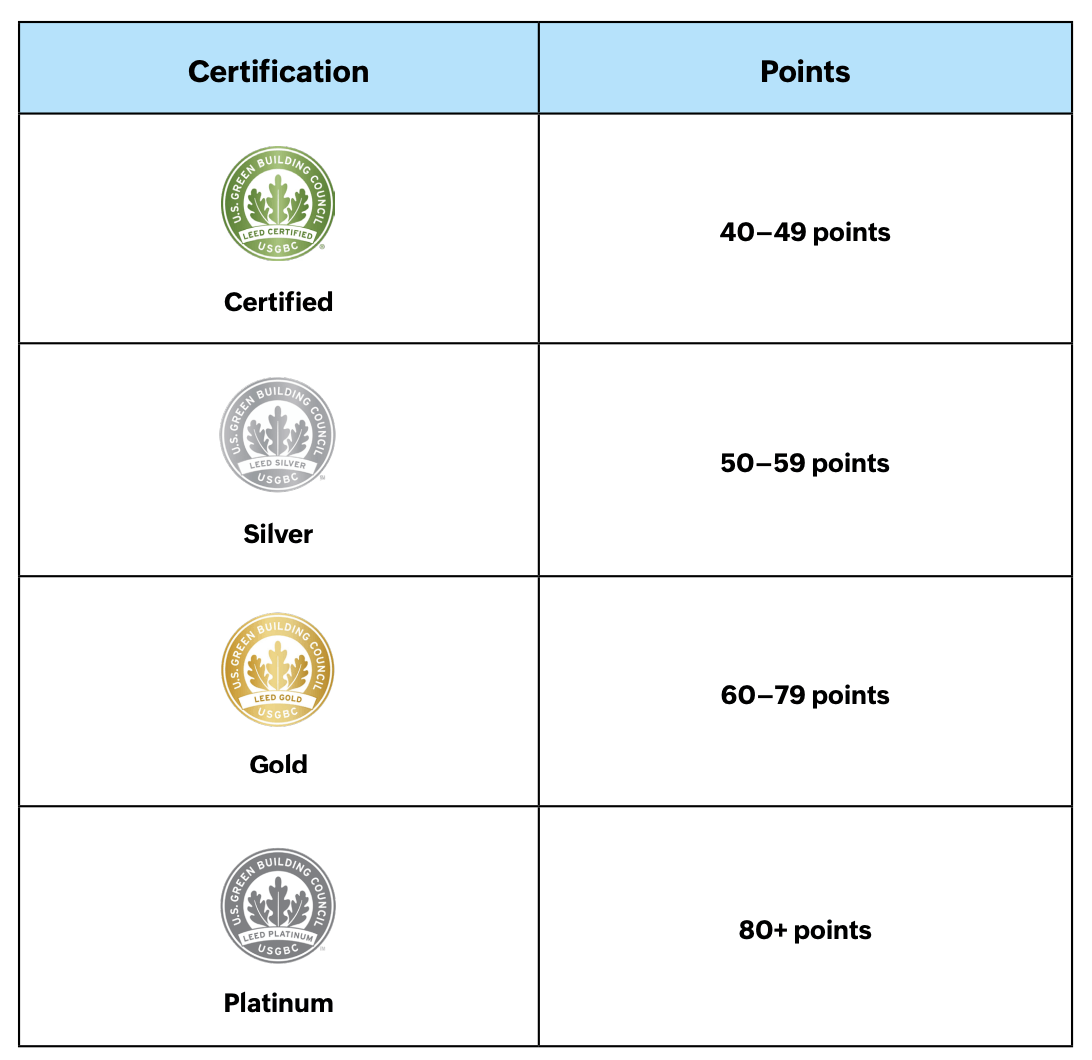
LEED is a globally recognized green building certification system developed by the United States Green Building Council (USGBC). It provides a framework for designing, constructing, and operating energy-efficient and environmentally friendly buildings, including data centers. LEED certification is awarded based on points earned across different sustainability categories, with four levels of certification:
Key principles:
- Energy and atmosphere: PUE, renewable energy, & efficient power distribution.
- Water efficiency: Water usage effectiveness, alternative cooling methods, and on-site water recycling.
- Sustainable sites: Location, storm water management, urban heat island effect reduction.
- Materials and resources: Sustainable construction materials, e-waste management, and adaptive reuse.
- Indoor environmental quality: Low-emission equipment and materials, advanced ventilation systems, lighting optimization.
- Innovation: Cutting-edge green technologies and additional compliance strategies.
Example:
Facebook’s US data center in Oregon is certified LEED Gold. It uses 100% renewable energy (i.e., solar and wind) and an advanced water-efficient cooling system, reducing water usage by 80%. It also utilizes custom-built, high-efficiency servers. Data center certifications ensure compliance, reduce inefficiencies, and build trust with customers and partners. Pursuing these certifications also positions data centers as future-ready in a market that increasingly values sustainability and transparency.