Frequently asked questions on enterprise endpoint management and security
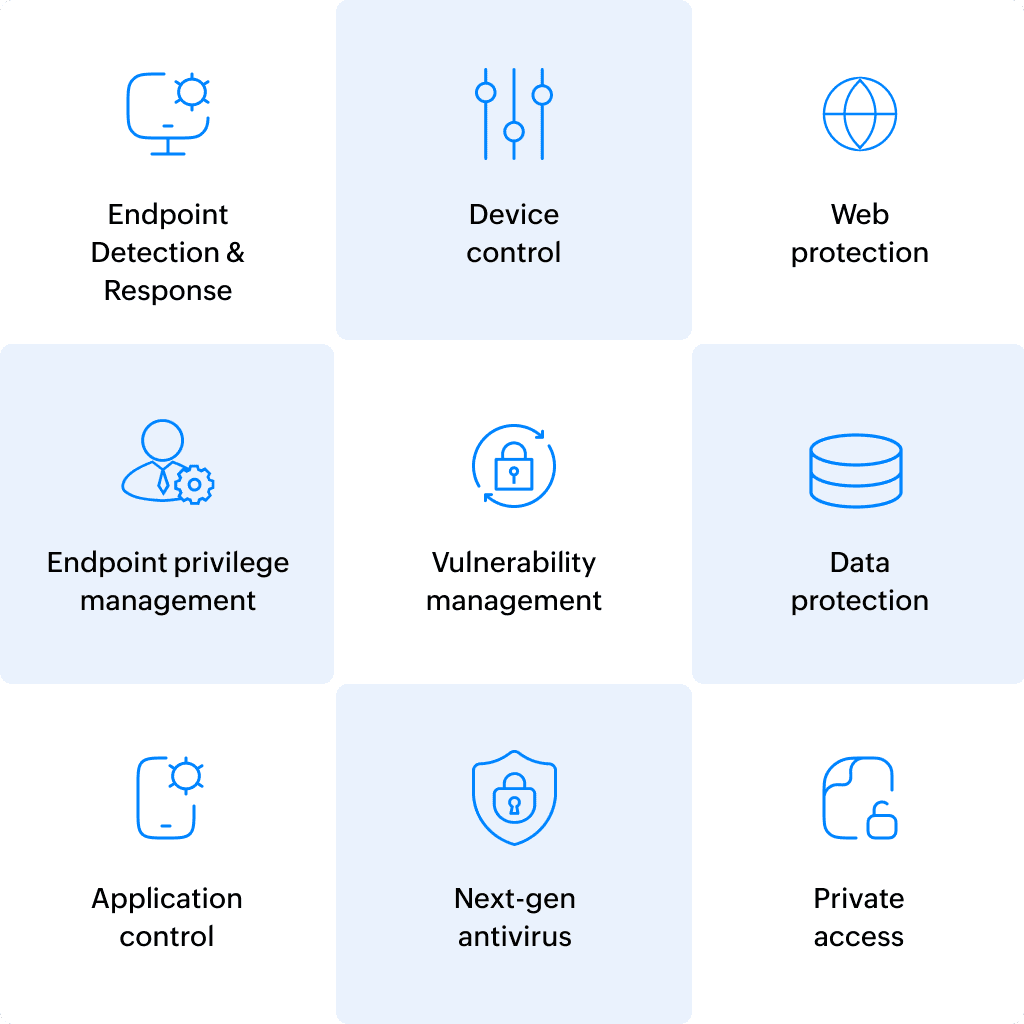
Enterprise endpoint management and security is the practice of managing, monitoring, and protecting all devices connected to an organization's network from a centralized platform. It combines IT operations like patching, software deployment, configuration management, and asset tracking with security capabilities like threat detection, vulnerability management, and data loss prevention. Endpoint Central unifies all of these into one platform with one agent across Windows, macOS, Linux, iOS, Android, ChromeOS, servers, and IoT devices.
Read moreEnterprises that rely on separate tools for patching, mobile management, security, and remote support face agent conflicts, visibility gaps, inconsistent policies, and rising costs. A unified endpoint management platform consolidates these into a single console and agent, giving IT and security teams a shared view across every device. Endpoint Central is recognized as a Challenger in the 2026 Gartner Magic Quadrant for Endpoint Management Tools and a Leader in the IDC MarketScape for Worldwide UEM Software.
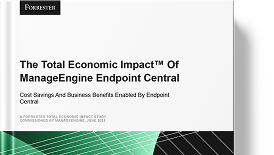
Read moreFragmented toolchains create overlapping licenses, integration overhead, and duplicated workflows. According to a 2025 Forrester Total Economic Impact study, organizations using Endpoint Central saved $913K by automating patching, $1M by decommissioning redundant technologies, and $921K through self-service and remote support enablement, achieving 442% ROI over three years.
Read moreA modern enterprise environment includes Windows, macOS, Linux distributions, iOS, Android, ChromeOS, server platforms, wearables, point-of-sale devices, and OT/IoT endpoints. The platform should manage all of them from a single console without requiring separate agents per OS. Endpoint Central supports over 100 OS versions with 1,000+ telemetry collection points, including Android Open Source Project (AOSP) devices.
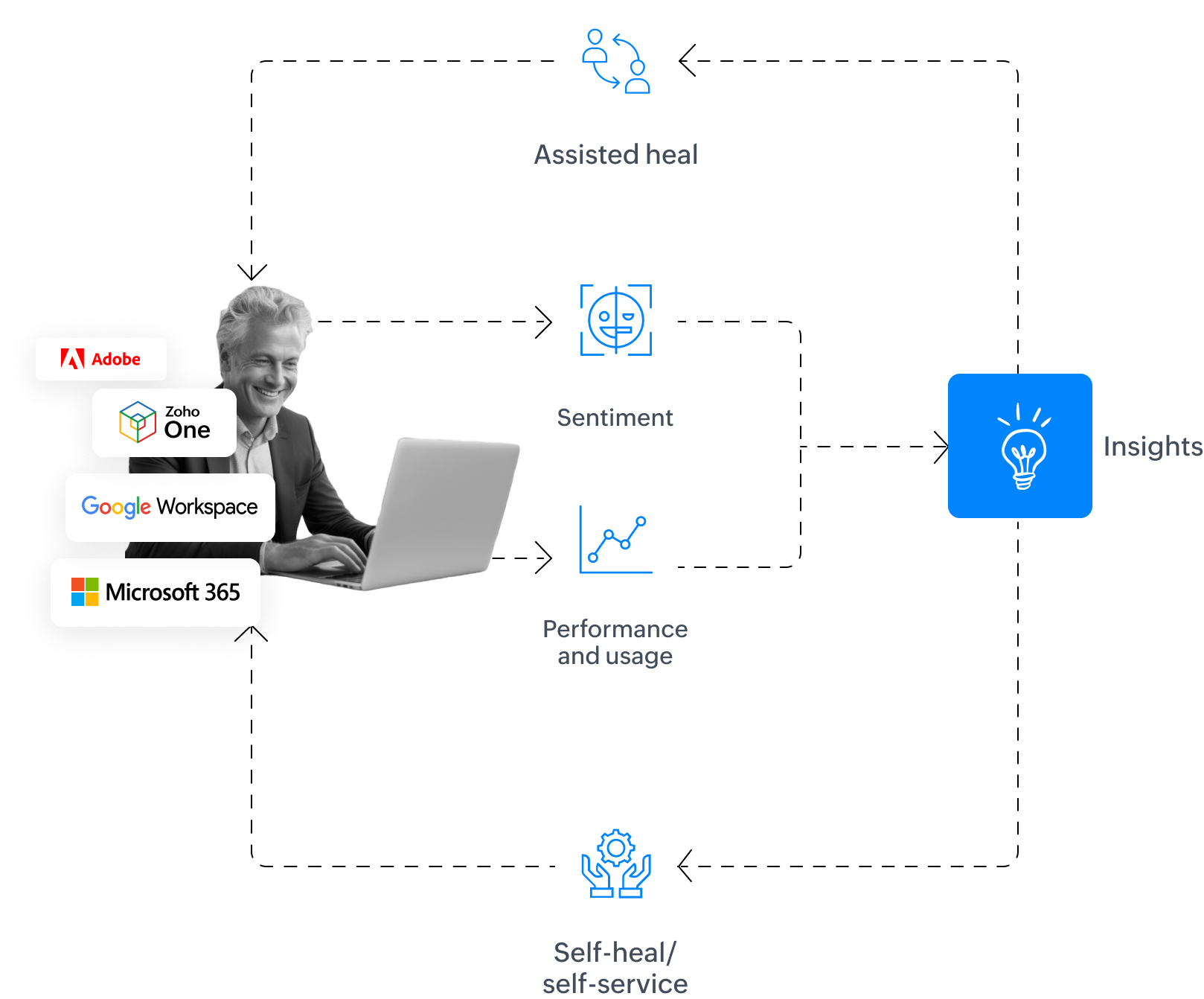
Read moreDigital employee experience (DEX) measures how well an organization's technology environment supports its workforce, covering device performance, application health, and employee sentiment. Poor endpoint performance leads to productivity loss and increased helpdesk tickets. Endpoint Central monitors DEX metrics proactively and triggers self-healing automation to resolve issues before users report them, reducing ticket volume and improving employee satisfaction across the enterprise.
Read moreAI powers smarter automation across both management and security workflows. In management, it enables self-healing bots that detect compliance drift, performance issues, or configuration gaps and remediate them without manual intervention. In security, deep-learning models and behavioral analytics detect ransomware, fileless malware, and zero-day threats that signature-based tools miss. Endpoint Central's agent processes telemetry from 1,000+ data points while keeping CPU usage under 1%, and delivers AI-driven scoring for both cybersecurity risk and digital employee experience.
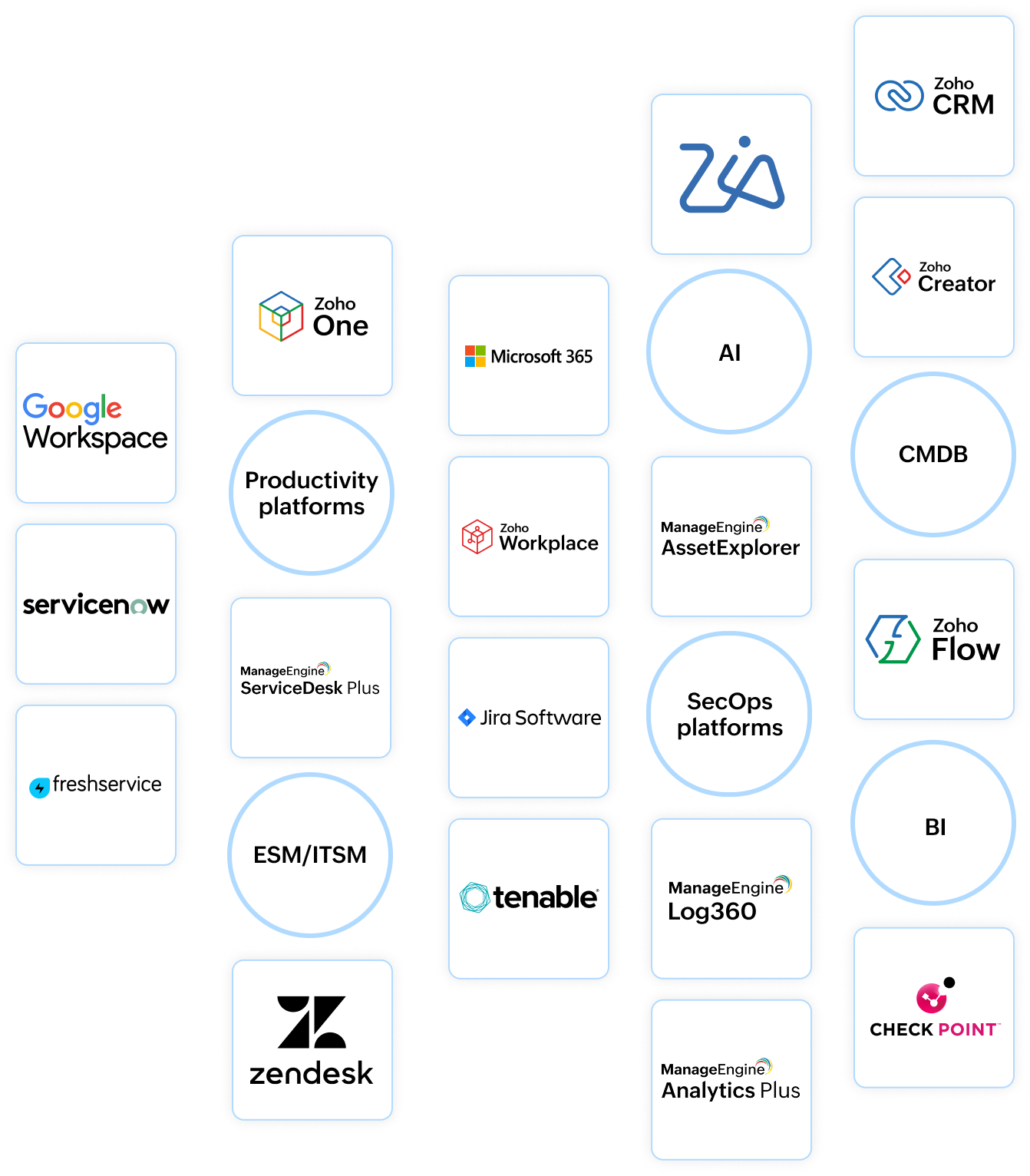
Read moreEvaluate across five dimensions: breadth of OS and device coverage, depth of management and security capabilities within a single agent, independent analyst recognition (Gartner, IDC, Forrester), total cost of ownership including integration and agent overhead, and extensibility with existing ITSM, identity, SIEM, and iPaaS tools. Endpoint Central scores above 4 out of 5 across all four Gartner Critical Capabilities use cases and integrates with the broader Zoho and ManageEngine ecosystem along with third-party platforms like ServiceNow, Splunk, and major iPaaS marketplaces.
Read more