
ManageEngine Applications Manager provides indepth Oracle Tablespace monitoring in addition to overall Oracle Performance Monitoring. Oracle tablespaces are the logical database structures that hold data for an Oracle Database. Each tablespace points to data files where the data is physically stored. An Oracle table space can consist of indices, tables, and other database objects. It is hence important for the database administrator to perform tablespace monitoring.
Monitor tablespace Usage and Growth: This effectively means tracking how the data grows in the Oracle database and ensuring proper provisioning at the right time. The Oracle DBA needs to monitor whether the tablespace is full and whether they need to take action to increase the capacity. There are various ways to increase capacity like add a datafile (after monitoring datafiles) to a tablespace, add a new tablespace or even by increasing the size of existing datafiles in a tablespace. Using the ManageEngine Applications Manager Oracle tablespace monitoring capability, a DBA can monitor tablespace growth in real time and can setup alarms if thresholds are violated.
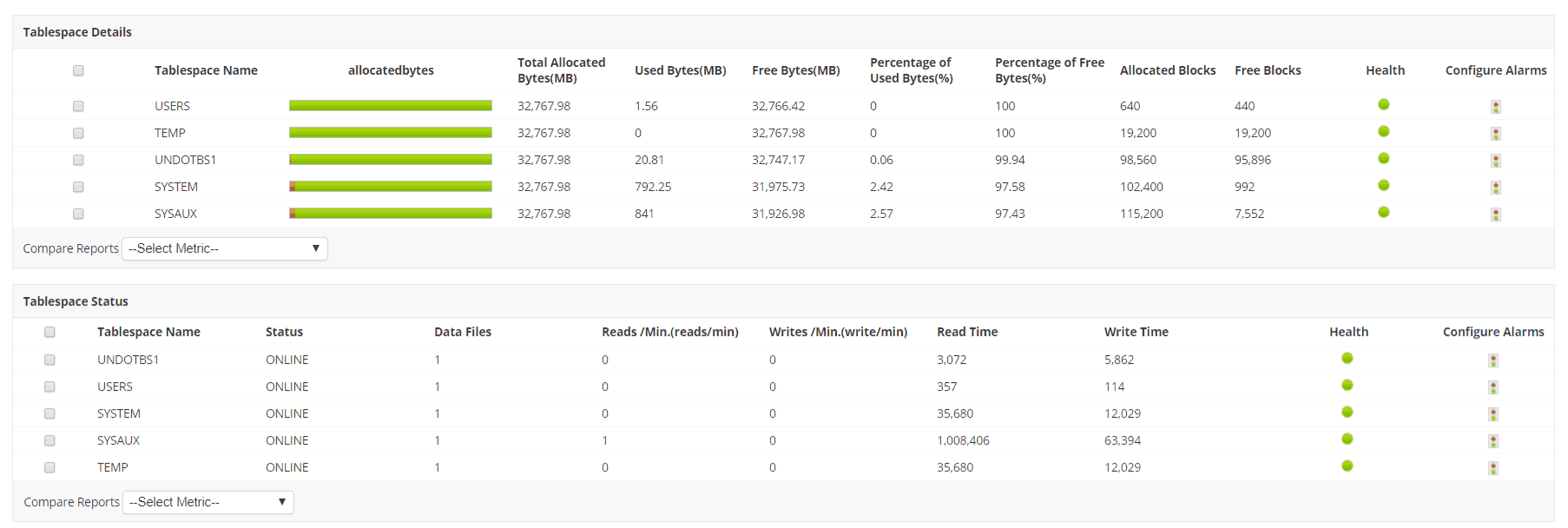
Trend Analysis of tablespace Usage: : Applications Manager tablespace monitoring also helps with Reporting on tablespace growth and can help a DBA in capacity planning.

It allows us to track crucial metrics such as response times, resource utilization, error rates, and transaction performance. The real-time monitoring alerts promptly notify us of any issues or anomalies, enabling us to take immediate action.
Reviewer Role: Research and Development

"I like Applications Manager because it helps us to detect issues present in our servers and SQL databases."
Carlos Rivero
Tech Support Manager, Lexmark
Trusted by over 6000+ businesses globally